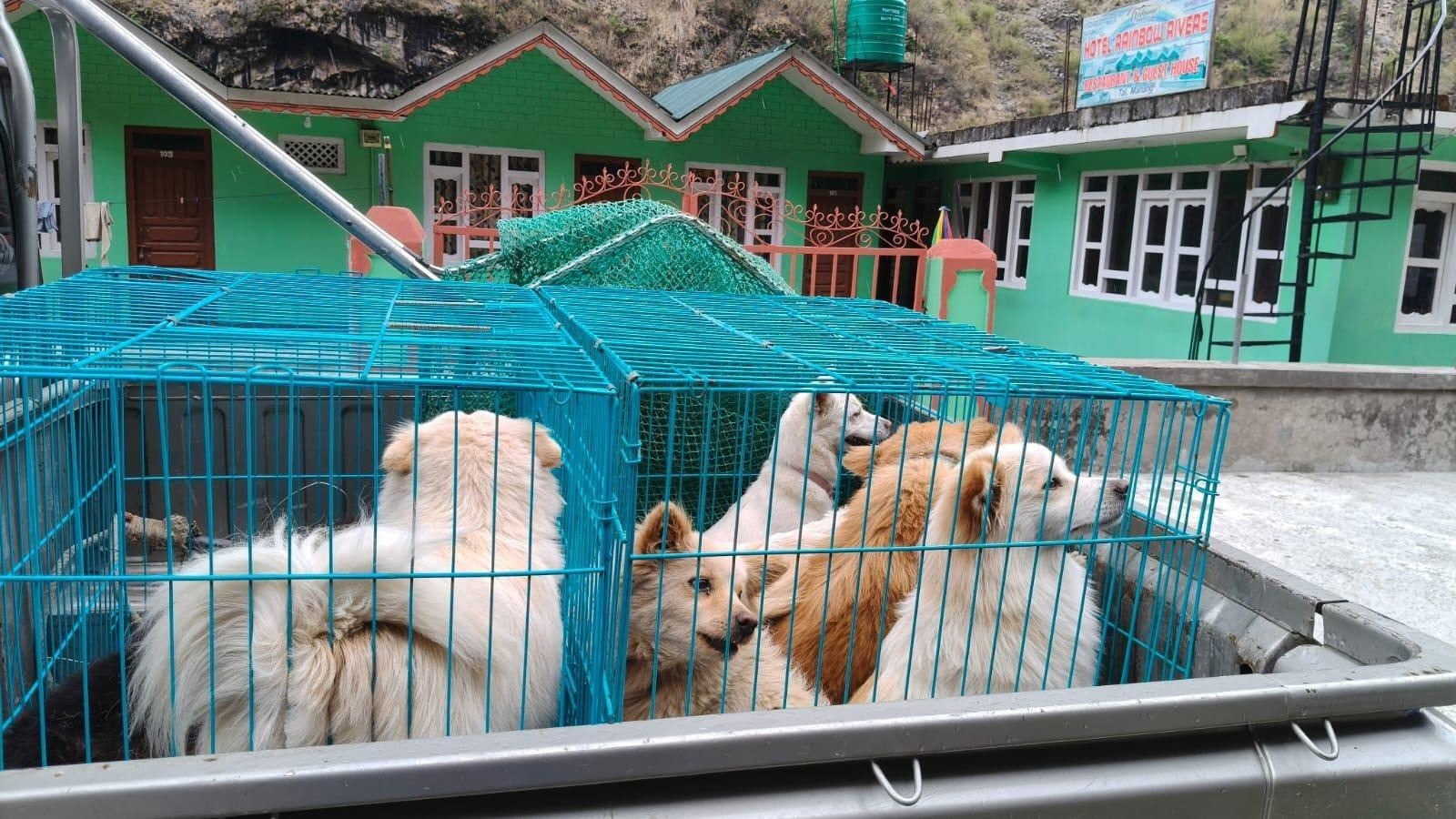
Companion dogs waiting for treatment – Photo: Dr. Sajana Thapa
This spring, Snow Leopard Conservancy and our partners International Veterinary Outreach (IVO) and Animal Nepal (AN) continued expanding the impact of the One Health – One Welfare (OHOW) initiative, a program founded on the idea that the condition of humans, animals, and ecosystems are deeply interconnected. Since this project impacts the complex interactions between all living things, it requires working across different sectors and scales, and brings together multiple organizations, experts, and invested communities. As a result, together with our partners, we planned activities in phases to lay the foundation for greater capacity and sustainability as the program grows in additional snow leopard landscapes. This year, the OHOW team has designed a five-phase program that began in February.
Animal Nepal veterinarian and OHOW Nepal program leader, Dr. Sajana Thapa, is actively leading this effort in Nepal’s Manang District. So far this year, AN has taken on the entirety of the fieldwork in collaboration with Annapurna Conservation Area Project (ACAP) veterinarians, a meaningful milestone in the program’s progress toward local sustainability. In a previous update, we shared how the AN team has been hard at work conducting vaccination clinics, a dog population census, and veterinary training across three rural municipalities, completing the first three phases of our plan. Now, we are pleased to share additional details from the dog population assessment, where things stand in the program’s five-phase plan, and what is ahead as the project moves into its next phases this fall and beyond.
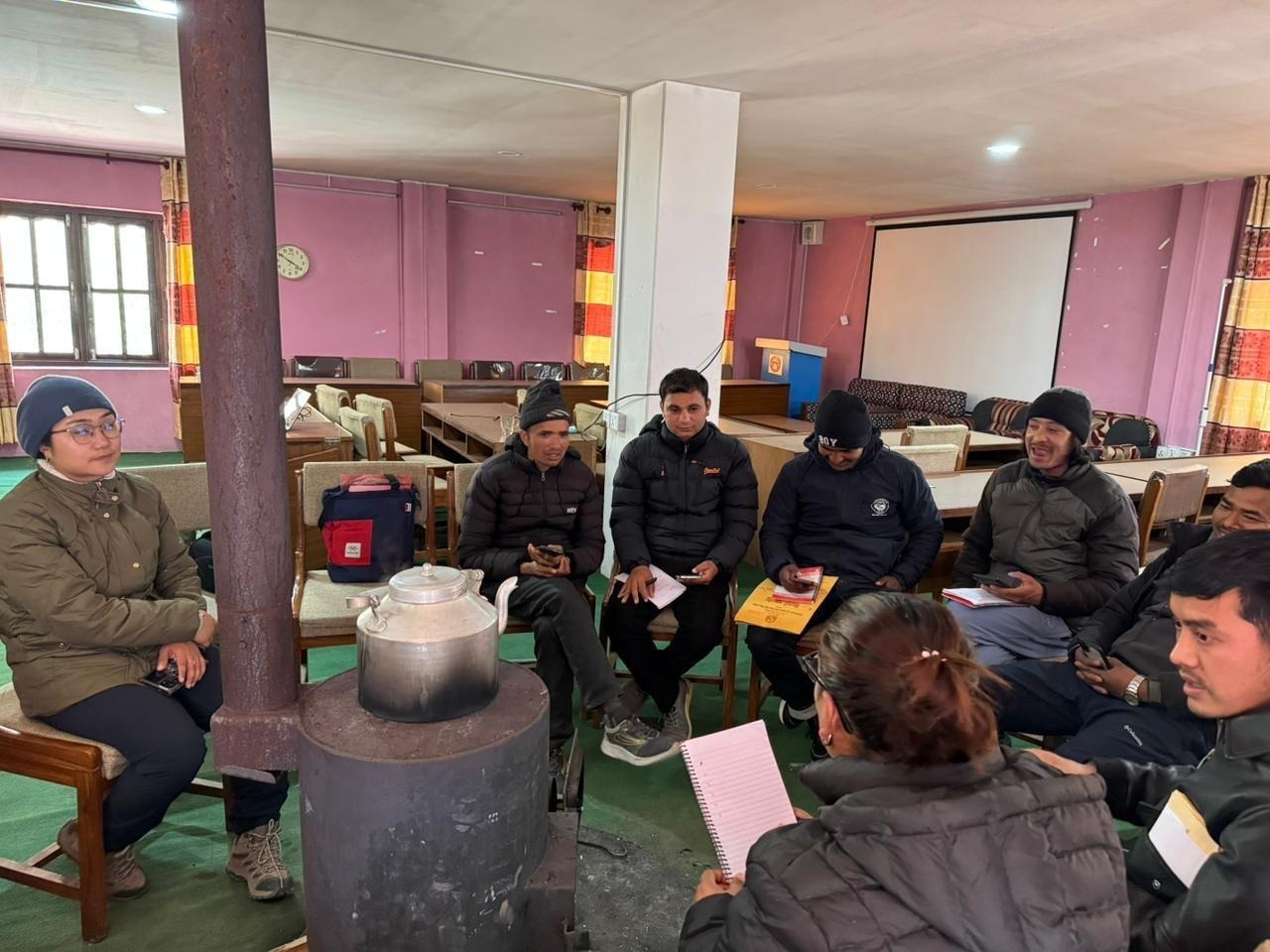
Vaccination clinic staff learn how to use a dog population census application – Photo: Dr. Sajana Thapa
Revealing the True Scope of the Dog Population
In February, Animal Nepal conducted a thorough dog population census to better understand the scope of the challenge. The growing number of unvaccinated, free-roaming, and feral dogs in Manang’s villages pose a cascading risk to people, livestock, and wildlife.
The census revealed a much larger dog population than previously understood. Initial estimates from local veterinary technicians suggested there were approximately 200 dogs in the region. However, teams using Animal Nepal’s mobile application documented more than 450 dogs, with a new total estimate of over 600 dogs. Field teams categorized dogs as owned, community, or feral. While owned and community dogs were systematically recorded, accurately assessing feral populations proved more difficult, as several groups of feral dogs were observed in forested areas, but kept their distance and could not be safely approached.
Understandably, residents’ concerns regarding feral dogs have intensified. Several reported growing distress over livestock attacks and safety issues for children moving through villages in the evenings. Disease transmission is also a major concern as rabies poses a fatal risk to humans, while canine distemper, also carried by free-roaming dogs, threatens the survival of the nearby snow leopard and other wild carnivore populations.
With the census complete, our partners shifted to vaccination, treatment, and sterilization efforts, targeting the preventative health gaps in the region. Though feral dogs largely remained out of reach during the February vaccination clinic, two were successfully sterilized. This was a small but meaningful step, as continued sterilization of community dogs will gradually help reduce feral populations over time.
Launching the First Canine Sterilization Clinic & Broadening Animal Health Coordination
Animal Nepal’s efforts through the dog census and vaccination clinic provided critical baseline data, laid the groundwork for future efforts, and facilitated key partnerships with local and regional government entities, such as the Annapurna Conservation Area Project (ACAP), Nepal’s largest protected area. Solidifying these relationships led to AN participating in the first coordinated dog sterilization clinic, which was led by ACAP.
Despite unexpected field challenges, the Annapurna Conservation Area Project and Animal Nepal worked collaboratively, with veterinarians performing an impressive 170 sterilization surgeries in demanding conditions. Dr. Thapa indicated that unseasonal snow and rain resulted in fluctuations in community dog presence and difficult catching conditions. As such, the number of dogs accessible for treatment was lower than hoped, demonstrating the complexity of this work and the need for sustained efforts. Despite impacted operations, local residents expressed the urgency for continued treatment.
Broadening these efforts further, a separate equine health camp operated simultaneously. This marked both a significant animal health achievement and a demonstration of successful coordination among Animal Nepal and local partner entities. These clinics vaccinated 317 horses against rabies and tetanus and humanely castrated 80. The strong turnout from animal guardians and increased municipal engagement reflect the building momentum around these collaborative animal health efforts.
Looking Ahead
Building on this foundation, the One Health – One Welfare team is now preparing for a larger multi-species clinic scheduled for September. The final two phases of this year’s plan will emphasize livestock and equine care while continuing to expand canine vaccination and sterilization efforts across the valley. Community awareness sessions will run alongside clinical activities. These will reinforce the connections between animal health, public health, and wildlife conservation that sit at the heart of this initiative. Animal Nepal is also planning expanded stakeholder meetings. These will involve local municipalities, veterinary hospitals, conservation agencies, and national-level government organizations, with technical support from SLC and IVO. These gatherings will further deepen the coordination and long-term sustainability on which this program depends.
Through every phase of this initiative, one message remains evident: protecting snow leopards means supporting the health, safety, and resilience of the people and animals who share their environment. We are deeply grateful to our partners, supporters, and the local leaders who make it possible to build healthier, more connected communities across the Himalayas.