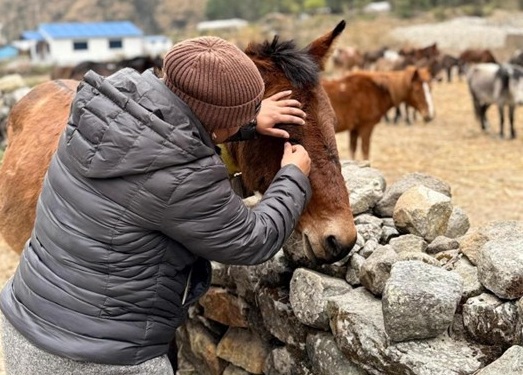
During veterinary and animal health care training in Nepal, participants perform a general checkup on an equine – Photo: Dr. Sajana Thapa
The One Health–One Welfare (OHOW) initiative is a collaboration between Snow Leopard Conservancy, Animal Nepal, and International Veterinary Outreach. This initiative improves access to veterinary and conservation resources and training, serving both people and animals in the high mountains of Nepal.
Snow Leopard Conservancy and its partners – including Nepali and international veterinarians, technicians, and conservation practitioners – have strengthened ties with government agencies including the Department of Livestock Services, rural municipalities, and conservation partners such as Annapurna Conservation Area Project. The objective is to improve animal health services, ensure timely vaccinations and diagnoses, and promote sustainable coexistence in this fragile ecosystem.
Limited Access to Veterinary Services
In the remote districts such as Manang, limited access to veterinary services has led to growing challenges at the human–animal–environment interface. Large populations of unsterilized and unvaccinated dogs elevate the risk of disease transmission, including rabies and canine distemper, while increasing the likelihood of these dogs becoming feral and adversely affecting people, livestock, and wildlife.
Livestock and equines are also largely excluded from routine vaccination, resulting in outbreaks of diseases such as Orf and Glanders. This results in the possible death of these animals and subsequent substantial economic loss, while simultaneously compromising public safety and threatening community stability. Local veterinary capacity remains insufficient to meet these demands, with limited training opportunities and a lack of diagnostic facilities.
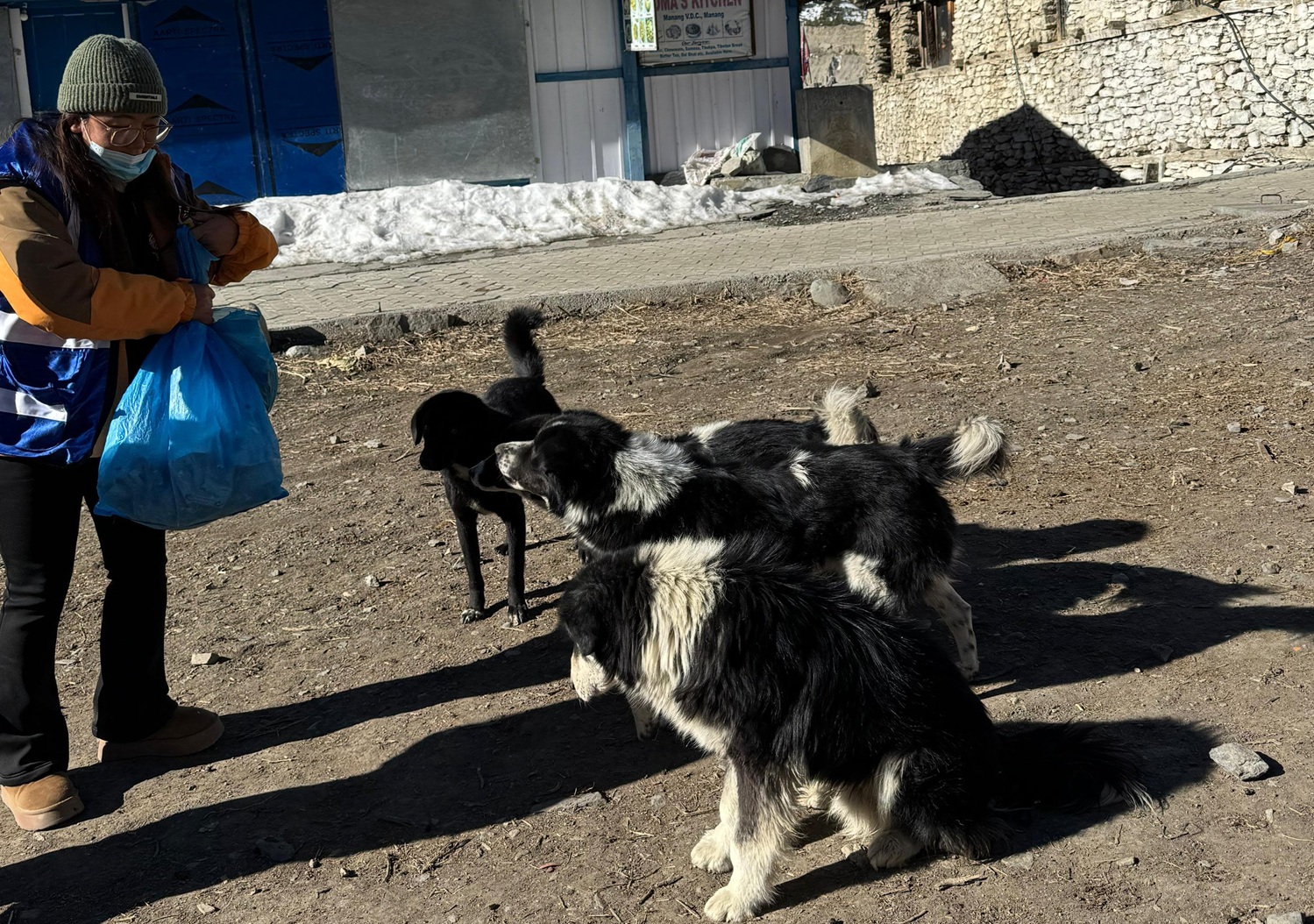
Luring the dogs to come closer for vaccination. – Photo: Choden Yangchen Lama
Addressing the Issues
Organizing Vaccination Clinics
This February, Dr. Sajana Thapa, program leader of OHOW partner Animal Nepal, organized a vaccination clinic in three rural municipalities of the Manang District. The objective of the clinic was to humanely address growing feral and free roaming dog populations. The team chose these specific villages with the intent of preventing attacks on humans, livestock, and wildlife. The attacks can result in the spread of fatal zoonotic diseases such as canine distemper and rabies.
As part of these efforts, participants conducted a feral dog census to gain an understanding of the scope concern. They also planned the program’s next phase; facilitating a valley-wide field clinic to sterilize as many of the dogs in the current estimated population (400-500 dogs) as possible, striving to humanely control the population.

The animal Nepal team and clinic participants assist Dr. Sajana Thapa with the collection of feral and roaming dog population data. – Photo: Choden Yangchen Lama
Providing Veterinary Training
Additionally, the Animal Nepal OHOW team provided training to local veterinarians and animal health technicians. They instructed them on best practices for safe dog catching, restraint, handling, and vaccination delivery. In total, the team examined 476 dogs, administered 301 DHPPiL (which protects against canine distemper, hepatitis, parvovirus, parainfluenza virus, and leptospirosis) vaccinations; and 388 rabies vaccinations.
The veterinary staff also performed health evaluations for 65 equines, including both horses and mules, and treated five chauri (a cross between a yak and a domestic cow). They successfully treated one cow for dystocia, a difficult or obstructed labor during birthing. Furthermore, they tended to the wounds of two dogs. One of the dogs was allegedly bitten by a snow leopard, according to community reports. Indeed, a number of witnesses claimed that interactions between snow leopards, wild carnivores, and feral dogs have increased significantly just in the last few years. This work is therefore critical to the survival of the 397 endangered snow leopards of Nepal.
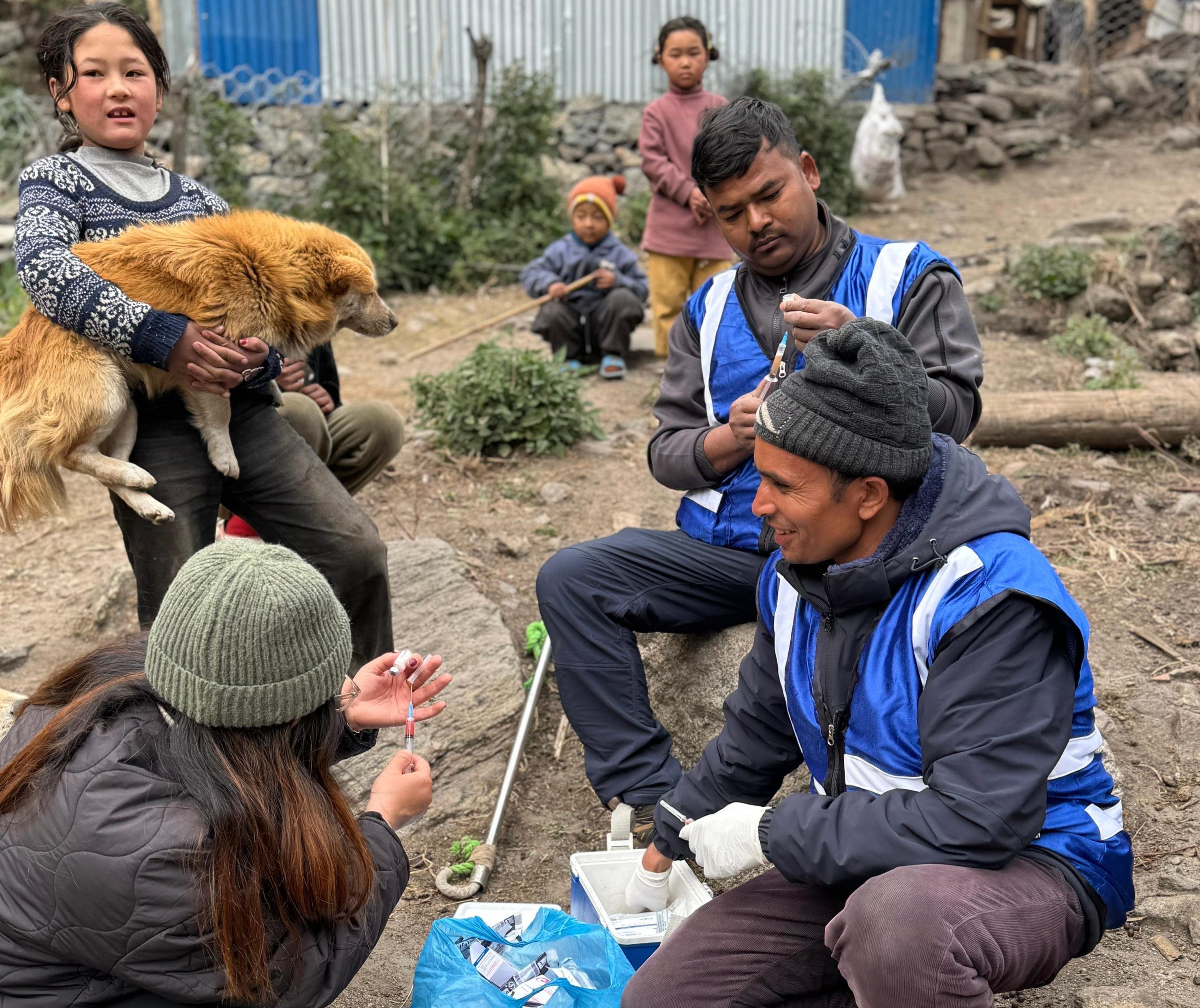
The OHOW team along with clinic participants assist Dr. Sajana Thapa in drawing up rabies vaccinations during a veterinary clinic in rural Manang, Nepal. – Photo: Choden Yangchen Lama
Addressing Emerging Health Threats
During this time, the OHOW team recognized another emerging threat: more than 100 sheep exhibiting symptoms of Orf. This is an extremely contagious viral infection that primarily affects sheep and goats. It causes painfully debilitating sores around their lips and mouth, and can result in starvation if left untreated. Samples sent to the Central Veterinary Laboratory confirmed the presence of the virus. The team is currently identifying the next steps to effectively address this outbreak, which not only acutely impacts the health and welfare of these animals but the livelihoods of their owners.
Overall, the clinic contributed to improved animal health through a robust and comprehensive vaccination campaign, strengthened community awareness of zoonotic diseases, and enhanced coordination between veterinarians, technicians, and local authorities. As a result, this collaboration created a safer and healthier environment for animals, humans, and wildlife in the region.

The Animal Nepal team, technicians and local government of Chame Rural municipality after veterinary training and meeting. Photo: Choden Yangchen Lama
Stay tuned for more OHOW updates on the valley-wide dog sterilization clinic happening this spring as the next part of this initiative.