
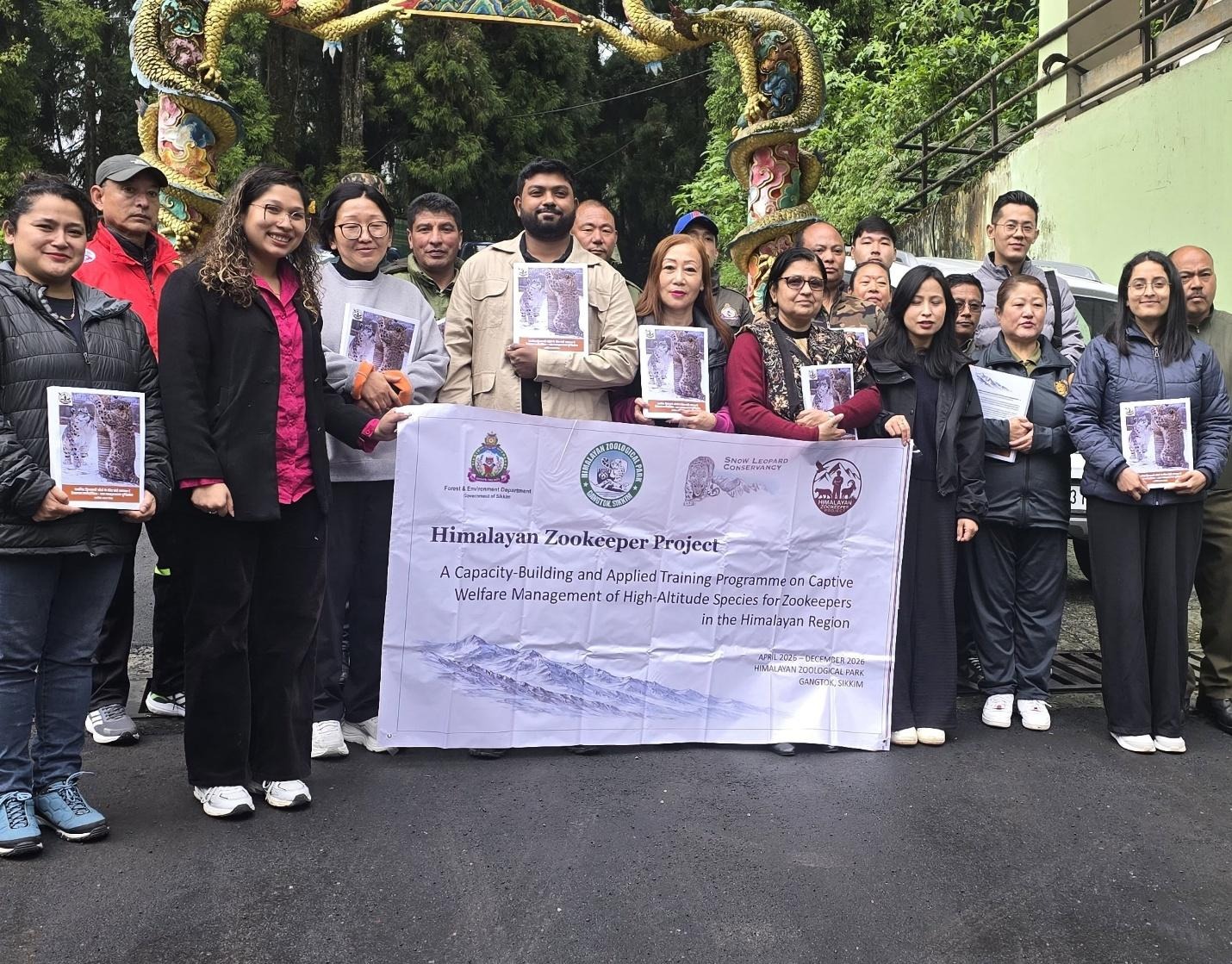
The Himalayan Zoological Park hosted the first phase of the Himalayan Zookeeper Project (HPZ) – a capacity building program for zookeepers, working specifically with Himalayan wildlife species on rehabilitation or long-term care. The program was carried out by Mr. Kartik Thevar, MS – Photo: Himalayan Zoological Park
The Himalayan Zookeeper Project Bridges Rescue, Rehabilitation, and Lifelong Care
Late last year, Snow Leopard Conservancy announced a new partnership with zoologist and animal welfare specialist Kartik Thevar. The Himalayan Zookeeper Project (HZP) is an ambitious initiative designed to strengthen animal welfare, behavioral management, and rewilding conservation outcomes for Himalayan wildlife in human care. We are now excited to share a major milestone: the project has officially launched with implementation on the ground in Gangtok, Sikkim, India.
Addressing the Growing Need for Long-Term Wildlife Care
As human-wildlife conflict, climate pressures, and habitat fragmentation continue to increase across Asia’s High Mountains, more wild animals are entering managed care. This is due to injury, displacement, habituation, or other circumstances that make release impossible. While rehabilitation and rewilding remain the preferred outcomes whenever feasible, many rescued animals ultimately require lifelong human care. Mr. Thevar created the HZP with the technical and financial support of the Snow Leopard Conservancy to ensure these animals receive species-specific, behavioral science-based, and welfare-oriented management. The HZP also supports the dedicated professionals responsible for their daily care.
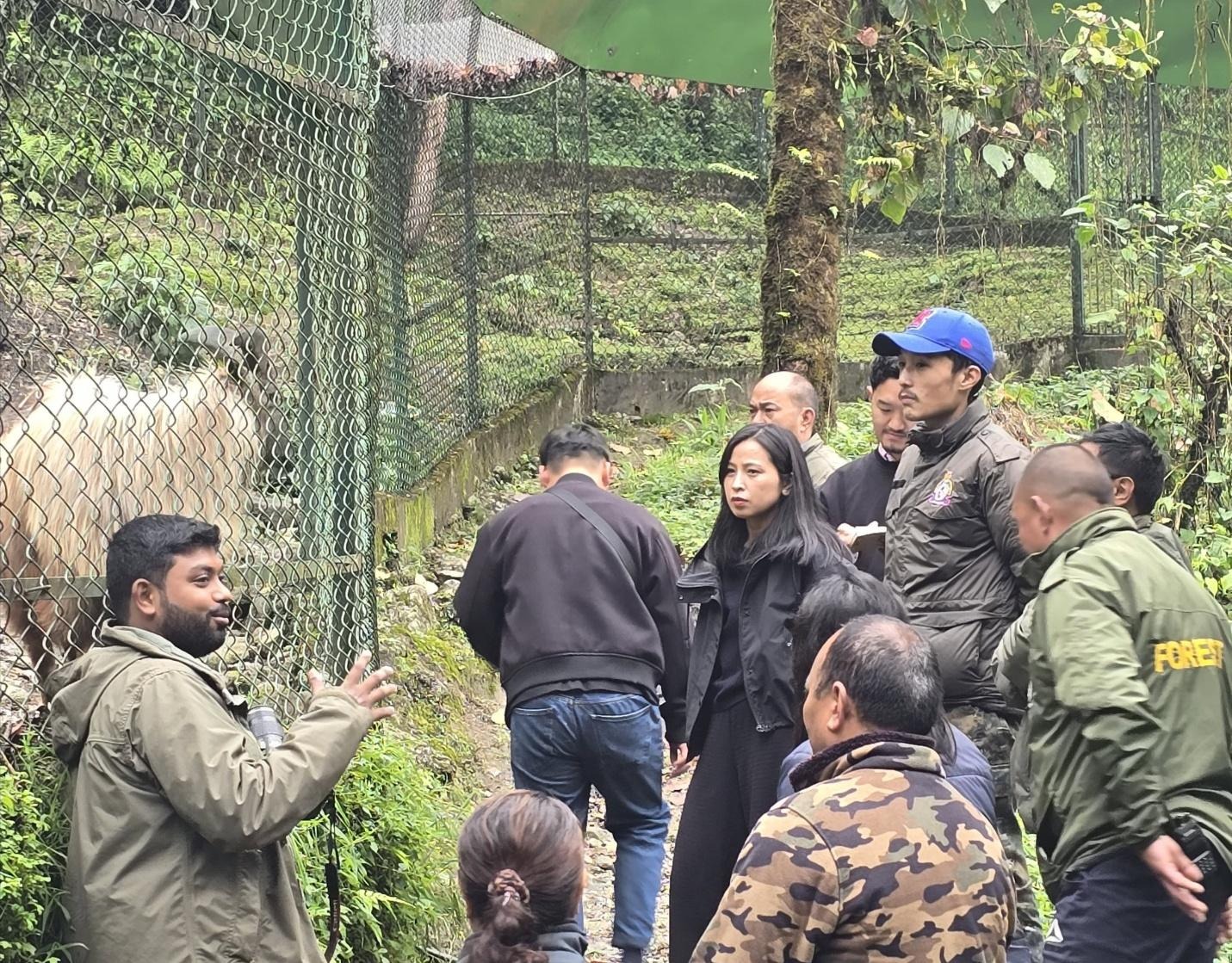
The first phase of the program was conducted from April to May 2026, with the release of the Captive Care Manual for Select Himalayan Fauna – a behavioral approach focusing on rehabilitation, rewilding and when necessary, life-long managed care – Photo: Himalayan Zoological Park
Launching a Comprehensive Care Manual
Working in partnership with the Sikkim Himalayan Zoological Park, Mr. Thevar has now begun the next phase of this collaborative effort. Following months of development and preparation, the project has published their foundational text. The manual is titled Captive Care Manual for Select Himalayan Fauna – A Behavioral Approach. Exceeding 400 pages and containing more than 200 technical illustrations, the text is one of the most extensive behavioral care references ever developed for frontline wild animal welfare teams. It covers behavior, enrichment, husbandry, health, and rewilding conservation techniques for more than 30 species.
Importantly, the manual was designed specifically for the realities faced by Himalayan wildlife facilities. It addresses challenges such as remote mountain locations, harsh climates, limited infrastructure, and the increasing number of conflict rescues occurring across the region. Written in the local language, the handbook is designed to help bridge that gap through a framework Mr. Thevar describes as: Rescue → Rehabilitation → Rewild → Retire. This continuum helps ensure that every animal — whether destined for release or lifelong management — receives care informed by best practices grounded in behavioral science and natural history.
Beyond improving conditions for animals currently in care, the project also supports broader conservation goals. It does this by nurturing healthier animals better suited for rehabilitation efforts. It also prepares animals for potential release back into the wild. Furthermore, it empowers and strengthens both the professional capacity and knowledge of Himalayan animal care teams who play a vital role in conservation of threatened and endangered species.
A Shared Commitment to Animal Welfare and Conservation
For Snow Leopard Conservancy Executive Director Ashleigh Lutz-Nelson, this work reflects a deeply personal commitment to the people and animals at the heart of conservation. Before joining SLC, Ashleigh spent more than two decades as a professional zookeeper in the United States, caring for species ranging from big cats and bears to rhinos and great apes.
“Each individual carried its own story, and with it, a responsibility to provide not only protection and rehabilitation but also a lifetime of thoughtful, compassionate care,” Ashleigh writes in the manual’s foreword.
Her experience working alongside animal care teams also reinforced the importance of collaboration and shared expertise across the conservation community. Through her work with the Association of Zoos and Aquariums (AZA) Felid Taxon Advisory Group, she saw firsthand how knowledge exchange and practical training can elevate animal welfare standards and strengthen conservation outcomes worldwide.
“Zookeeping is among the most demanding professions in conservation,” Ashleigh explains. “It calls for resilience, precision, empathy, and an unwavering dedication to the animals in our care.”
That understanding helped shape the vision behind the Himalayan Zookeeper Project. Beyond improving animal welfare, the initiative is equally focused on empowering the people working on the frontlines under often challenging conditions.
“This is more than a guide,” Ashleigh writes. “It is a commitment to better care, deeper understanding, and a future where both wildlife and those who protect it can thrive together.”
From Manual Development to On-the-Ground Training
On April 30th, the manual was officially released with a celebration at the Himalayan Zoological Park. It was attended by esteemed Zoo officials, conservation biologists, zookeepers, and veterinary staff. The event included a comprehensive walkthrough of the park, with species-specific briefings held at each enclosure that will guide upcoming training sessions and long-term expectations.
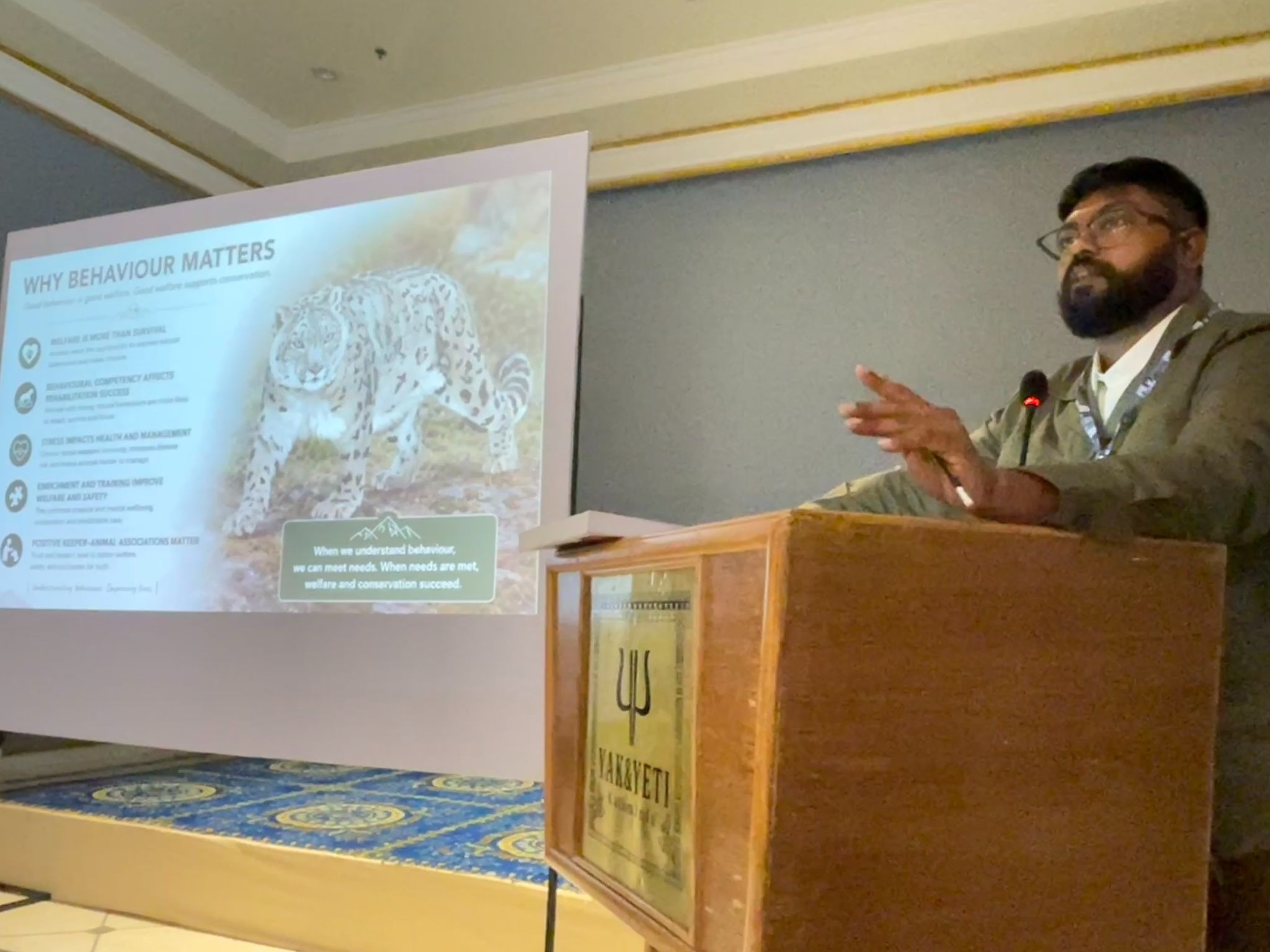
Kartik Thevar presented at the Society for Conservation Biology 6th Conservation Asia Congress at the Snow Leopard Conservancy Partner Network Workshop on “Strengthening Collaborative Partnerships and Learning Exchanges for Conservation Action and Impact” June 1, 2026 – Photo: Kartik Thevar
The Two Paths After Rescue: Rewilding and Lifetime Care in Snow Leopard Conservation
With regards to snow leopards, Mr. Thevar shared his objectives for the HZP earlier this month at a workshop gathering of the Snow Leopard Conservancy’s partners before the Society for Conservation Biology (SCB) Asia’s 6th Conservation Asia Congress (CAC Nepal 2026) in Kathmandu on June 1, 2026. Specifically, he acknowledged that because rescue outcomes vary, both rehabilitation and long-term managed care deserve equal attention and scientific rigor:
My intention behind this approach is to discuss both outcomes commonly observed in rescued snow leopards — individuals that can successfully return to the wild following specialized rehabilitation and behavioral intervention as well as individuals that remain under long-term managed care due to severe injuries, permanent disabilities, habituation, old age, or compromised survival capabilities.
He emphasized that while successful rehabilitation and release remain important conservation goals, many rescued carnivores ultimately require permanent human care, underscoring the need for stronger long-term behavioral management and welfare planning within zoological facilities.
From my experience working with rescued carnivores, a significant proportion of conflict-related rescues do not ultimately make it back into the wild. In many cases, post-rescue focus is understandably centered around immediate rescue and stabilization, while comparatively less attention is given to long-term behavioral management and welfare planning for animals that cannot be released.
Looking Toward the Future
Snow Leopard Conservancy is proud to support this growing initiative and the dedicated professionals working tirelessly on behalf of Himalayan wildlife. Together, we are helping ensure that every rescued animal — whether returned to the wild or cared for throughout its life — receives the dignity, compassion, and scientifically informed care it deserves.
