

Spiritual Leader Zhaparkul Raimbekov teaching a Kyrgyz kindergarten student about the environment – Photo: RDF/SLC
Young Guardians: SOS For Snow Leopards
In Kyrgyzstan, Spiritual Leader Zhaparkul Raimbekov and the Rural Development Fund (RDF) established the Young Guardians: SOS For Snow Leopards program, which provided environmental education for more than 30 children and their families from the Aigolok Kindergarten. The program was an off-shoot of the Land of Snow Leopard (LOSL) Network educational initiative, Elders and Youth for Conservation of the Snow Leopard, a ground-breaking collaboration between Western and Indigenous science supported by a grant from IUCN Save Our Species, entitled “Sustaining Indigenous Communities in Snow Leopard Conservation.”
The Young Guardians unique curriculum included a series of culturally-based activities designed to cultivate environmental awareness. It sought to instill a deep love and respect for nature and prepare the students for their future roles as responsible stewards of the landscape. Specifically, the project integrated snow leopard protection into existing cultural frameworks, particularly through the Manas Epic tradition, where the snow leopard serves as a sacred protector. Lessons also described the impact of human activities on the environment and by using the snow leopard as an example demonstrated the interconnectedness and natural balance of a healthy ecosystem.
Project Components
New Year Celebration
The project officially launched in December 2024 with a transformative New Year celebration where spiritual leaders Kamil Mamadaliev and Zhaparkul Raimbekov shared tales from the Manas Epic. Children experienced their first encounter with snow leopard conservation through a play featuring “Zhibi,” a snow leopard cub. They then received traditional blessings that emphasized care for all living beings.

Kyrgyz kindergartners participating in a New Year Celebration as part of the SOS for Snow Leopards program – Photo: RDF/SLC
Spring Nooruz Celebration
This Kyrgyz holiday celebrates the spring equinox. The children dressed in traditional costumes and participated in rituals honoring both cultural heritage and natural protection. The celebration included traditional foods prepared by parents, outdoor games connecting children with nature, and the burning of juniper as a cleansing ritual that emphasized the spiritual connection between Kyrgyz culture and environmental protection.
Snow Leopard Corner
Throughout the project’s duration, a permanent “Snow Leopard Corner” in the classroom (pictured below) displayed the students’ drawings and crafts, which served as a daily reminder of their commitment to conservation. The “corner” also featured donated storybooks and thematic materials that the teachers utilized for continued environmental education activities.
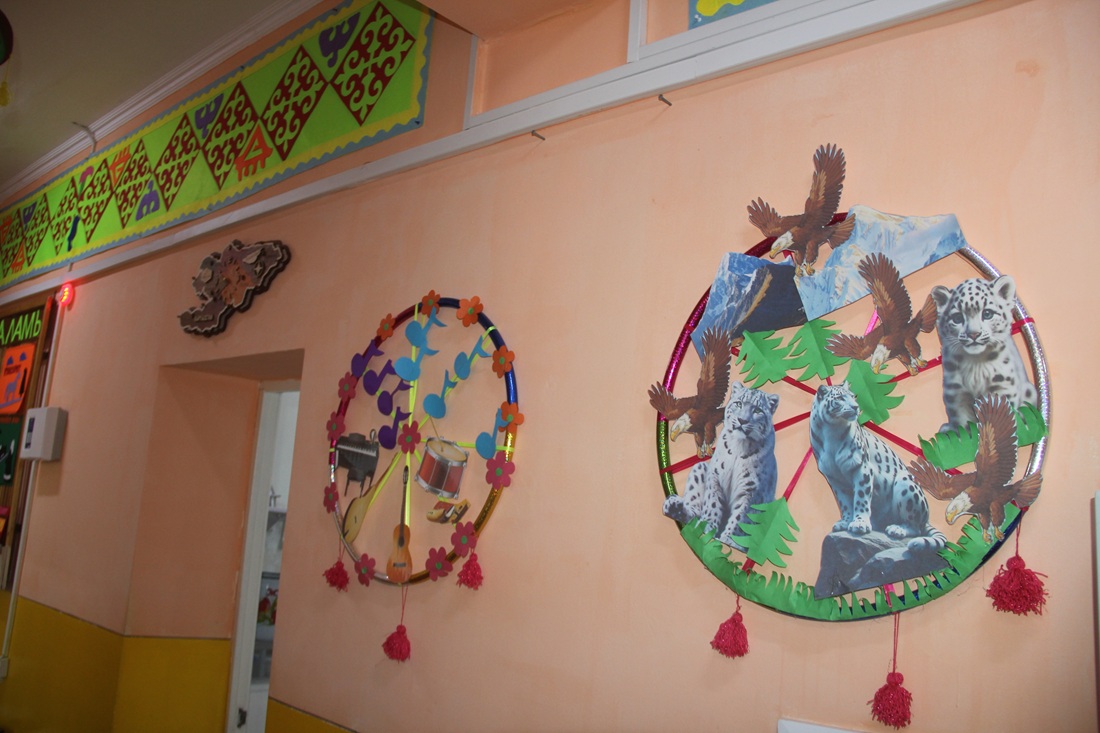
Children’s crafts displayed in the “Snow Leopard Corner” as part of the SOS For Snow Leopards Environmental Program – Photo: RDF/SLC
Besh-Tash Nature Park Excursion
The project culminated in June 2025 with an excursion to the Besh-Tash Nature Park, where students, parents, and teachers experienced snow leopard habitat firsthand.
Activities Included:
Camera Trap Presentation: The focal point of the field trip was the formal presentation of a camera trap from the Rural Development Fund to the park for wildlife monitoring purposes. Park staff demonstrated how to install and operate the camera trap and explained how it records animal movements and then transmits the data for research purposes. Students and their family members watched with fascination as they learned how modern technology serves conservation science.
Guided Tours: Staff then led the participants on guided tours where they described local flora and fauna; the snow leopard’s habitat requirements, natural history, and behavior; and the critical importance of maintaining the natural balance of the environment for species survival.
A highlight of the trip was when a park researcher shared exciting information about a family of approximately five snow leopards currently living in the surrounding mountains!
Discussions: As an integral part of the experience, park staff and spiritual leaders addressed the spiritual dimension of conservation, focusing on the sacred forces of the local landscape. They impressed upon the students the importance of acknowledging all aspects of nature with respect to the integration of Traditional Wisdom with modern conservation technology.
Emphasis on Culture: The children were then given the opportunity to perform excerpts of the Manas Epic, while dressed in traditional national costumes. Kamil Mamadaliev shared additional epic stories, and Zhaparkul Raimbekov provided traditional blessings for all participants.
Interactive Games: The visit came to a close with the students enjoying outdoor games such as “Following Animal Tracks,” where participants imitated the movements of various animals, including snow leopards.

Kyrgyz kindergarten children participating in an environmental education excursion to Besh-Tash Nature Park learn about trail cameras and the importance of monitoring wildlife. – Photo: RDF/SLC
Project Successes
- Conservation Awareness – Teachers reported that 100% of participating children were able to identify snow leopards and explain their conservation needs.
- Positive Educational Outcomes – Many students showed a growing interest in nature through increased questions to teachers and greater observance of seasonal and environmental changes.
- Establishing a Cultural Connection – Through nature-themed costumes and performances during celebrations, children began to see nature as part of cultural and family traditions, developing emotional connections to animals and natural phenomena. The hands-on experience at Besh-Tash Nature Park helped children understand that nature is not just something found in books or stories but a real and valuable part of their world.
- Spiritual Reinforcement of the Conservation Message – Spiritual elders imparted nature-based knowledge rooted in local historical traditions, teaching the children to treat the mountains, animals, and water with respect. And through storytelling, the snow leopard was shown to be not only an ecologically important animal but a symbol of balance and harmony worthy of reverence and protection.
- Application of Knowledge – Lessons learned in the classroom began to have an impact on the students’ behavior at home. Parents relayed their children were practicing good environmental stewardship by conserving water, treating plants with care, and reducing littering. The youth were also initiating discussions about nature and environmental protection with their family members, including thoughts about snow leopards such as “the leopard protects the mountains” and “we must take care of it.” As one parent shared, “The project taught us to see our nature in a new way. Now, even little kids know who the snow leopard is and why it must be protected. This is important for our future.”
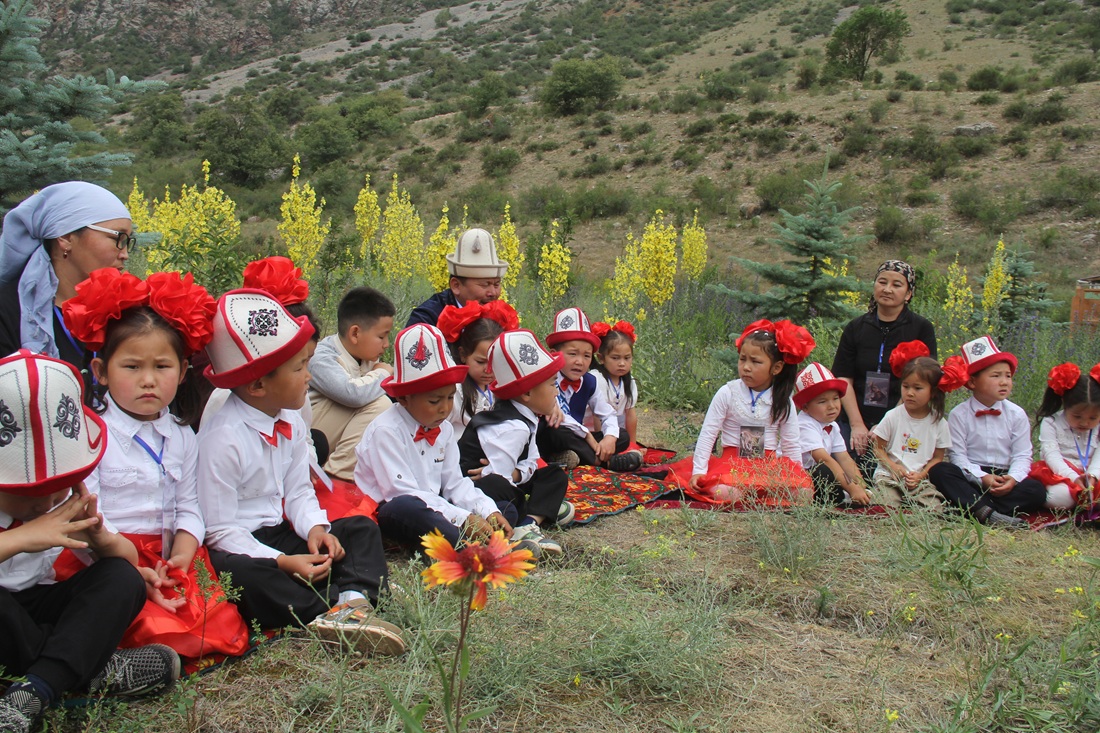
The children perform the “Manas” epic, where the snow leopard serves as a sacred protector, during the environmental education trip to the Besh-Tash Nature Park. – Photo: RDF/SLC
The Young Guardians: SOS For Snow Leopards project successfully demonstrated that culturally-integrated environmental education creates a meaningful and lasting impact for young children and their families. By honoring Kyrgyz traditions while introducing modern conservation concepts, the project fostered genuine environmental stewardship that children and families embraced as part of their cultural identity.
The thirty children who participated in the project returned to their families and communities as ambassadors for snow leopard protection, carrying knowledge and attitudes that will influence environmental decisions for many years to come. The successful integration of spiritual leadership, traditional storytelling, scientific education, and modern technology provided a framework for environmental education in culturally rich communities worldwide.