
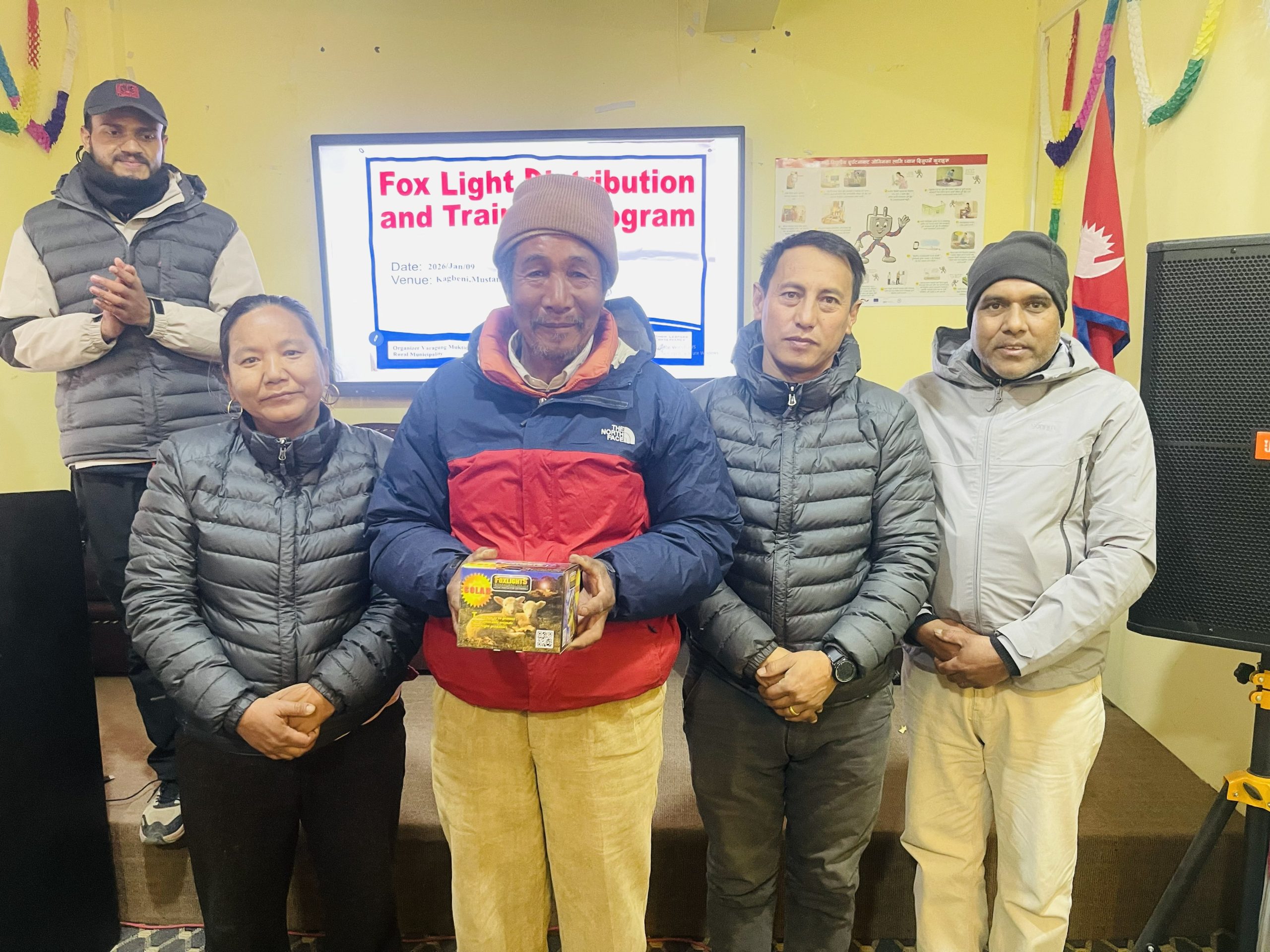
Community mobilizer Mr. Niraj Thakali distributed Foxlights, nighttime predator deterrents, to herders. The devices flash intermittently to deter snow leopards and other predators from livestock areas. Photo Credit: CBSLCP
When a snow leopard entered a livestock enclosure in the mountain village of Marpha earlier this year, the consequences were devastating. In a single night, one family lost 23 goats and sheep. For families living alongside snow leopards, losses like these extend far beyond the animals themselves. They can threaten household food security, economic stability, and generations of traditional herding practices, while also intensifying the challenges of human-wildlife coexistence. Finding ways to protect both snow leopards and the livelihoods of the communities who share their habitat is therefore an essential part of long-term snow leopard conservation in Nepal.
An Integrated Approach to Human–Wildlife Coexistence
These events underscore why the Community-Based Snow Leopard Conservation Program (CBSLCP) has adopted an integrated, community-centered approach. The CBSLCP is building snow leopard-friendly communities by combining human-wildlife conflict mitigation, awareness raising, livestock protection, and livelihood diversification. In previous years (2023 and 2024), we shared how CBSLCP laid the foundation for coexistence in Lower Mustang. This year’s results demonstrate how those efforts have expanded, delivering measurable and far-reaching impacts. Led by Niraj Thakali, with the support of local governments and the Annapurna Conservation Area Project (ACAP), CBSLCP directly benefited nearly 400 households and 373 community members – including herders, farmers, and students – with women representing nearly 65% of participants. Cultural performances and social media also amplified messages about living alongside snow leopards, reaching more than 7,500 people and extending the program’s impact well beyond its target villages.
Niraj surveyed local goths, or traditional corrals, to identify structures in need of improvement to keep livestock safe from predators. Photo Credit: CBSLCP
Strengthening Livestock Protection
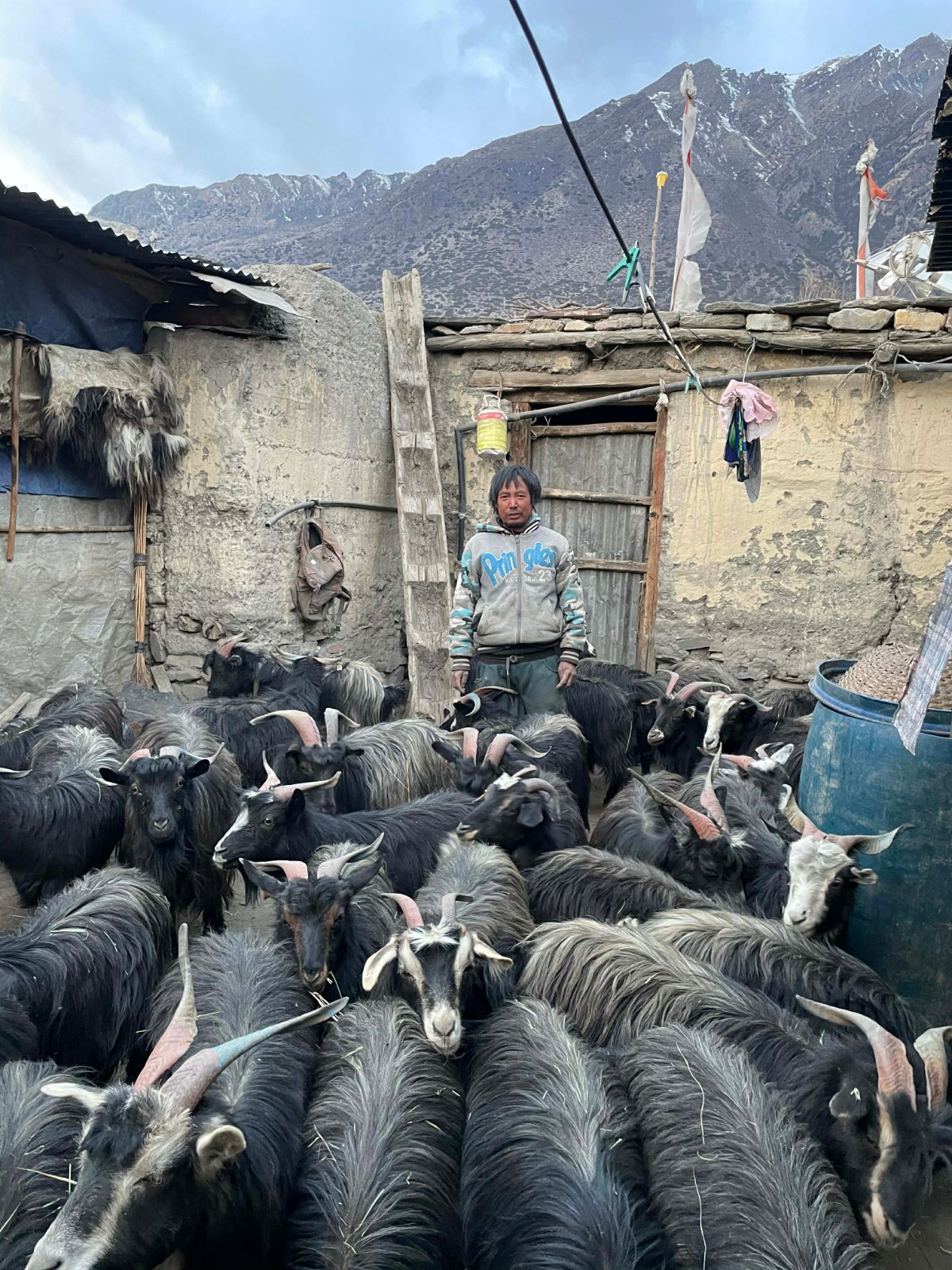
Reducing livestock depredation remained the program’s highest priority. This year, the program strengthened its approach by moving beyond reactive interventions and adopting an evidence-based strategy to identify the livestock shelters most vulnerable to snow leopard attacks. The team surveyed 20 high-risk goths (traditional livestock shelters) in Varagung Rural Municipality – home to Mustang District’s largest goat population and highest rates of livestock depredation. Six of the most vulnerable goths were selected to receive targeted improvement grants, helping herders reinforce doors, windows, and other structural weaknesses that predators can exploit. While the grants covered only a portion of the total cost, they successfully leveraged additional investments from livestock owners themselves, strengthening protection while fostering long-term community ownership and sustainability.
Building on the success of previous years, the program expanded one of its most trusted conflict-mitigation tools: Foxlights (nighttime predator deterrent devices). Thirty livestock owners received Foxlights and hands-on training in their proper use and maintenance. Follow-up visits found nearly every recipient using them correctly, while herders consistently reported fewer predator encounters around protected livestock shelters. Twenty-one high-quality solar lighting systems were also distributed to remote herders – exceeding the original target after participants voluntarily contributed 60% of the purchase cost – indicating the community’s willingness to invest alongside conservation partners.

Herding goats and sheep is a primary livelihood for people in Mustang, Nepal. Snow leopard predation on livestock creates real hardship for herders and fuels negative attitudes toward the species, putting snow leopard conservation in Nepal at risk. Photo Credit: CBSLCP
Healthy Livestock, Resilient Communities
Protecting livestock also means ensuring farmers have the resources necessary to keep them healthy. A collaborating veterinary technician treated more than 2,200 goats, reducing disease risk and strengthening the economic resilience of these families. Typically, this medicine is expensive for farmers and not readily available in local markets, so having it provided through CBSLCP helped remove a significant financial barrier while improving the long-term health and productivity of their herds. Additionally, three workshops brought together herders, veterinarians, conservation practitioners, and local officials to exchange knowledge on livestock management, compensation programs, and practical strategies for living alongside snow leopards. These workshops not only improved livestock husbandry and animal wellness practices, but also strengthened collaboration between communities, local government, and ACAP – building the partnerships needed for long-term coexistence.

Herders learned Foxlight maintenance and proper use, including optimal placement and display techniques, to maximize protection for their livestock.
Empowering Local Leadership and Sustainable Livelihoods
That same approach guided investments in local leadership. Six grants empowered local organizations – primarily women’s groups – to organize conservation activities, village clean-up campaigns, and support for families affected by wildlife conflict; together, these engaged 261 community members, nearly 80% of whom were women. At the same time, the Thini Community Homestay received trekking and camping equipment to launch snow leopard tourism, creating new livelihood opportunities where protecting wildlife becomes an economic asset rather than a hardship.
Conservation Through Culture and Education
Building coexistence requires more than stronger livestock corrals; it also depends on understanding, awareness, and dialogue. Students and performers brought snow leopard conservation to life through an original street drama at the Thini Fala Festival, while a professionally produced Snow Leopard Song featuring Himalayan Tungna music celebrated both wildlife and local culture. Together, these creative initiatives shared messages of coexistence through traditional storytelling, reaching thousands of people across Nepal.
Lasting Coexistence
The success of CBSLCP lies not in any single intervention, but in how each one reinforces the next. Stronger livestock shelters reduce conflict. Healthy animals strengthen livelihoods. Awareness inspires stewardship. Women’s leadership builds resilience. Sustainable tourism creates new opportunities. Together, these interconnected investments create a model in which thriving communities become the foundation for protecting snow leopards and the mountain landscapes they share.
What is emerging in Lower Mustang is a practical, low-cost, community-led model that is already delivering measurable outcomes. It is helping transform snow leopard conservation from a cycle of responding to conflict into one of preventing it. It demonstrates that when local knowledge, science, culture, and livelihoods are woven together, protecting snow leopards also strengthens the communities who share their mountain home.