
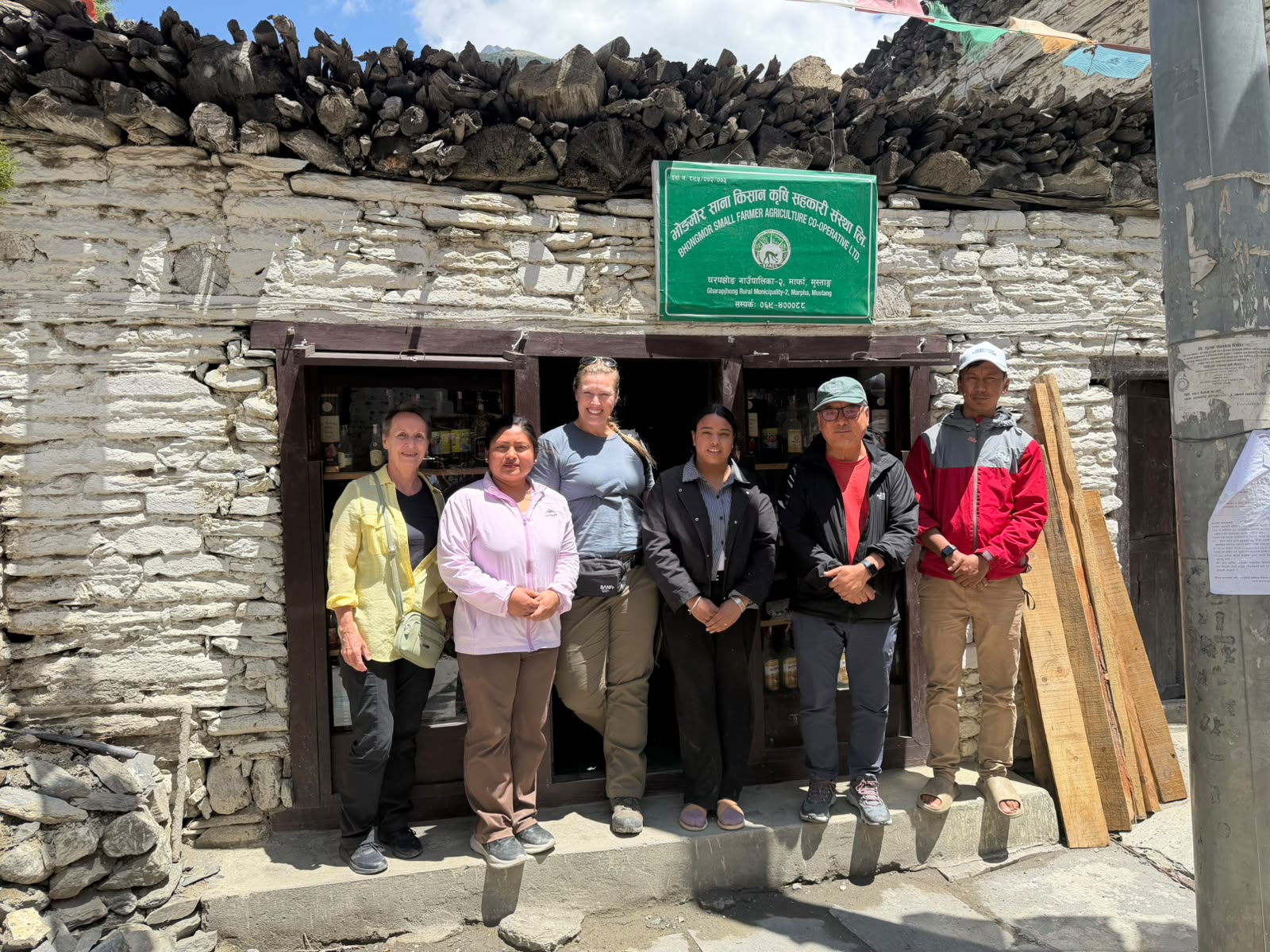
Marpha, a picturesque village in Nepal’s Mustang District, is widely known as the “Apple Capital of Nepal.” Local cooperatives play a vital role in supporting the community’s agricultural economy, connecting farmers with resources, and providing access to small loans. Snow Leopard Conservancy Executive Director Ashleigh Lutz-Nelson and former program manager, now consultant, Charleen Gavette had the opportunity to visit Marpha this summer.
Following the Society for Conservation Biology Congress in June, Snow Leopard Conservancy (SLC) took the opportunity to accompany two of our partners, Dr. Shailendra Thakali and Niraj Thakali, to visit sponsored projects in Lower Mustang. In this District, which lies inside the Annapurna Conservation Area (ACAP), SLC supports three interconnected initiatives: Niraj’s conservation-focused “Community-Based Snow Leopard Conservation Program (CBSLCP),” Teka Samuha Nepal’s complementary education project, and the recently completed Darwin Initiative–funded community conservation and livelihoods program.
Each component of these projects reinforces the other, creating a complete and holistic framework for successful integration of wildlife and ecosystem conservation while also honoring the village’s culture and needs. Our partners work with children in the classroom to build conservation knowledge that spreads to their families, with the herding community to solve livestock loss issues, and with the broader community to diversify economic pursuits, thereby decreasing reliance on livestock as a sole livelihood. Each group overlaps with the other, across generations and social groups simultaneously, reaching an entire village at once.
The site visits for the US-based team are a way to view the projects firsthand and to speak directly with the people affected by the presence of snow leopards, hoping to find meaningful and mutually beneficial understandings and solutions. This area has excellent snow leopard habitat, yet, as livestock herding is a major focus in the area, snow leopards and herders face conflict. Site visits strengthen relationships between SLC and our partners who interact with the communities. It also allows community members to describe their needs directly to SLC, allowing us an unfiltered vision of their lives and needs. This information helps shape future project goals and actions.
Livelihoods
Our first stop was the community of Marpha, a village of stone buildings and cobbled alleyways. Marpha is known for its apple products, such as apple cider, dried apple chips, apple wine and brandy, and other items. The Darwin Initiative–funded project partnered with the Vongmore Small Farmers Agriculture Cooperative — the district’s largest, with 540 women members — to brand local apple products with snow leopard imagery, connecting the sale of those products directly to conservation. Branded packaging materials are being created which will carry the snow leopard image and the slogan, “Small Farmers for Snow Leopard – Committed to Quality, Pure, and Organic Local Products.” Marpha is a tourist location as well as a trekking stop, receiving over 100,000 guests each year. These products will promote the region and support snow leopard conservation.
At the northern end of this valley, near the boundary with the restricted Upper Mustang, lies Thini Village. Upper Mustang, or the Kingdom of Lo, was opened to outsiders in 1992 but with strict limitations to protect and preserve the region’s unique culture and ecosystem. Here we were able to gather with the women developing the Thini Village Himalayan Homestay program. This is a cooperative of households that open their homes for guests, providing meals and lodging. Thini is a tourist destination and a trekking stop, so the potential for success is great. The women-led cooperative is functional with high potential for new revenues linked to wildlife-based tourism but still in its infancy, with the next step being marketing.
To enhance eco-tourism in and around Thini village, the project mapped three themed trekking trails—Thakali Heritage Trail, Nilgiri Round Trail, and the Snow Leopard Trail, which leads to Tilicho Lake via prime snow leopard habitat. Dr. Thakali is currently working with a graphic artist to design 34 storyboards, all describing exceptional aspects of the area, proper environmental behavior, the ecosystem, wildlife in the region, and elements of human-wildlife conflict with methods being employed to reduce it.
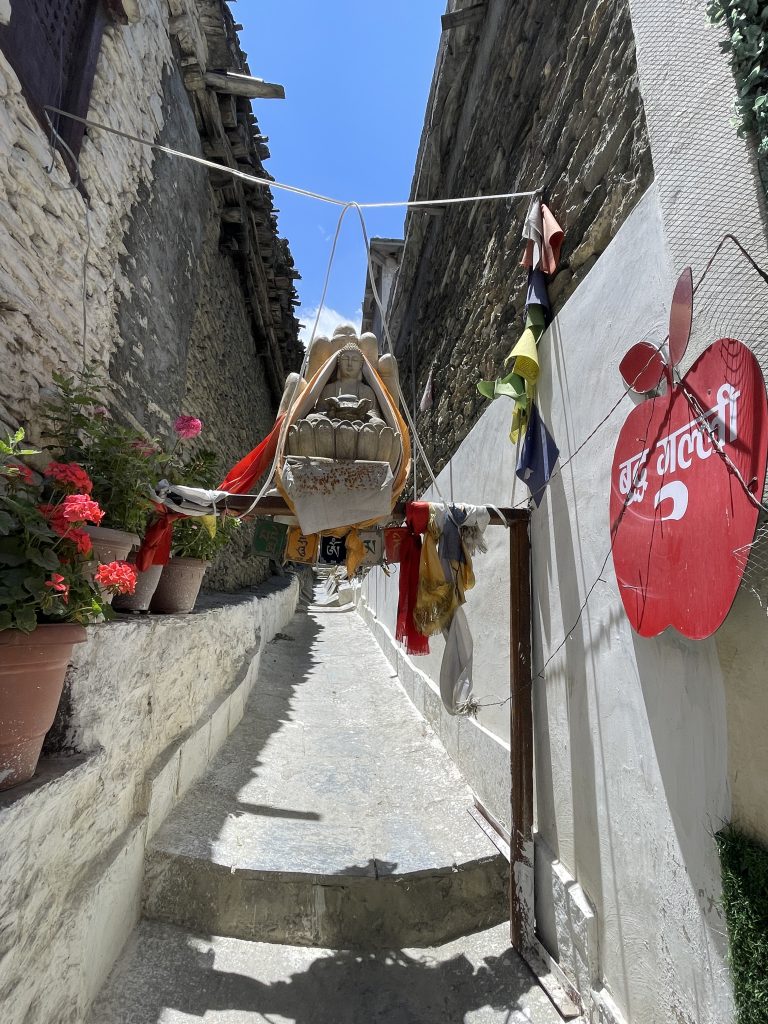
Commercial fruit production in Marpha thrives under unique high-altitude, dry conditions.
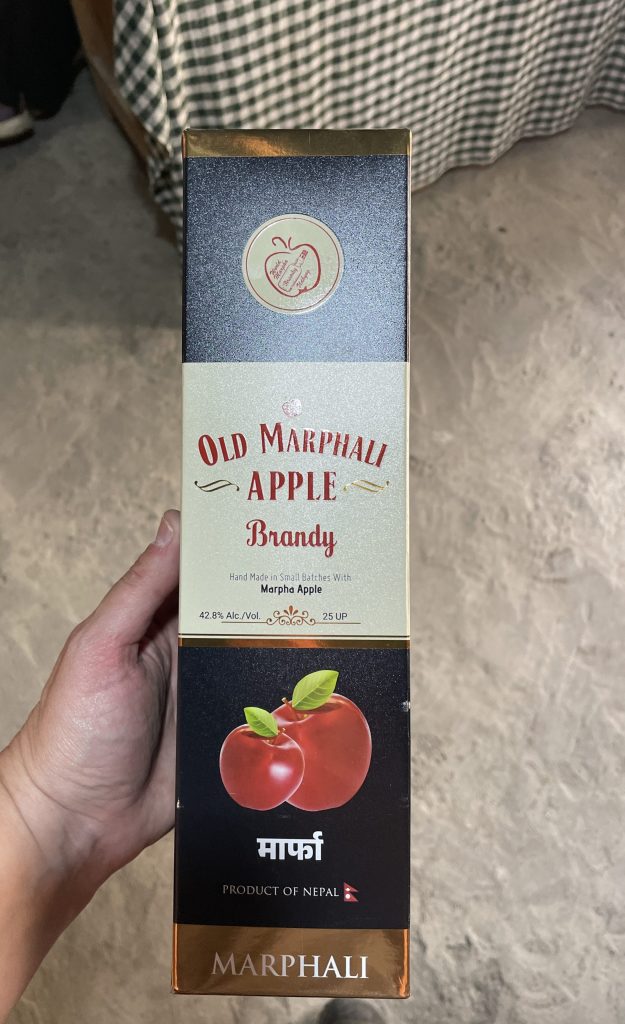
Apple brandy is the signature product of the region. This unaged, clear fruit brandy is distilled using traditional methods combined with fresh Himalayan spring water.
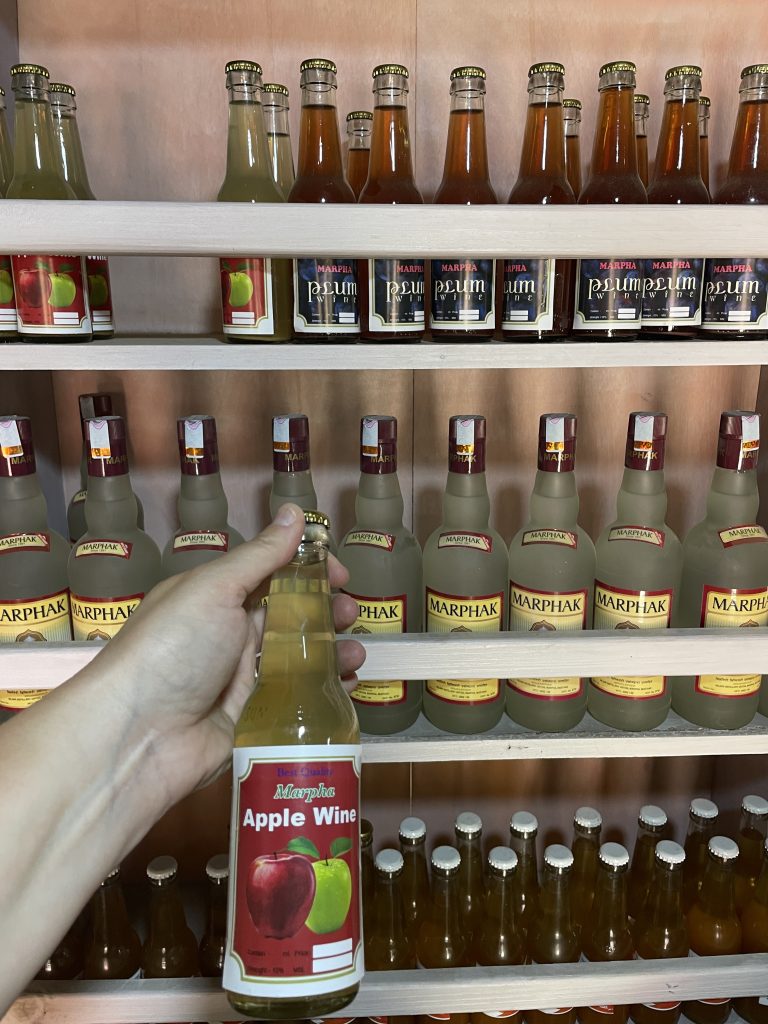
Apple wine is one of several apple products made and sold in Marpha.
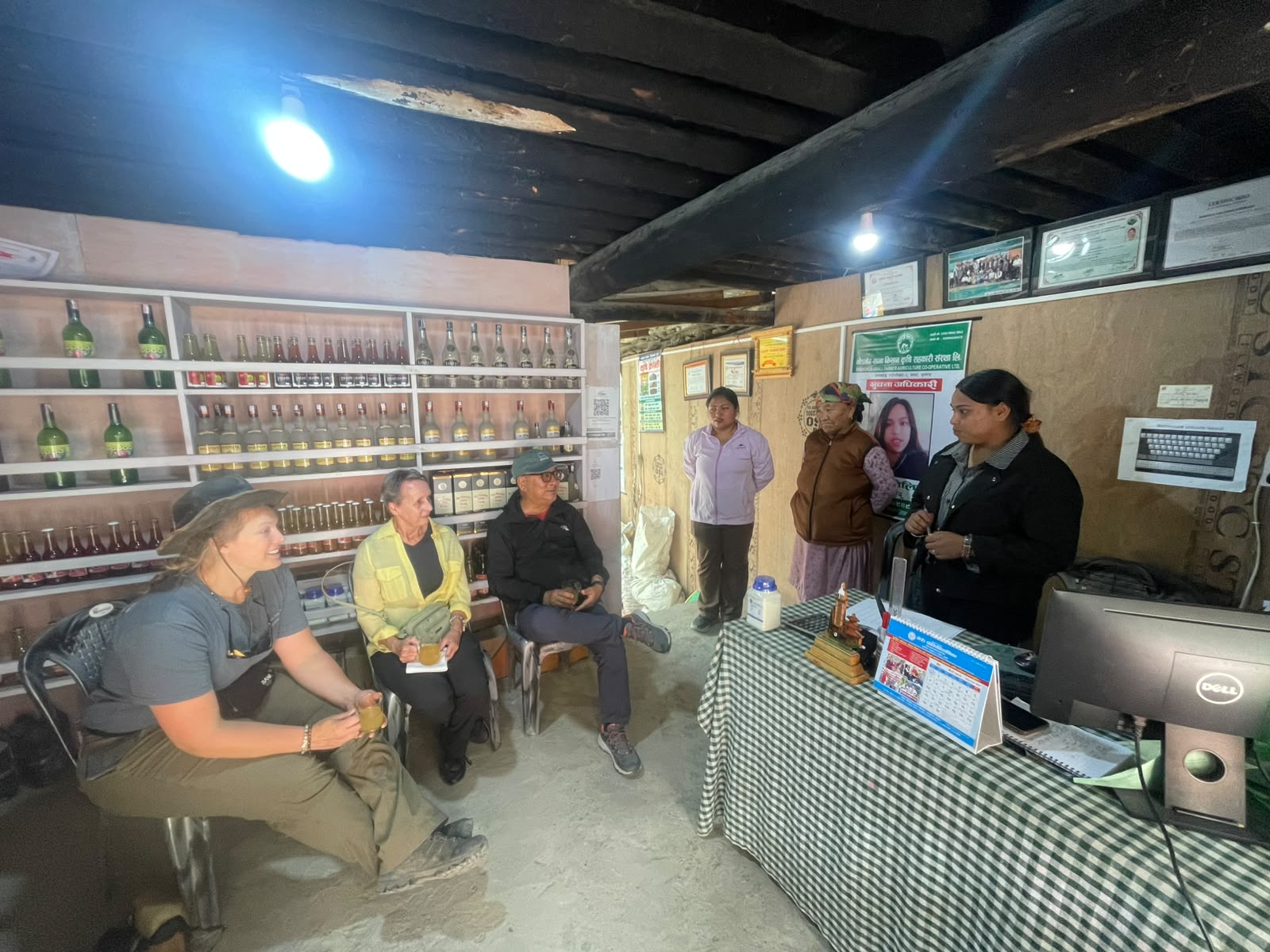
Snow Leopard Conservancy had the privilege of joining a coop meeting. The coops are frequently driven by a strong network of local women.
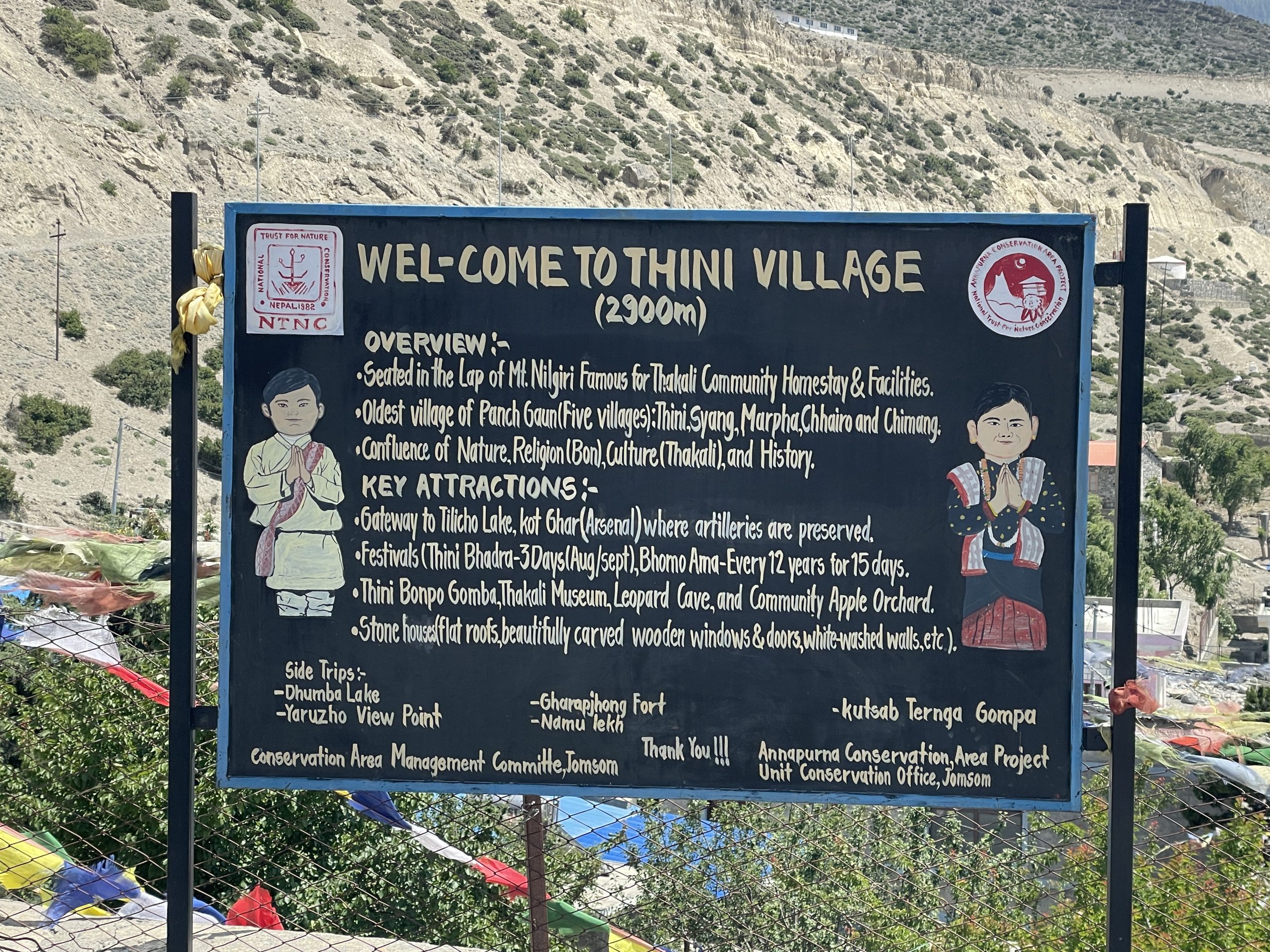
Welcoming visitors to Thini Village, home to a community-based homestay program that supports local livelihoods while offering guests an opportunity to experience Thakali culture and village life.
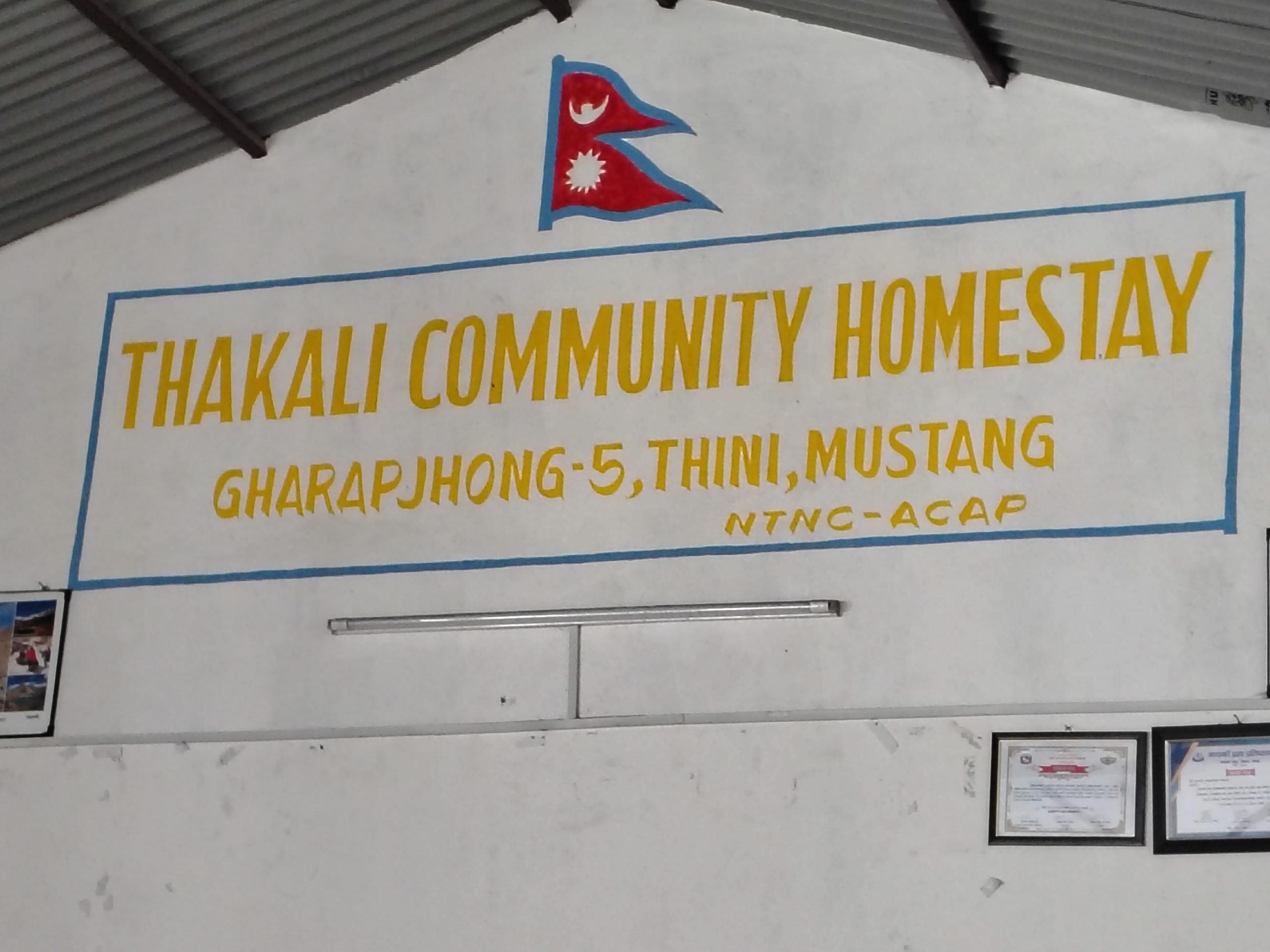
Thini Village Homestay invites visitors to stay in local family homes, eat traditional food, and experience Thakali culture rather than booking a conventional tourist hotel.
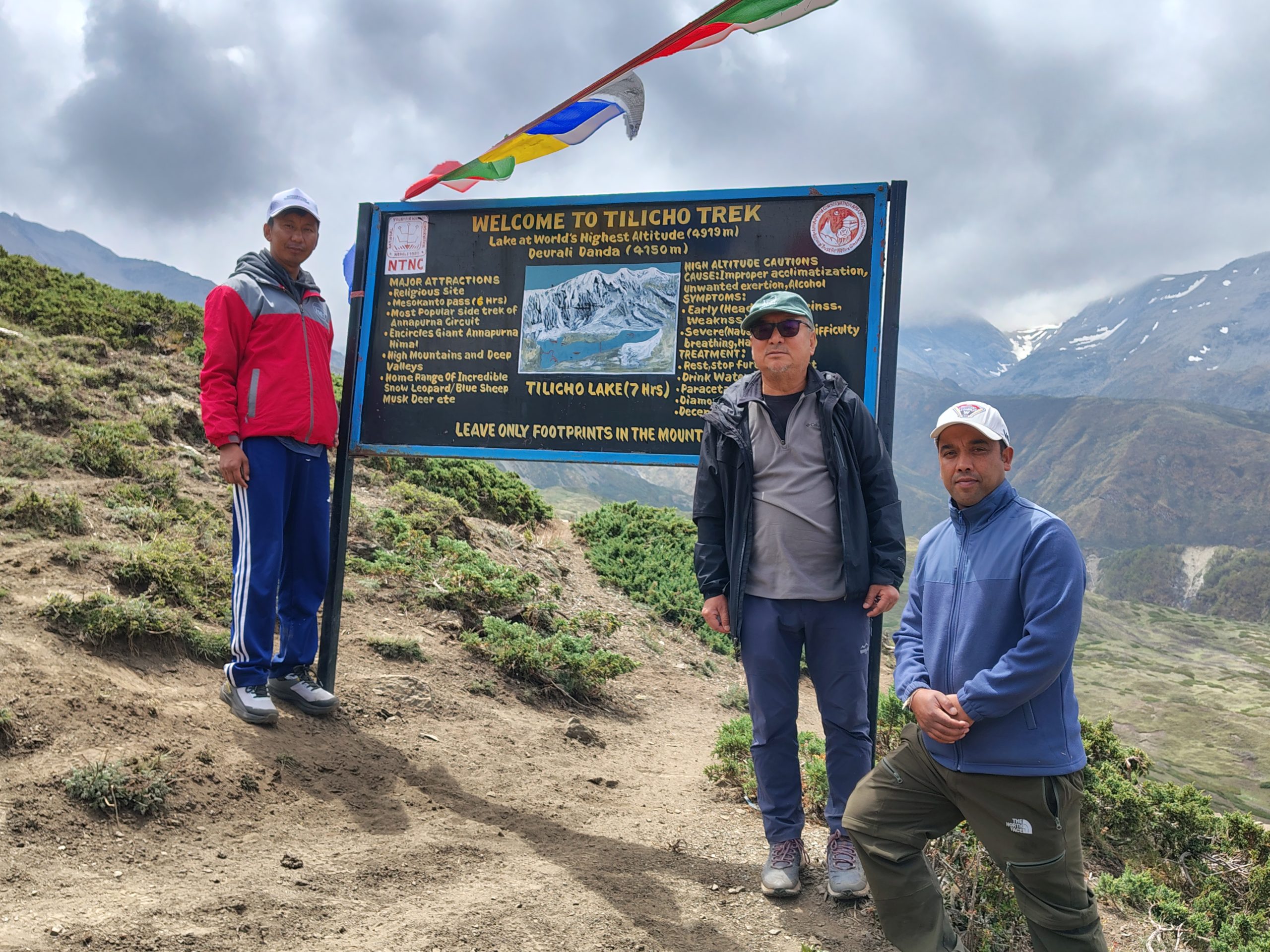
Entrance to the trekking trail above Thini Village, with views across the surrounding mountains of Lower Mustang.
Conservation
While in Marpha, we met with a group of yak herders. They have all received Foxlights from SLC, which are used at the corral sites. The herders are pleased with their functioning, as no yaks have been lost to depredation while in the corrals. However, several herders present became boisterous about losing yak calves to snow leopards once the calves are moved from the nighttime corral protection to full-time pasture living. One herder stated he had lost 31 of 35 calves born that year. They stressed their anger was not at snow leopards directly, knowing the risks being taken when pasturing animals, but at the “inefficient and ineffective “ livestock loss compensation and insurance programs. These programs tend to be very slow to pay, pay only a fraction of the value of the livestock loss, and require burdensome documentation. Exploring ways to keep pastured animals safe is necessary as Foxlights cannot keep free-roaming, wide-ranging herds safe at night.
Above the ancient village of Kagbeni, the gateway to Upper Mustang, we visited the herding pastures of the Phalyak region. Many of the herd owners employ shepherds to tend to the sheep and goats in the high pastures over summer. The shepherds watch the animals during the day, guiding them to the pastures, and in the evening, bringing them back to the corrals. There is a small community-like setting of 5-10 corrals and shepherds in the central area. Mr. Niraj Thakali has worked with the owners and shepherds to ensure the herds are safe from wolves and snow leopards during the night, thus keeping both from retaliatory killing should they prey on livestock. Niraj distributes Foxlights, devices that emit a random light pattern throughout hours of darkness, imitating the presence of humans to deter predator attacks at the corrals. He also works with the community to construct predator-proof corrals, enclosures with full walls and roofs that prevent entry to a predator. Since the Foxlight distribution and corral improvements, this area has not had any depredation events.
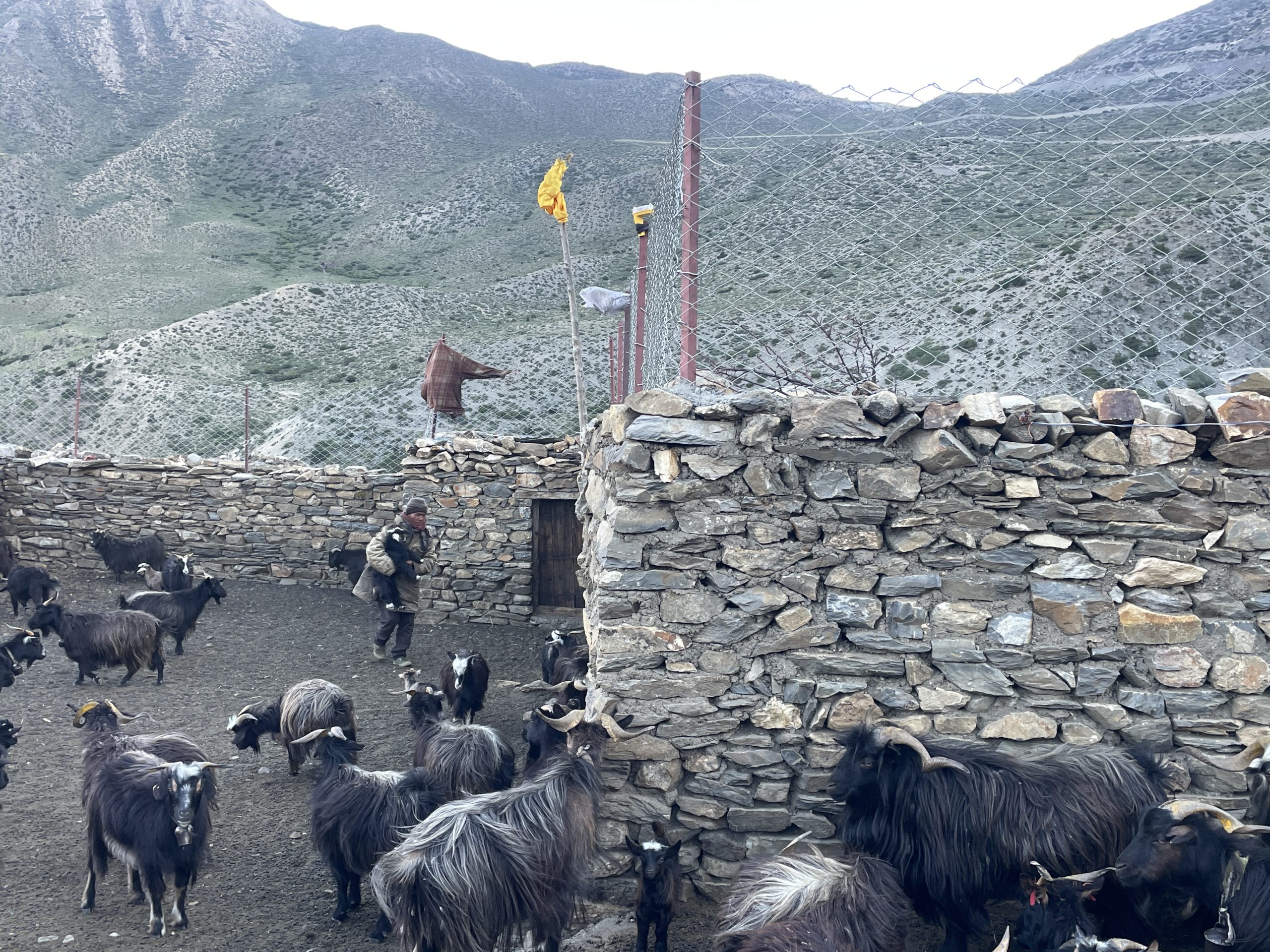
A Foxlight (yellow object on top of center stake) over a goat corral in Phalyak helps protect livestock by discouraging predators from approaching at night — a low-cost, nonlethal tool that supports coexistence between herders and wildlife.
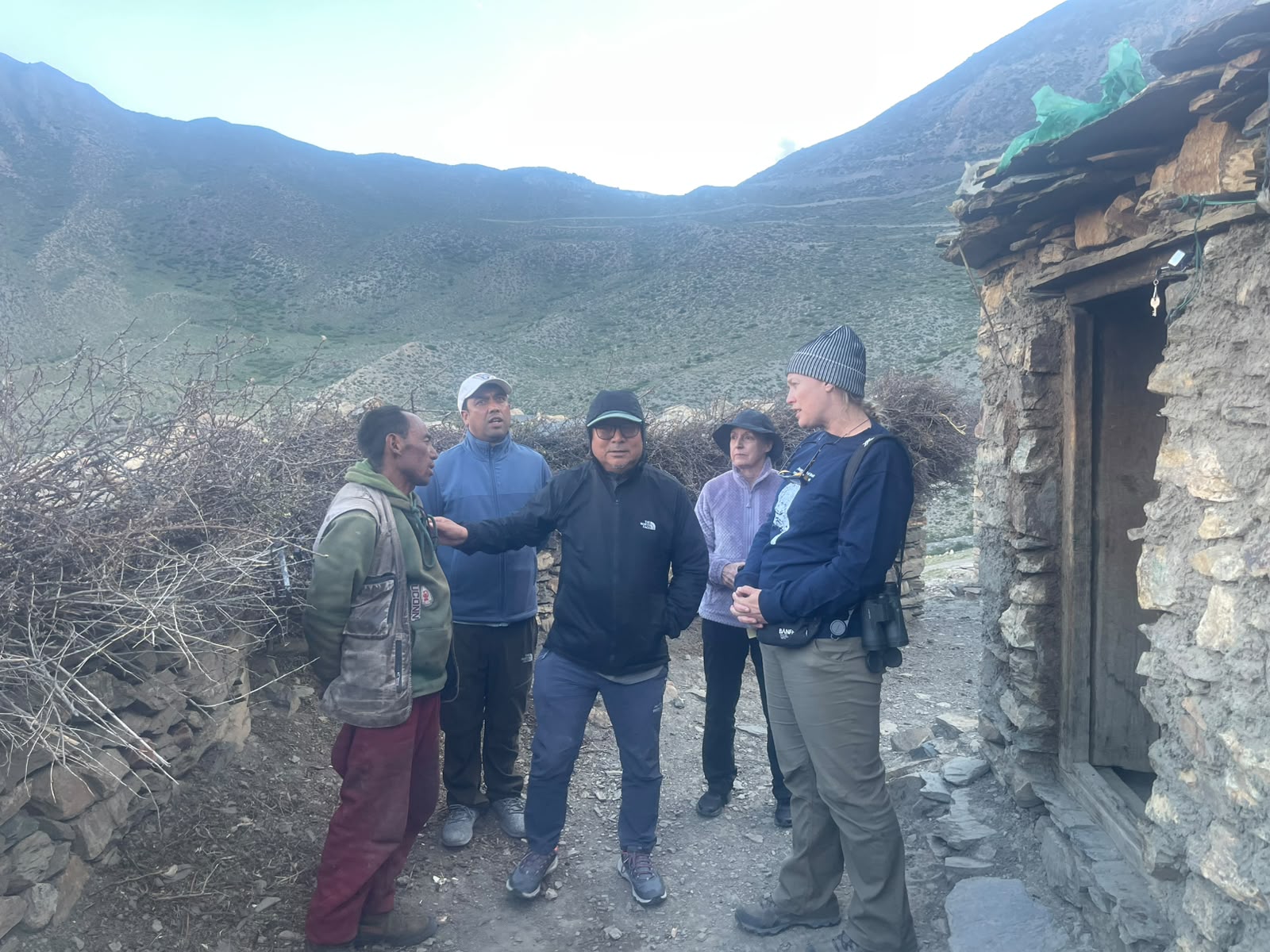
Snow Leopard Conservancy had the opportunity to meet with herders at a corral cluster in Phalyak, learning firsthand about livestock management, predator pressures, and the challenges of living alongside snow leopards.
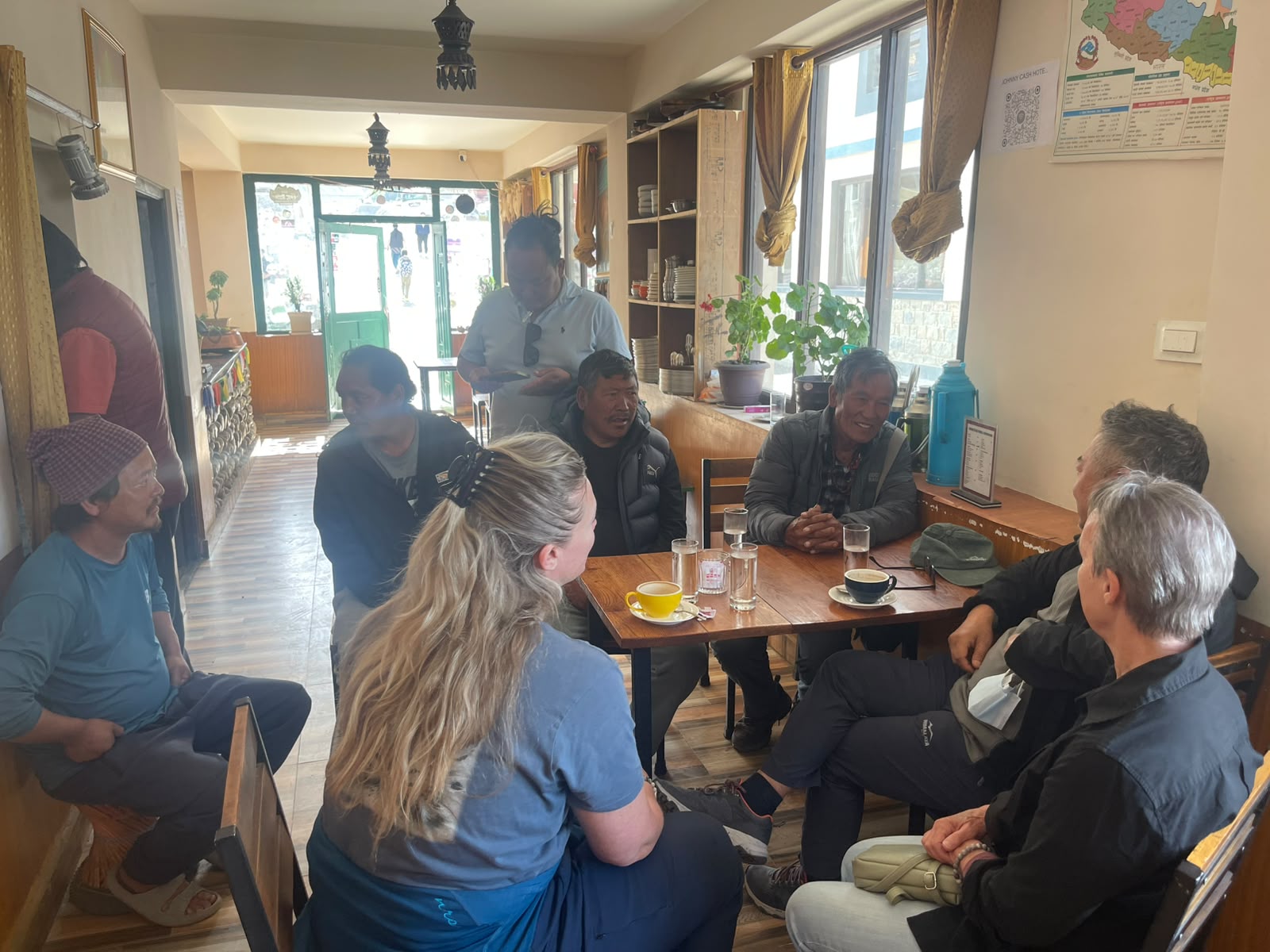
Herd owners in Kagbeni gather to share experiences and discuss practical approaches to protecting livestock and reducing conflict with wildlife.

Following a mass depredation event, this corral was reinforced with a wire roof cover after a snow leopard gained access through a hole in the previous roof.
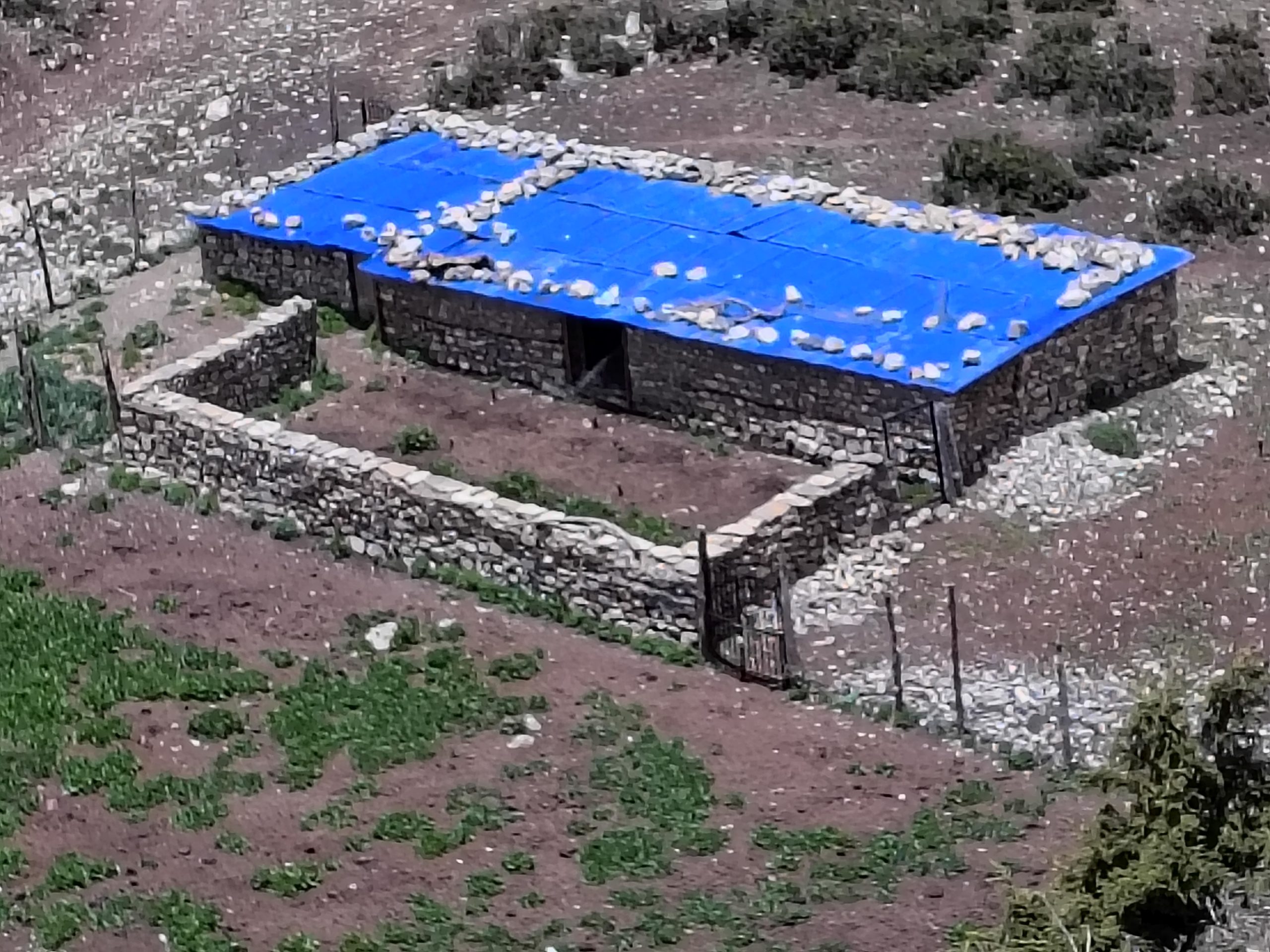
This predator-proof corral uses reinforced walls and a covered top to help keep livestock safe from snow leopards and other predators.

High-elevation summer corrals provide shelter and protection for livestock during the seasonal grazing period.

Snow Leopard Conservancy is honored to sponsor these predator-proof corrals, helping safeguard livestock and support coexistence between herding communities and wildlife.
Education
In Thini, we were able to greet a former Snow Leopard Scout as he was tending his goat herd in the summer pastures, alongside his canine shepherd. As a youth, he had been a member of the SLC-sponsored Snow Leopard Scouts. After obtaining a scholarship for further schooling and completing coursework, he chose to return to his home village and raise goats, using the conservation management knowledge the Scouts program had given him. He was very generous in praising the Scouts program.
The Guanpalika Chairman, roughly the equivalent of a mayor, in the same area informed us that snow leopard conservation is being incorporated into the government school curriculum and will become part of the regular school testing program. Our current sponsored snow leopard conservation education is an extra-curricular activity. Although it is highly regarded and students want to take the classes, it is voluntary, and the schools do not require testing on material comprehension.
As we began the return to Kathmandu, we had the opportunity to meet with the ACAP district chairman and a ranger in the town of Jomsom, the hub of Gharapjhong Rural Municipality. Also joining us were a teacher leading the curriculum and two students. The information they all shared reinforced the earlier news we had received that snow leopard conservation will become part of the full school curriculum and that our education partner Anil Adhikari’s good work in creating conservation textbooks for grades 6-8 will be used as a basis. The teacher and students were very supportive of the textbooks and coursework Anil has created and felt it was valuable in improving local understanding of snow leopards and their protection.

A former Snow Leopard Scout tends his goat herd in the high summer pastures, accompanied by his canine shepherd—a familiar partner in the daily work of herding livestock in the mountains.
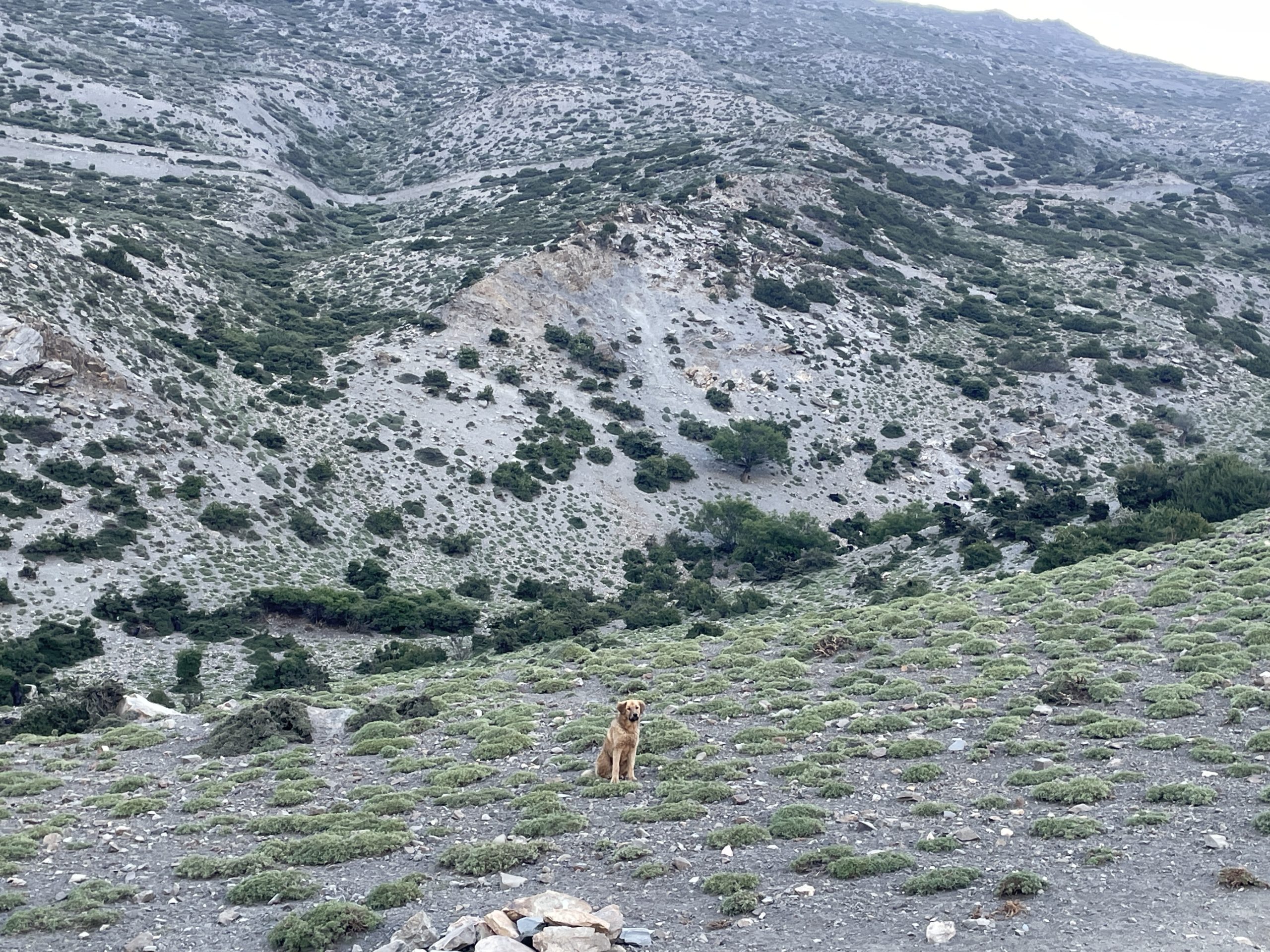
A livestock guardian dog at a corral cluster in Phalyak, helping protect herds from predators in the surrounding landscape.
Conclusion
This trip allowed us to observe the results of the years of hard work from our partners. The snow leopard / conservation education books are being incorporated by the local governments into the official curriculum; the herders are extremely pleased that depredation at the corral sites has been greatly reduced or eliminated; and individuals within the community are taking advantage of initiating new livelihoods that benefit their economic standing as well as the general community’s. So much has been gained, yet there is still more to do.
We left Mustang with a much greater understanding of the region and the realities of daily living. Seeing firsthand the landscapes, listening to the people navigating the threat snow leopards pose to their livelihoods, meeting with the authorities who can influence regulations, and witnessing the abundant work already completed and in progress, has strengthened our position that working with communities to protect and celebrate snow leopards is a strong path forward to ensure that both the villages and snow leopards, and by extension, the ecosystem thrive.
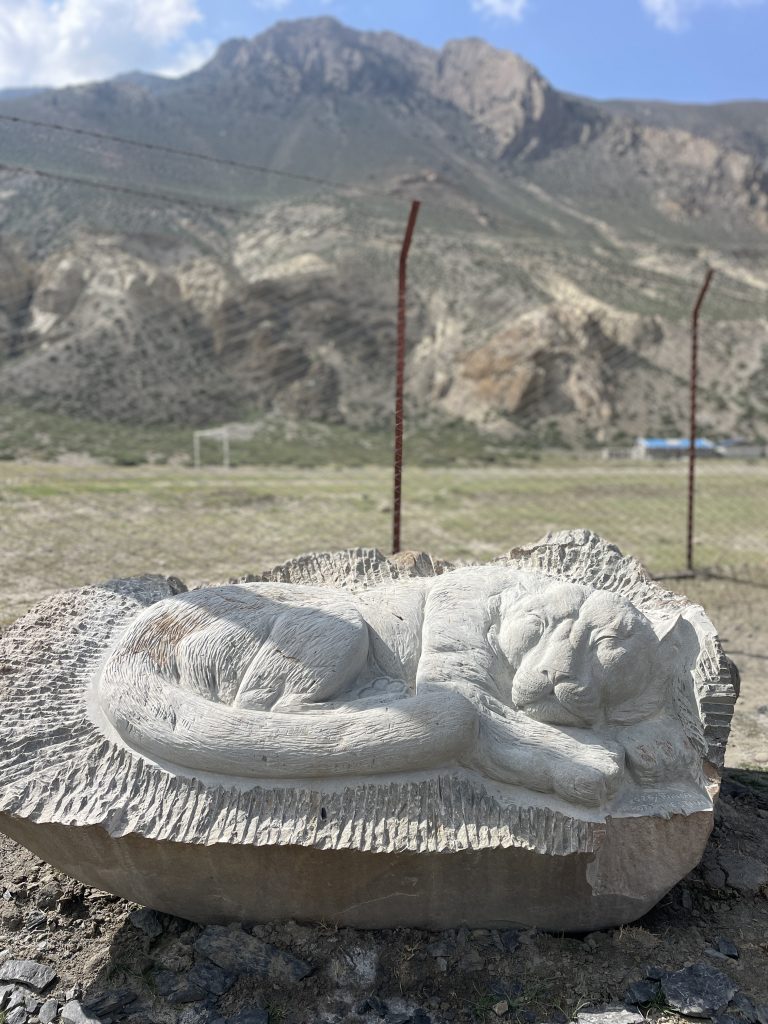
A sculpture of a snow leopard in Jomsom, reflecting the species’ cultural and conservation significance in the Mustang region.
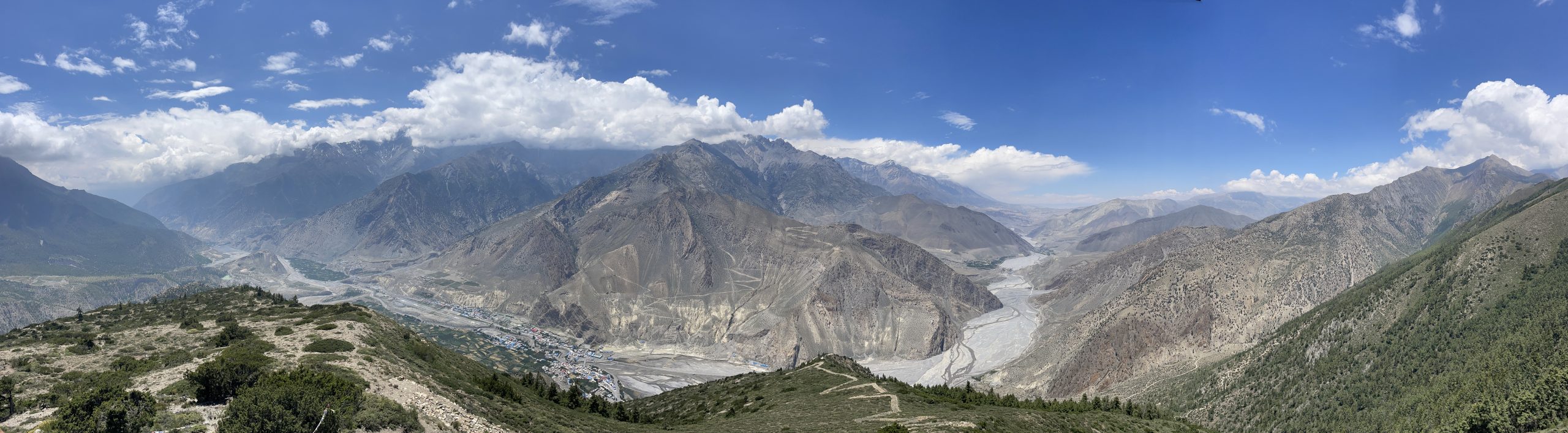
Across the mountains of Mustang, people and wildlife remain deeply connected to the land — an enduring relationship at the heart of efforts to build a future where communities and snow leopards can thrive together.
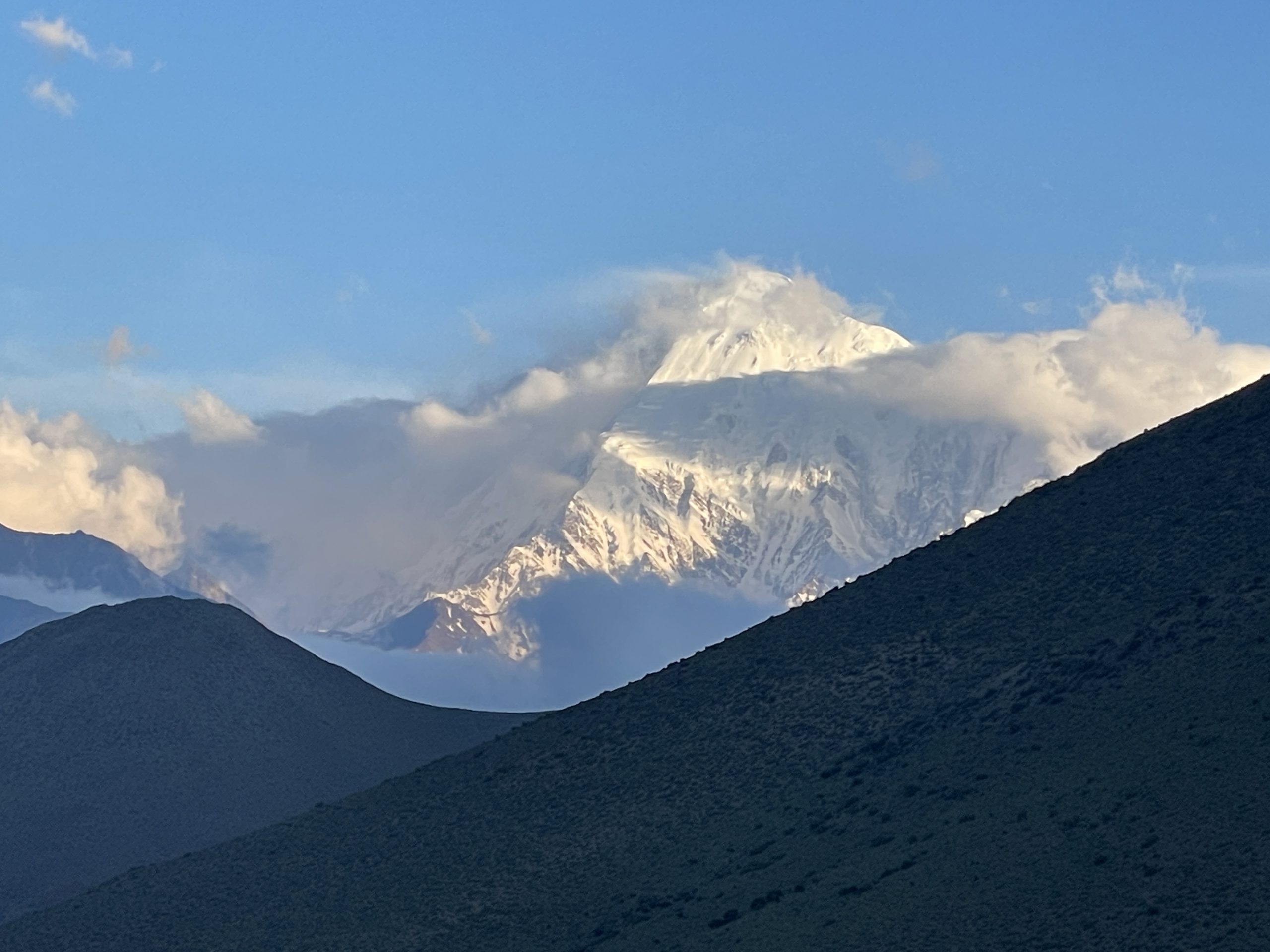
It was a privilege to spend time in this extraordinary part of Nepal, and Snow Leopard Conservancy left Mustang with deep gratitude — and the hope of returning again soon.