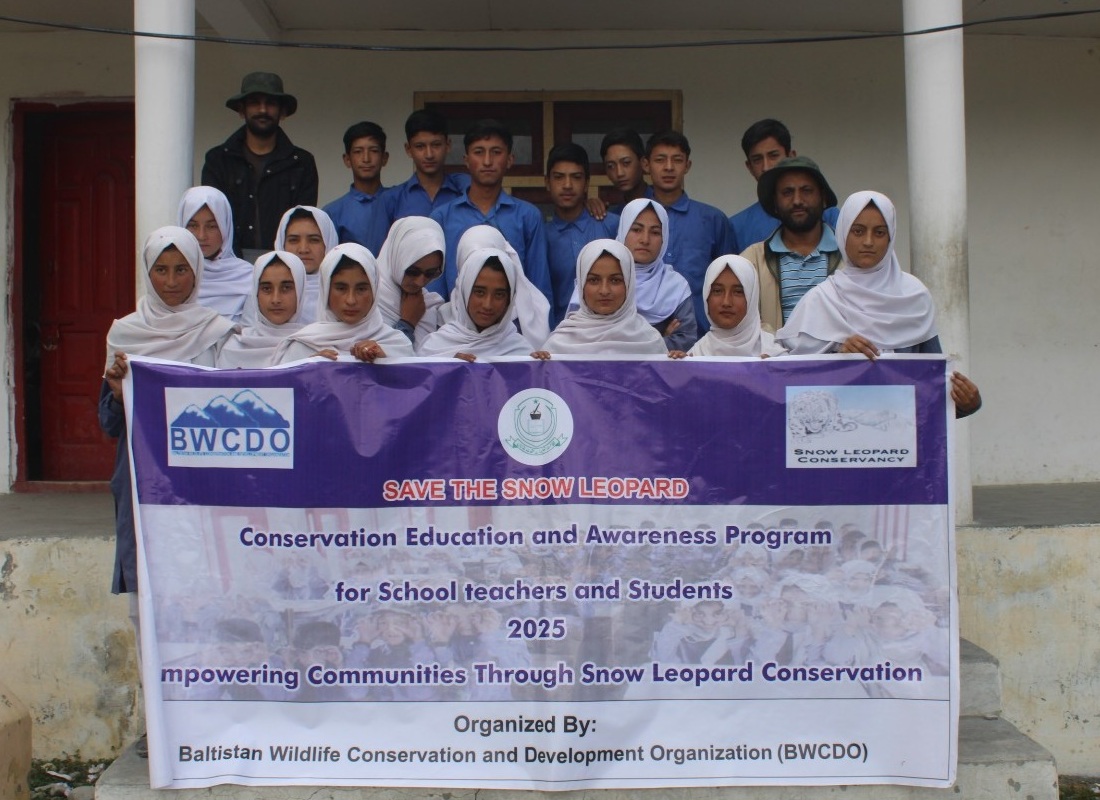
School children participating in wildlife conservation education in Basha, Pakistan – BWCDO
Embracing an all-encompassing approach, the Baltistan Wildlife Conservation & Development Organization (BWCDO) works in close collaboration with local communities of Gilgit Baltistan, Pakistan, for the conservation of snow leopards and their prey. BWCDO engages in a wide array of activities. They include camera trap and wildlife monitoring training and implementation, repair of predator-proof corrals, classroom and field educational opportunities, livestock vaccinations, and community events celebrating wildlife and the snow leopard.
Wildlife Conservation Monitoring
Training Session
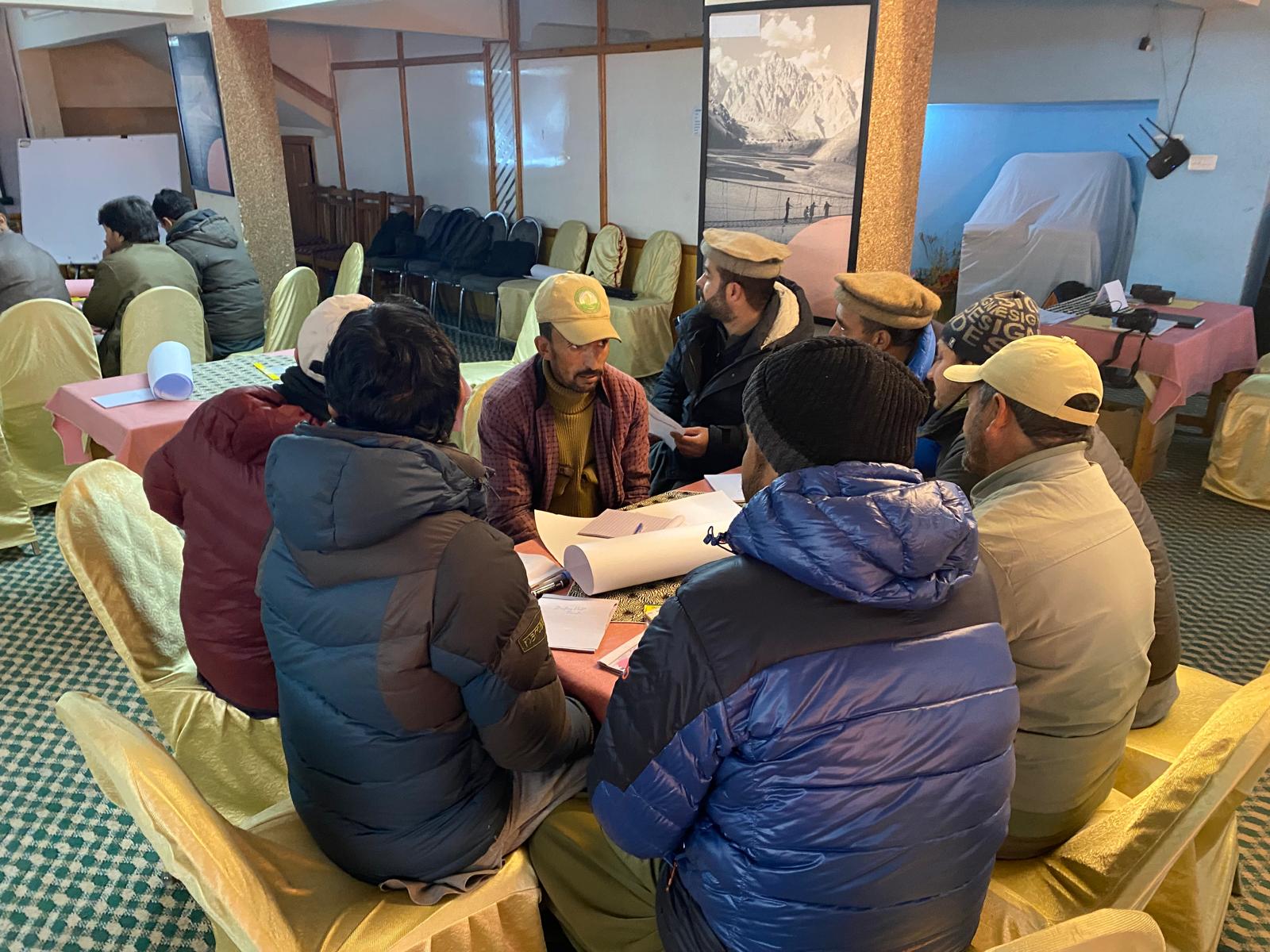
Local conservationists and wildlife field staff participate in a wildlife conservation monitoring training session – Photo: BWCDO
BWCDO conducted a one-day training session in Skardu, Pakistan, focusing on a variety of monitoring techniques. These included camera trapping, double observer, acoustic, scat collection, and sign surveys. Instruction also covered mapping, ethical field practices, species identification, and habitat assessment. In addition, participants received practical instruction on setting up and maintaining camera traps.
Government wildlife field staff and local community conservationists took part in the training that emphasized the importance of community-based conservation. BWCDO training facilitators tasked participants with evaluating and critically analyzing the work of conservation organizations. Building on that, the facilitators asked them to identify the key problems facing conservation and offer possible solutions. Participants were then to determine which organizations were best suited to solve these issues.
Local herders shared acquired knowledge about maintaining predator-proof corrals. Based on their personal experiences, they encouraged the practice of rotational grazing, utilizing the corrals, to prevent overgrazing and soil erosion.
Structurally, the session involved interactive discussions and activities designed to better understand the integration of scientific approaches with Indigenous practices and how they can complement each other in protecting local wildlife.
The day concluded with closing remarks by Forest and Wildlife Conservator Khadim Hussain and Director of the Central Karakoram National Park Raja Abid Hussain. Both speakers emphasized the importance of the community’s role in wildlife monitoring. They also stressed the need to integrate Indigenous Knowledge with modern scientific techniques.
Camera Trapping

Members of BWCDO setting up a camera trap in Pakistan to monitor populations and distribution of wildlife, including snow leopards and their prey species – Photo: BWCDO
BWCDO deployed 24 camera traps in five valleys over the course of 2024 and 2025. The trail cameras captured both pictures and videos of the snow leopards, markhor, red fox, wolves, and birds. The team utilized AI software to analyze the camera trap images and videos. The results contributed to the population assessment of the snow leopards in the region.
Predator Proof Corrals
The BWCDO team repaired two corrals damaged by heavy snowfall and significant flooding that occurred in 2025. Ten community members worked together to repair the corrals, completing the work in the late fall of 2025.
Conservation Education
BWCDO organized conservation education sessions, both classroom based and field based, in ten schools across three valleys: Hushe, Basho, and Roundo. They designed the sessions so that students could engage in a wide range of activities with an emphasis on group experiences. Education sessions included discussions, lectures, drawing, food web designing, wildlife spotting, nature journaling, and a practical demonstration of using natural resources sustainably.
Classroom Instruction
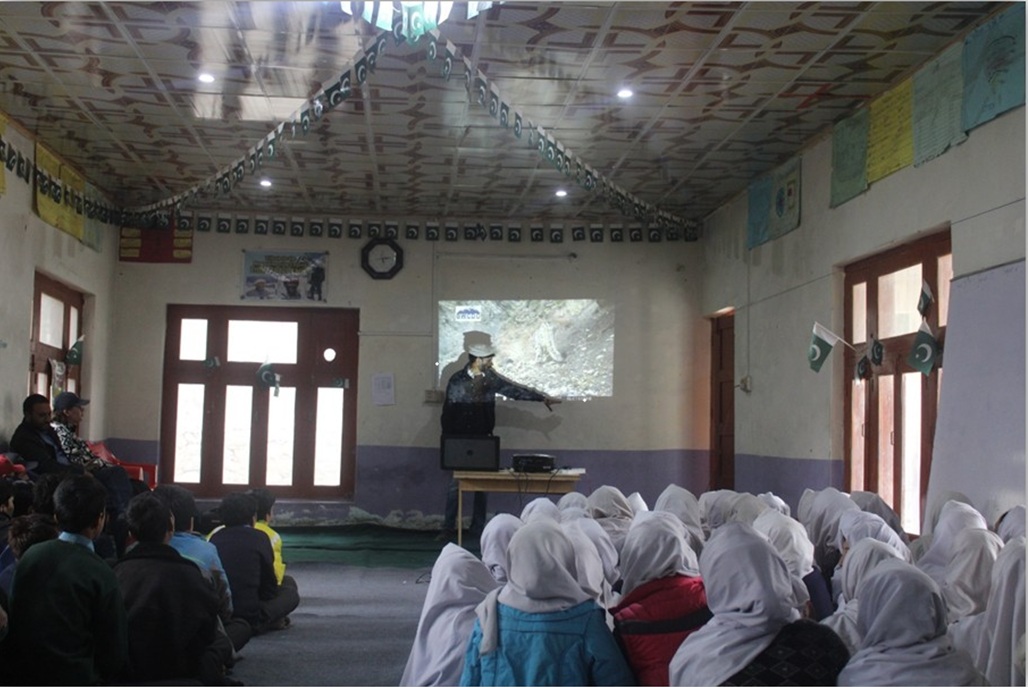
Wildlife film screening by students in the classroom – Photo: BWCDO
In the classroom, students had an opportunity to view a film created from BWCDO camera trap footage. Included were videos of snow leopards, wolves, red fox, markhor, ibex, golden marmots, and birds like magpies and the chukar partridge. BWCDO educators discussed with the students the various behaviors demonstrated by each animal as well as the ecological importance of these animals.
Outdoor Field Activities
BWCDO provided conservation education field activities for 207 students in 2025, which included nature journaling, wildlife spotting, and participatory games. Students used binoculars and a spotting scope to locate and identify wildlife.
Livestock Vaccinations
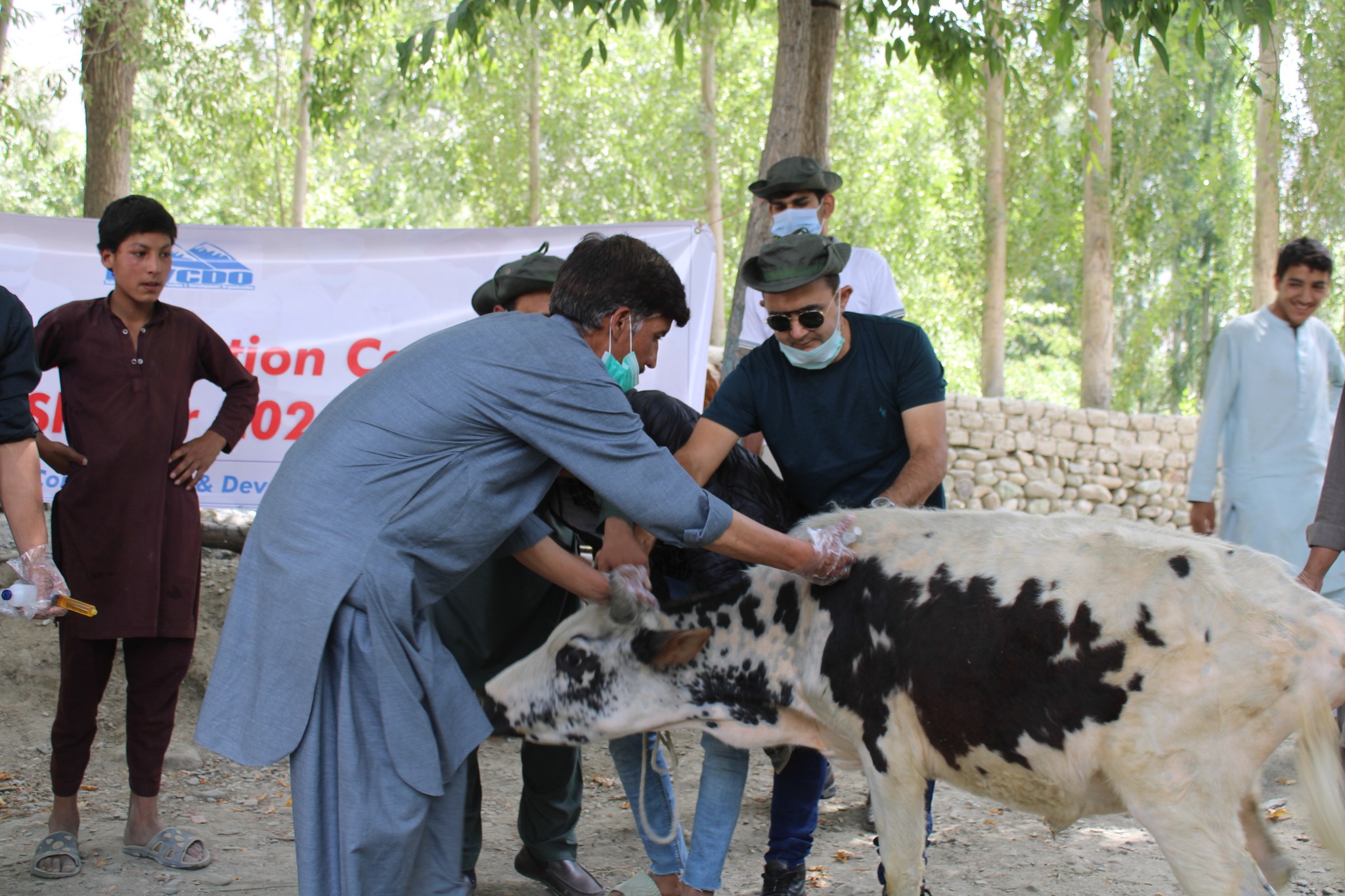
Administering vaccinations to livestock in Pakistan – Photo: BWCDO
Due to an outbreak of Hand-Foot-and-Mouth disease in Basha Valley, Shigar, Pakistan, BWCDO began vaccination campaigns. Coordinating with the Government Livestock Department Shigar and Snow Leopard Foundation, the Snow Leopard Conservancy vaccinated 4,618 small-sized livestock and 842 large livestock.
Community Outreach Events
World Wildlife Day 2025
BWCDO enthusiastically celebrated World Wildlife Day 2025 together with representatives from the Government Wildlife Environment & Parks Department, Central Karakoram National Park, and local community members. As part of the festivities, BWCDO organized an “awareness walk” in nearby Skardu. The walk was held to emphasize the importance of wildlife in the region and the need for their conservation.
World Environment Day 2025
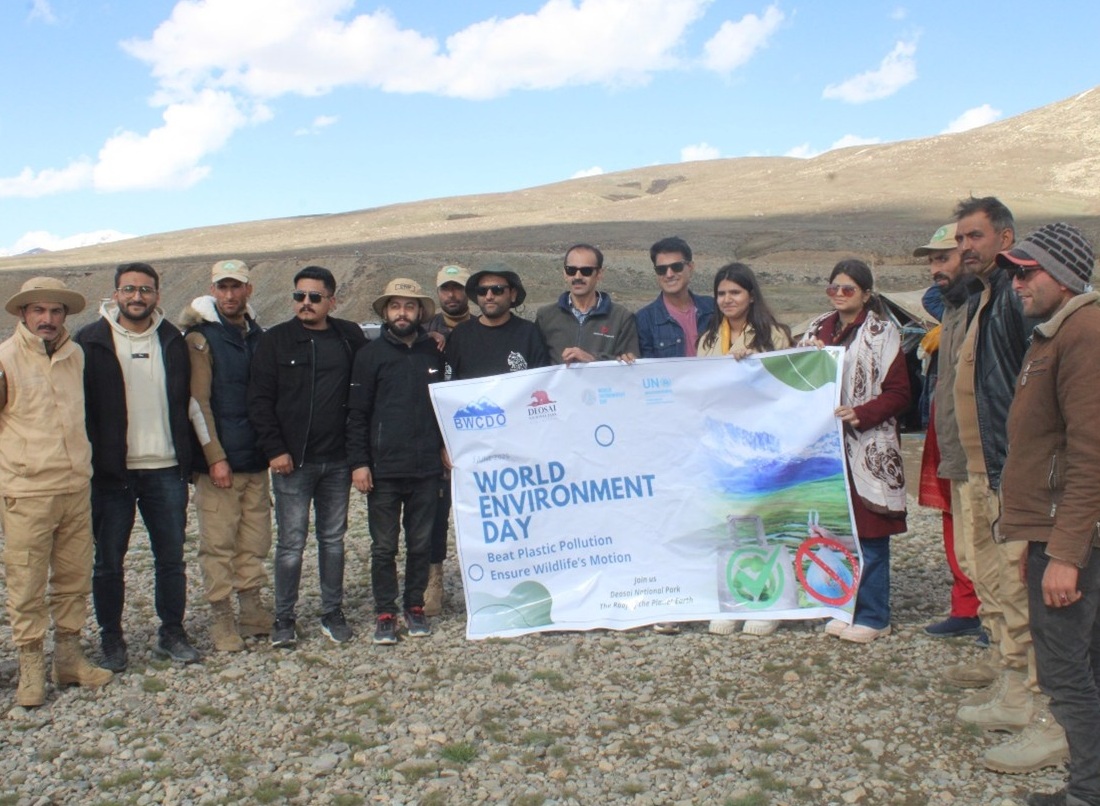
Members of BWCDO celebrated World Environment Day at the Deosai National Park, Pakistan – Photo: BWCDO
BWCDO joined the Government Wildlife & Parks Department, Skardu, in celebrating World Environment Day 2025 at Deosai National Park. Located on the world’s second-highest plateau, the park is home to the critically endangered Himalayan brown bear, Himalayan wolf, and the snow leopard. The event focused on the importance of using biodegradable materials in place of plastic to ensure a healthier planet for future generations. As part of the campaign, BWCDO distributed 150 eco-bags to encourage tourists to carry out their trash. Additionally, a cleanup drive was organized for tourists to learn about the impacts of pollution on the park’s fragile ecosystem.
International Snow Leopard Day 2025
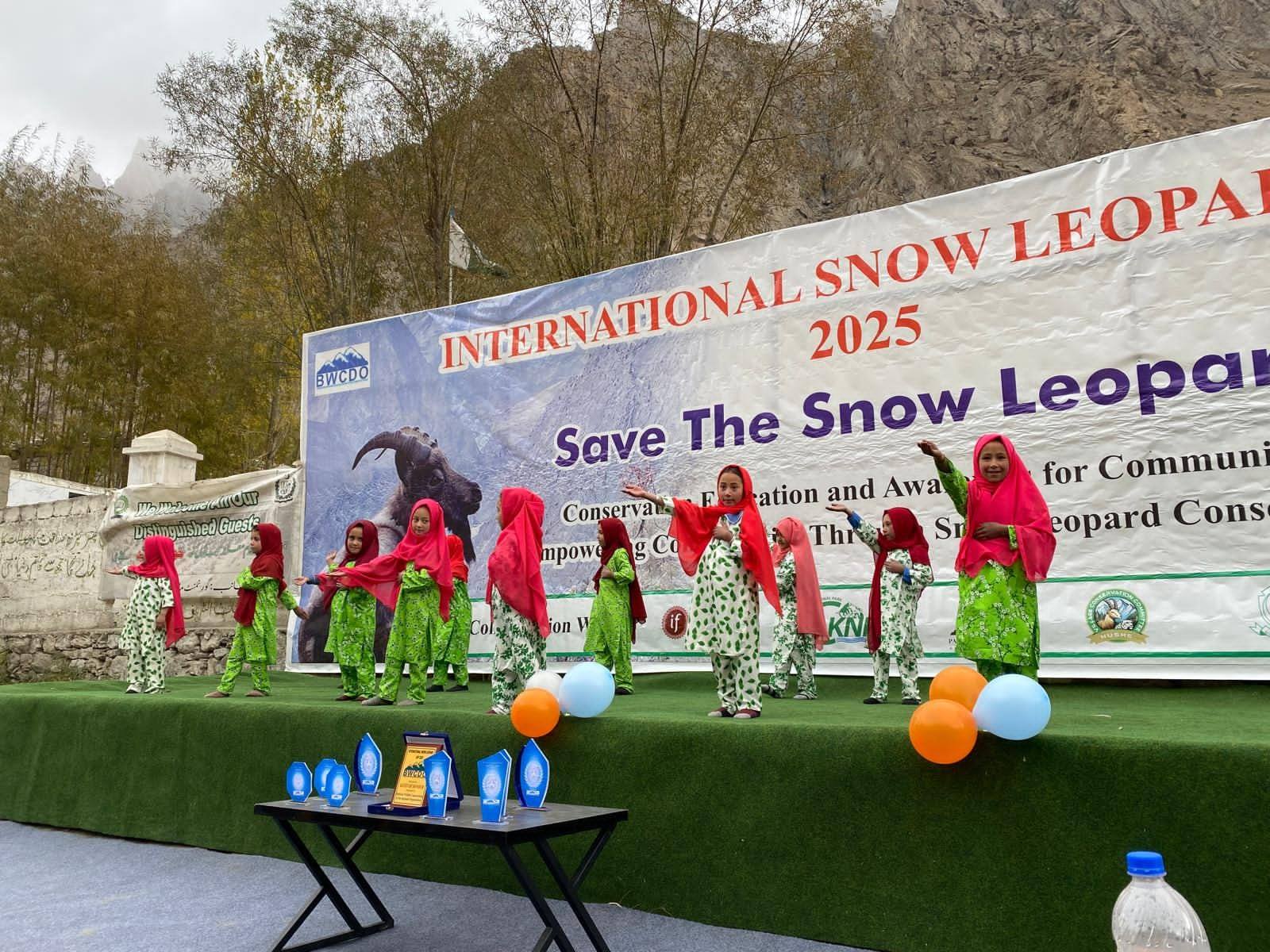
Children perform at the International Snow Leopard Day celebration in Hushe, Pakistan – Photo: BWCDO
On October 25, 2025, BWCDO celebrated International Snow Leopard Day in collaboration with the Village Conservation Committee of Hushe. Representatives of the Wildlife Department, Central Karakoram National Park, and Forest and Parks Department attended the festivities. A special highlight of the event was recognizing four local conservationists for their efforts to conserve snow leopards and their prey over the past two decades.
A positive outcome of the BWCDO’s all-encompassing approach to snow leopard conservation is clearly evident in the Hushe project area where four snow leopards were seen on a single frame of a camera trap video. This local community is now actively inviting wildlife photographers for snow leopard sightings, and ecotourism has begun to generate income across the region. As a result, community attitudes toward snow leopards are improving, with increased recognition that snow leopards and other wildlife contribute to sustainable livelihoods.