As more Himalayan wildlife require lifelong human care, Mr. Thevar represents SLC’s expanding mission to ensure positive welfare for all animals, whether in the wild or in human care – Photo: Kartik Thevar
Empowering the Caretakers of Himalayan Wildlife
In 2026, we are expanding our One Health – One Welfare program to a new, often overlooked, facet of conservation. As climate change, human development, and other anthropogenic factors increasingly put pressure on the high mountain ecosystem, we see more human-wildlife interactions. These can often lead to injury, displacement, and habituation of wildlife. At times, rescued animals are unable to survive on their own in the wild. While rescuers make every effort to ensure animals remain in their natural habitat, they cannot release some individuals for their own health and safety. Instead, those animals in human care become ambassadors to their wild counterparts.
Caretakers at many Himalayan animal facilities dedicate themselves to wildlife, but they often work with limited resources. They would benefit from enhanced training opportunities to meet international care standards. Many are eager to expand their knowledge of modern animal welfare principles, husbandry techniques, enrichment, and training methods. This is where SLC and new partner Mr. Kartik Thevar have identified an opportunity to support under-resourced Himalayan zoos, their animal care professionals, and, in turn, the wildlife they care for.
Exciting New Collaboration
We are pleased to support Mr. Kartik Thevar, a zoologist with strong expertise in animal welfare and behavioral husbandry. He will be partnering with the Sikkim Himalayan Zoological Park (HZP) in Gangtok, India. Working directly with zookeepers, veterinarians, and zoo management personnel, Mr. Thevar will provide educational resources and training. He will also evaluate how the HZP can advance their level of care for Himalayan animals that cannot return to the wild. Through hands-on training and mentorship, Mr. Thevar will help establish best practices that ensure these remarkable animals not only receive excellent care but thrive as ambassadors for their species.
Creation of a Comprehensive Care Manual
As part of this training program, Mr. Thevar will develop a comprehensive care manual that compiles global best practices in animal care and presents them in a format that is both accessible and locally relevant. The manual will include specific care guidelines tailored to high-altitude wildlife, addressing the unique needs and challenges of caring for these species in mountain environments. Beyond this initial partnership with Sikkim’s Himalayan Zoological Park, the manual will serve as a resource to help expand the project to other zoological facilities, strengthening animal welfare standards across Himalayan zoos.

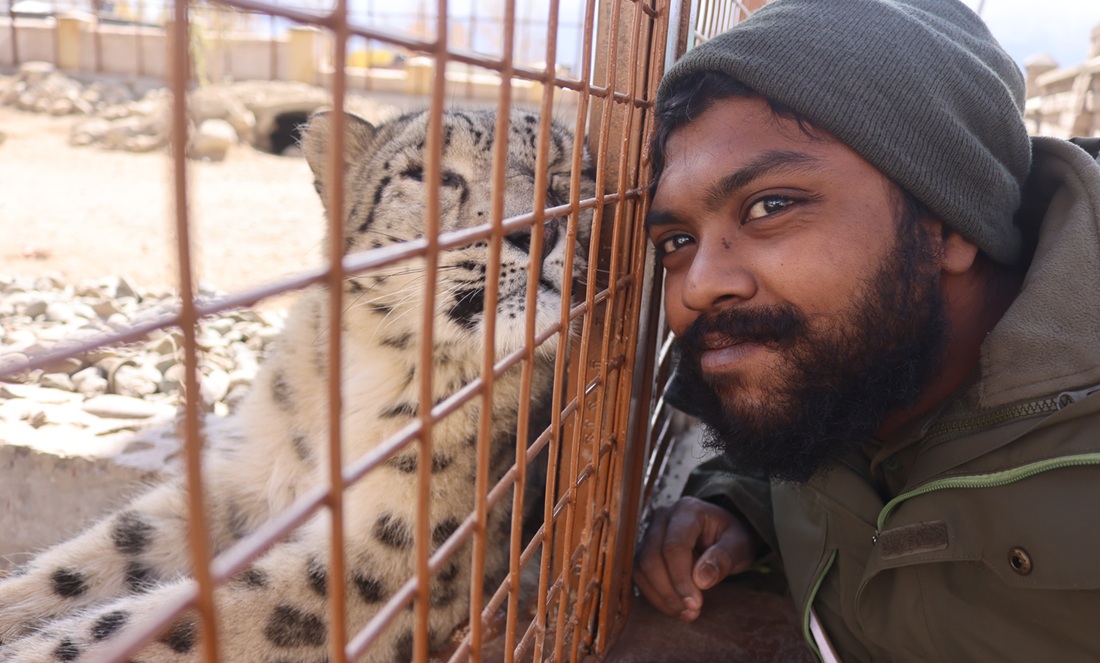
Zoologist Kartik Thevar works with a snow leopard at a Himalayan wildlife facility – Photo: Kartik Thevar
Gaining a Better Understanding to Enhance Long-Term Care
In addition to working directly with the staff, Mr. Thevar will also conduct a collaborative review of the zoo’s animal collection and management systems. This will help enhance the welfare and conservation outcomes for the species under care. The review will focus on understanding how animals come into the zoo, whether due to injury or conflict, or if they were born within the zoo as part of a managed breeding program.
For rescued wildlife, Kartik will work with the zoo team to better understand and support existing evaluation and decision-making frameworks. These are used to determine whether an animal can be successfully rehabilitated and released or if long-term care is in its best interest. By understanding the situations that bring wild animals into human care, SLC can identify critical intervention points where proactive conservation measures might prevent these instances from occurring in the first place.
This new partnership represents Snow Leopard Conservancy’s commitment to ensuring positive welfare for all animals and that all wildlife are protected, whether they are in the wild or within human care. By bridging the gap between field conservation and animal welfare in zoos, we’re taking a holistic approach that recognizes every individual animal matters. Ultimately, the insights gained from those in human care can directly strengthen our efforts to protect wild populations and their habitats.