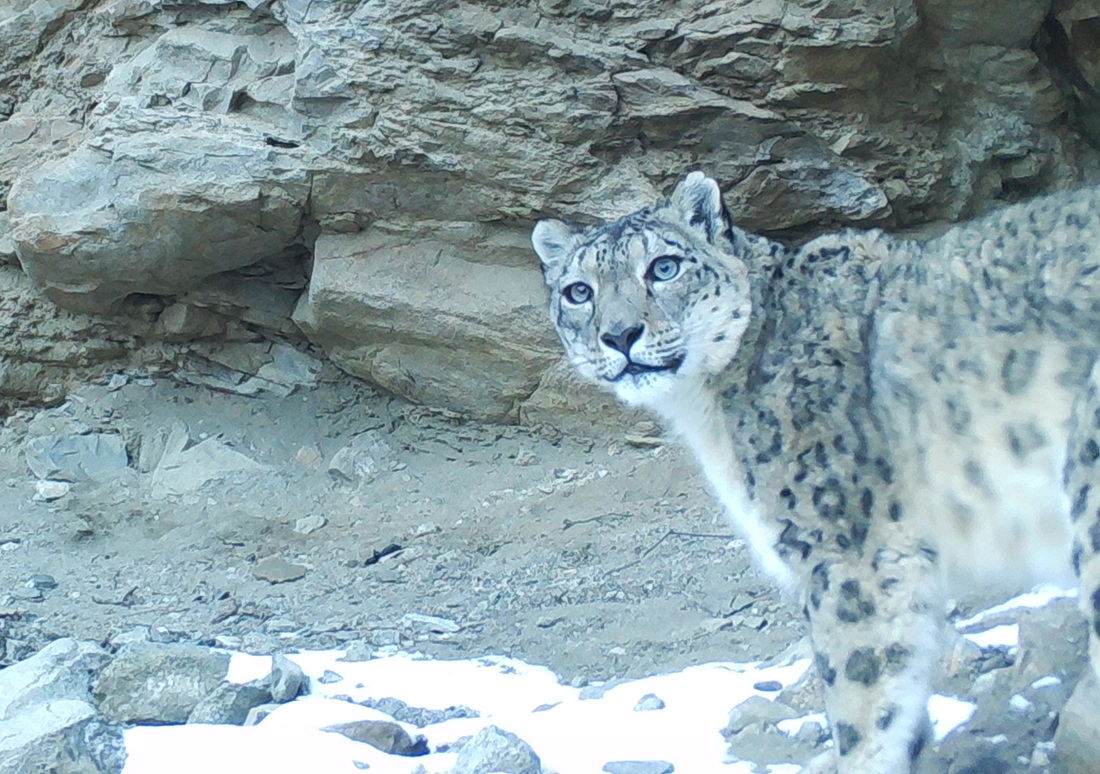
Snow Leopard – Trail Camera Photo: Wildlife Initiative
While Wildlife Initiative’s snow leopard conservation project in the Sutai-Myang Ugalzad corridor has focused on protecting these magnificent cats, their network of trail cameras has revealed how this remote landscape is a biodiversity hotspot teeming with wildlife that few people ever see.
Over the past two years, Wildlife Initiatives’ motion-activated cameras have been capturing intimate glimpses of the secret lives of Mongolia’s wildlife. The results showcase why this ecological corridor between the Sutai massif and Myang Ugalzad National Park is so critical—not just for snow leopards, but for an entire ecosystem of remarkable species.
Pallas’s Cat
Pallas’s Cat – Trail Camera Video: Wildlife Initiative
Beyond snow leopards, Wildlife Initiative’s cameras have revealed a complex carnivore community. Among these exciting discoveries is the frequent appearance of the Pallas’s cat, Otocolobus manul, known locally as “Manul.” These small cats, believed to be the oldest living cat species, live throughout Asia and the Middle East, preferring uplands, hilly areas, and steppes with rocky outcrops. In the study area, Wildlife Initiative has documented Pallas’s cats using the same rocky outcrops and narrow passages favored by snow leopards, suggesting these “stepping stone” mountains provide crucial habitat for multiple carnivore species.
Gray Wolves
Gray Wolves – Trail Camera Video: Wildlife Initiative
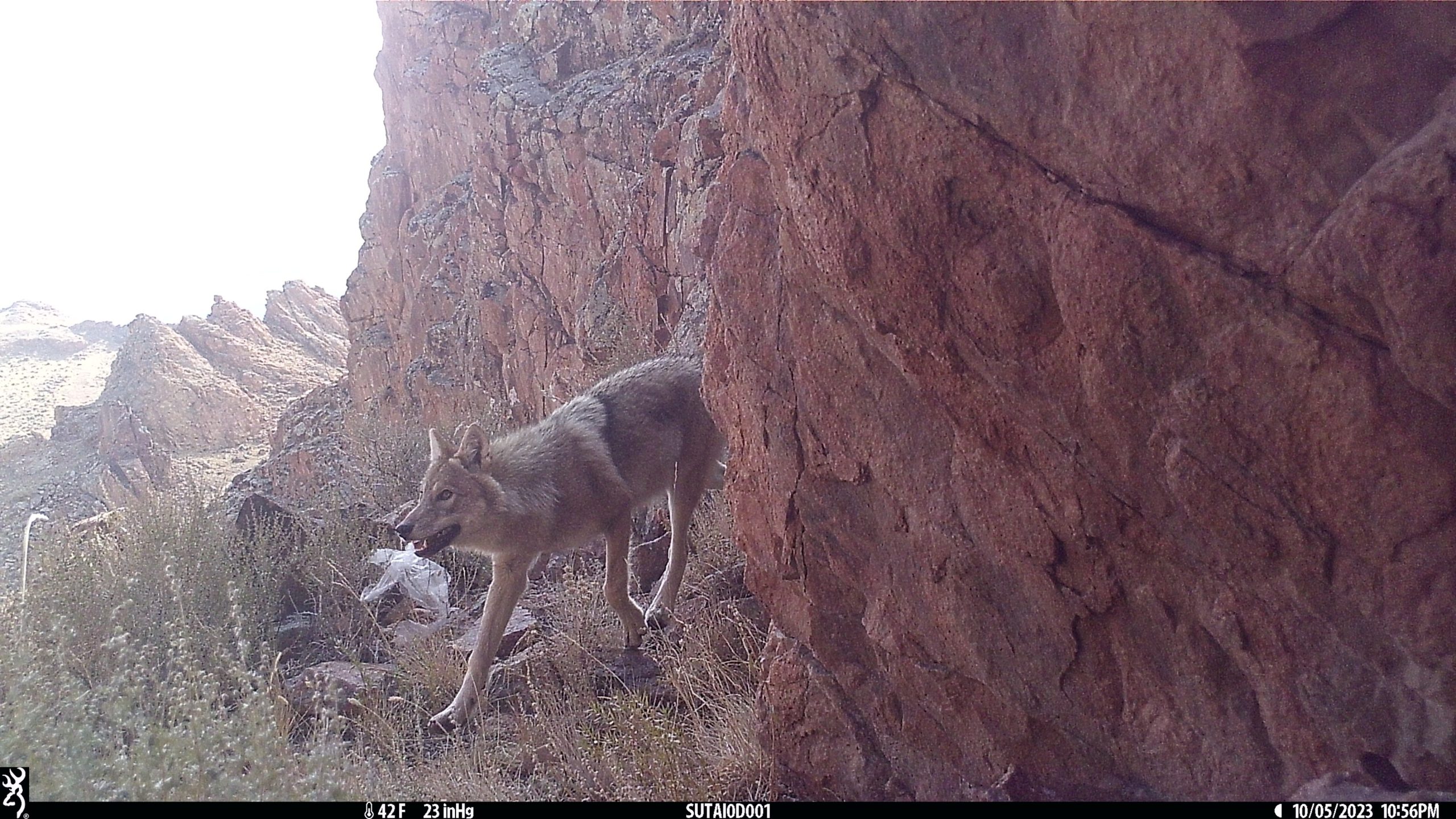
Gray wolves, Canis lupus, have appeared regularly, often traveling in family groups through the mountain passes. These intelligent pack hunters play a crucial role in the ecosystem, though they present greater challenges for local herders than snow leopards. While snow leopards are a primary focus of Wildlife Initiative’s work, wolves are unfortunately even more persecuted than snow leopards due to higher livestock predation rates, yet the same deterrent technologies like Foxlights that protect against snow leopard attacks can be equally effective at reducing wolf-livestock conflicts.
Siberian Ibex
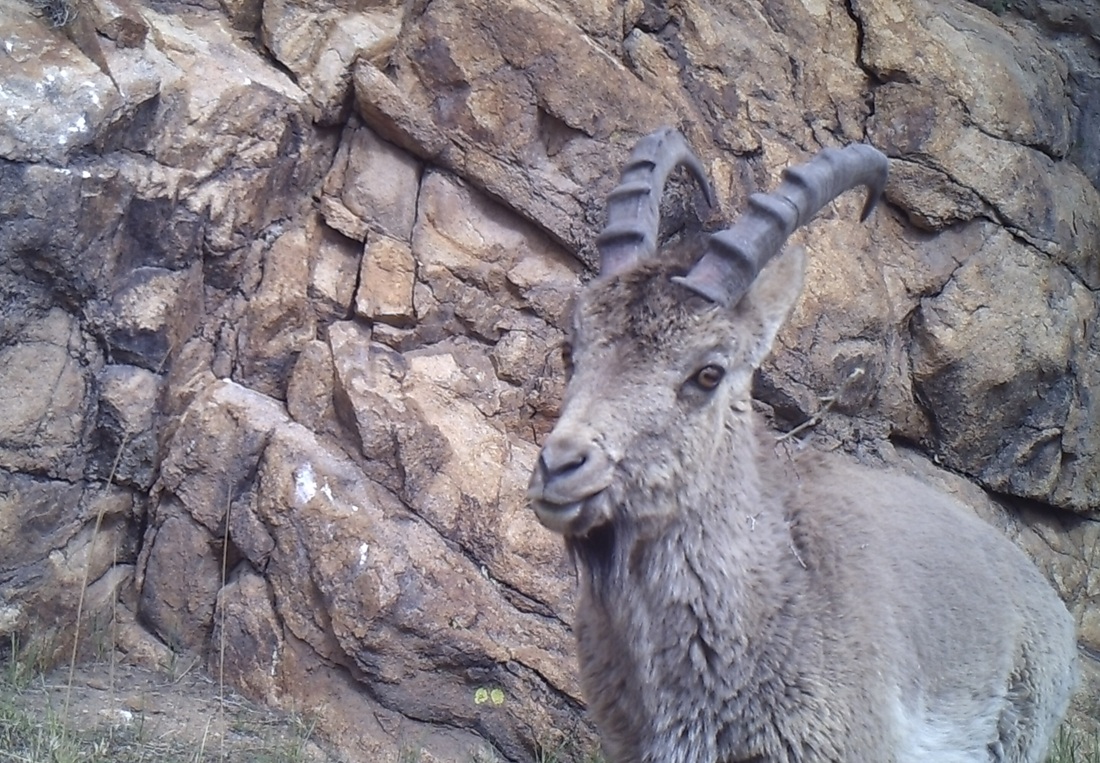
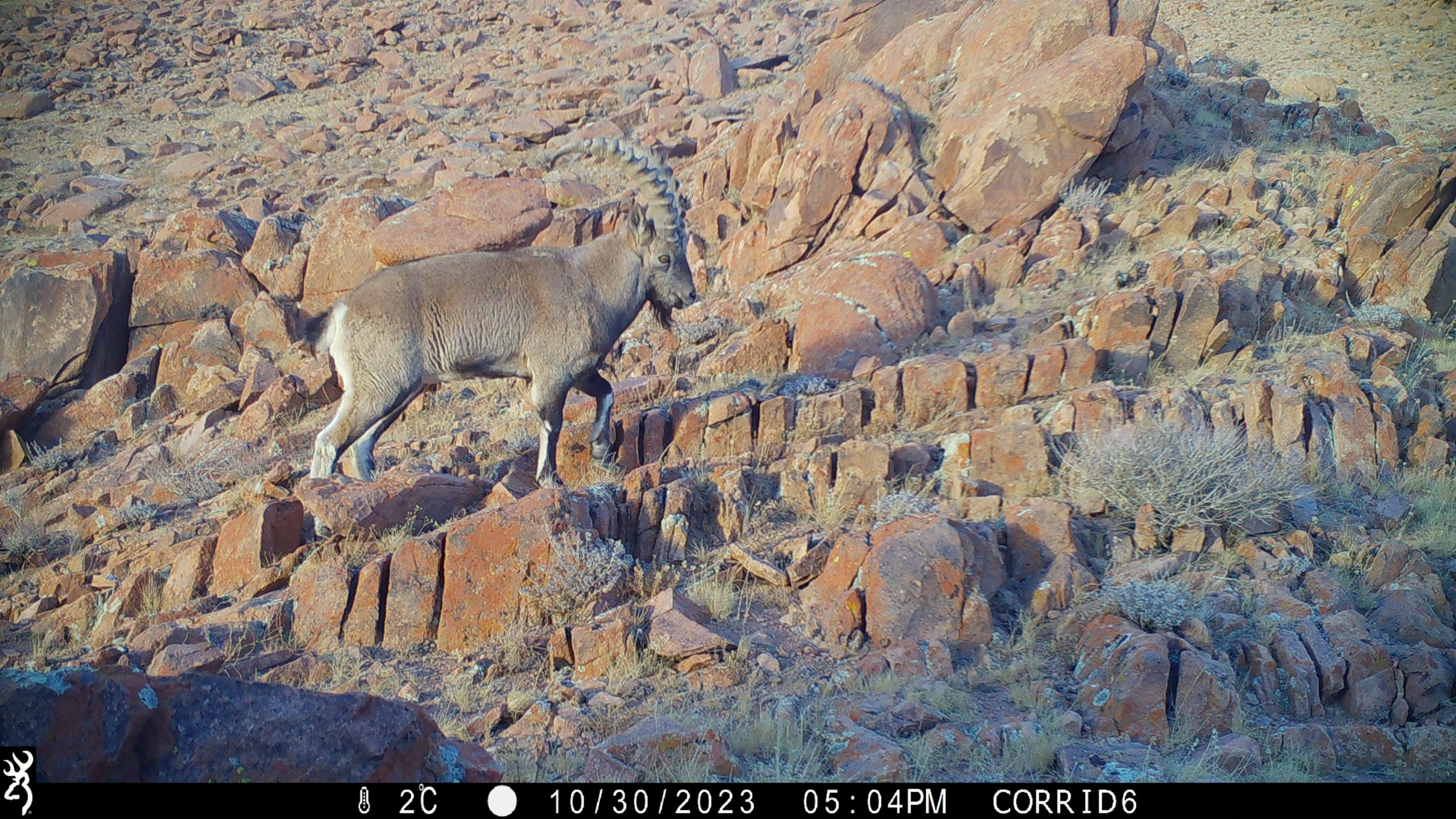
Siberian Ibex – Trail Camera Photo: Wildlife Initiative
The trail cameras haven’t just captured predators—they have revealed the prey species that form the foundation of this ecosystem. These natural prey populations are essential for supporting healthy carnivore communities and reducing pressure on domestic livestock. One of these prey species is Siberian ibex, Capra sibirica. Ibex are wild goats adapted to rugged terrain, rocky habitats, and extreme climates. Living in distinct male and female herds, they inhabit harsh climates at elevations up to 11,000 feet (3,352 meters). Their diet has little nutritional value, so much of the day is spent finding adequate food.
And More!
Pika – Trail Camera Video: Wildlife Initiative
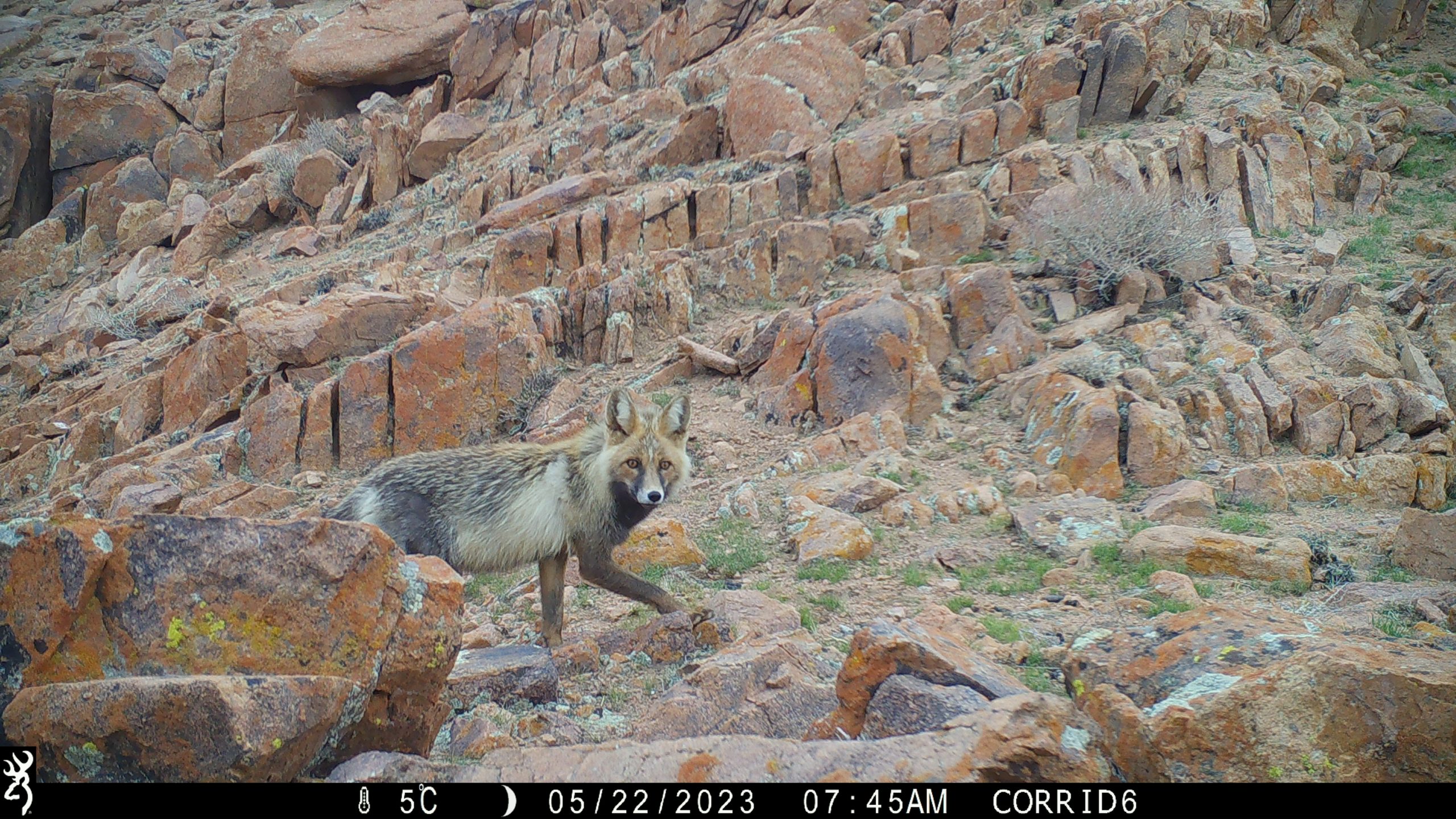
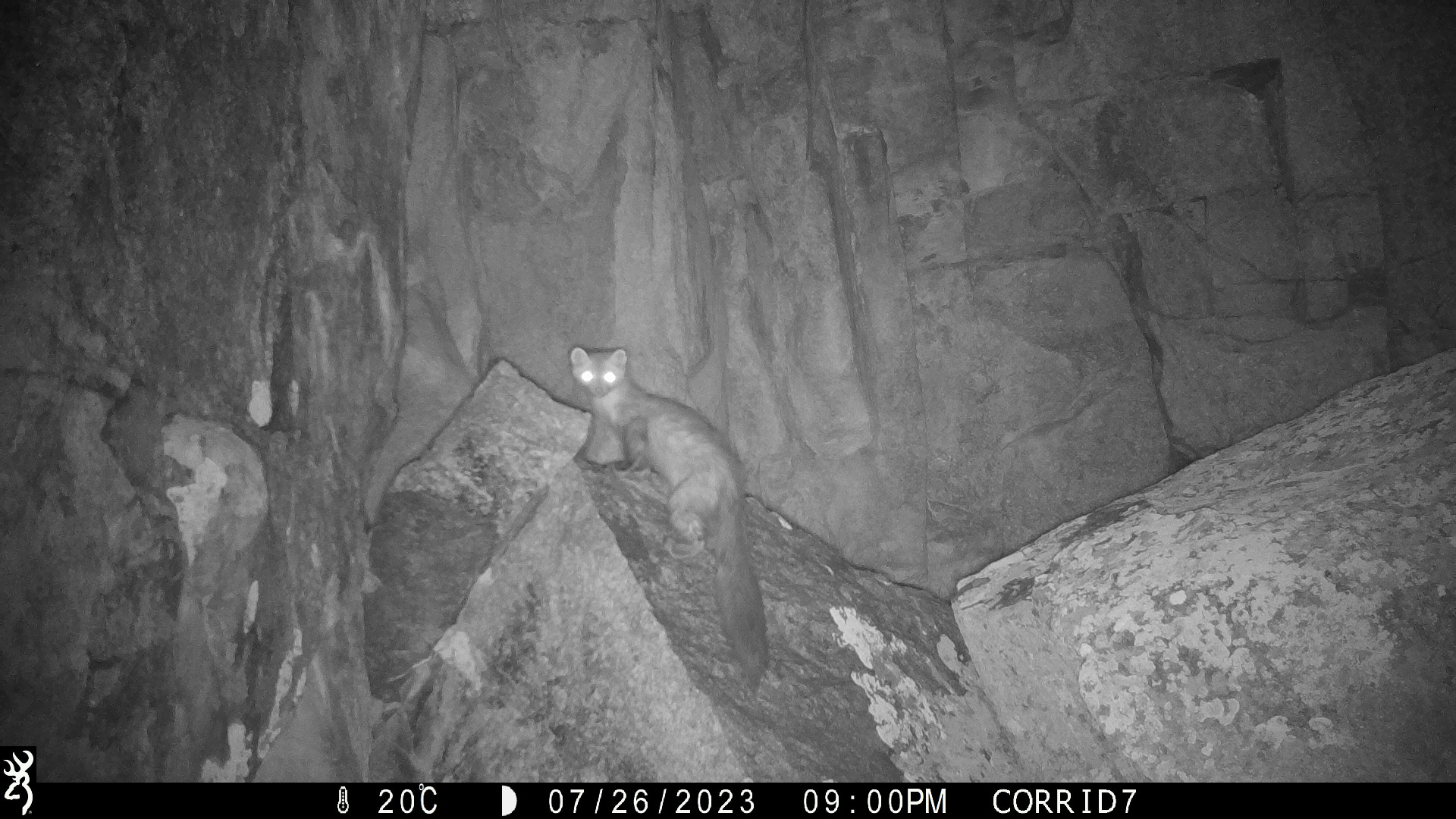
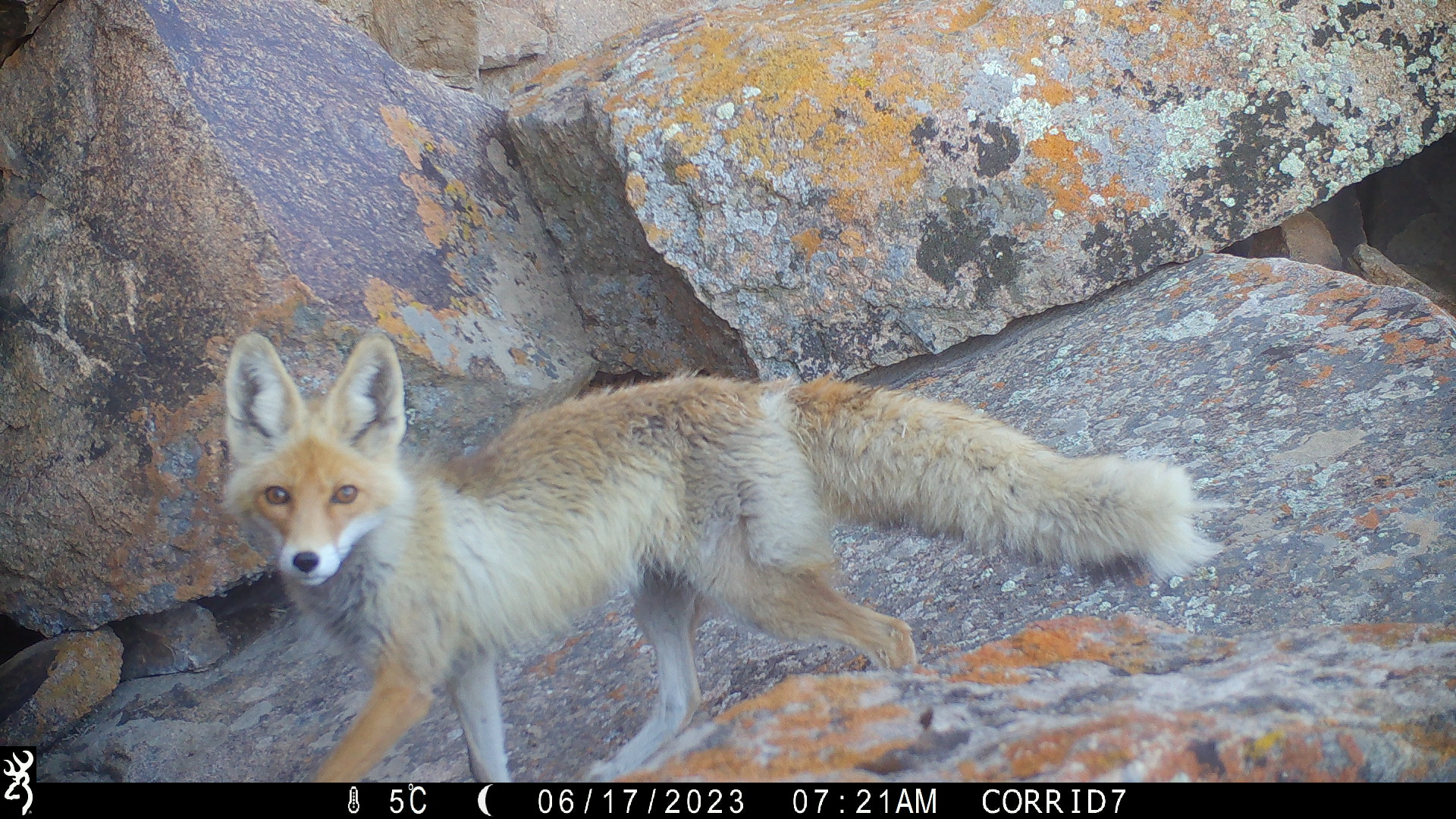
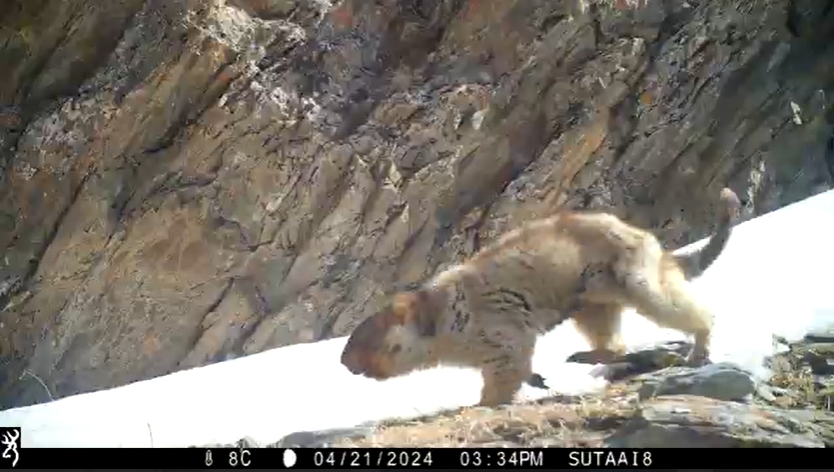
Wildlife Initiative’s camera trap network has also captured the incredible diversity of other wildlife species calling this ecological corridor home. Red foxes patrol the rocky terrain, beech martens navigate the clifftop passages, and tiny pikas and marmots dart between boulder fields. These images reveal that the Sutai-Myang Ugalzad corridor supports a rich tapestry of life, demonstrating that conservation efforts protecting snow leopards benefit entire ecosystems and the countless species that depend on this vital landscape.