
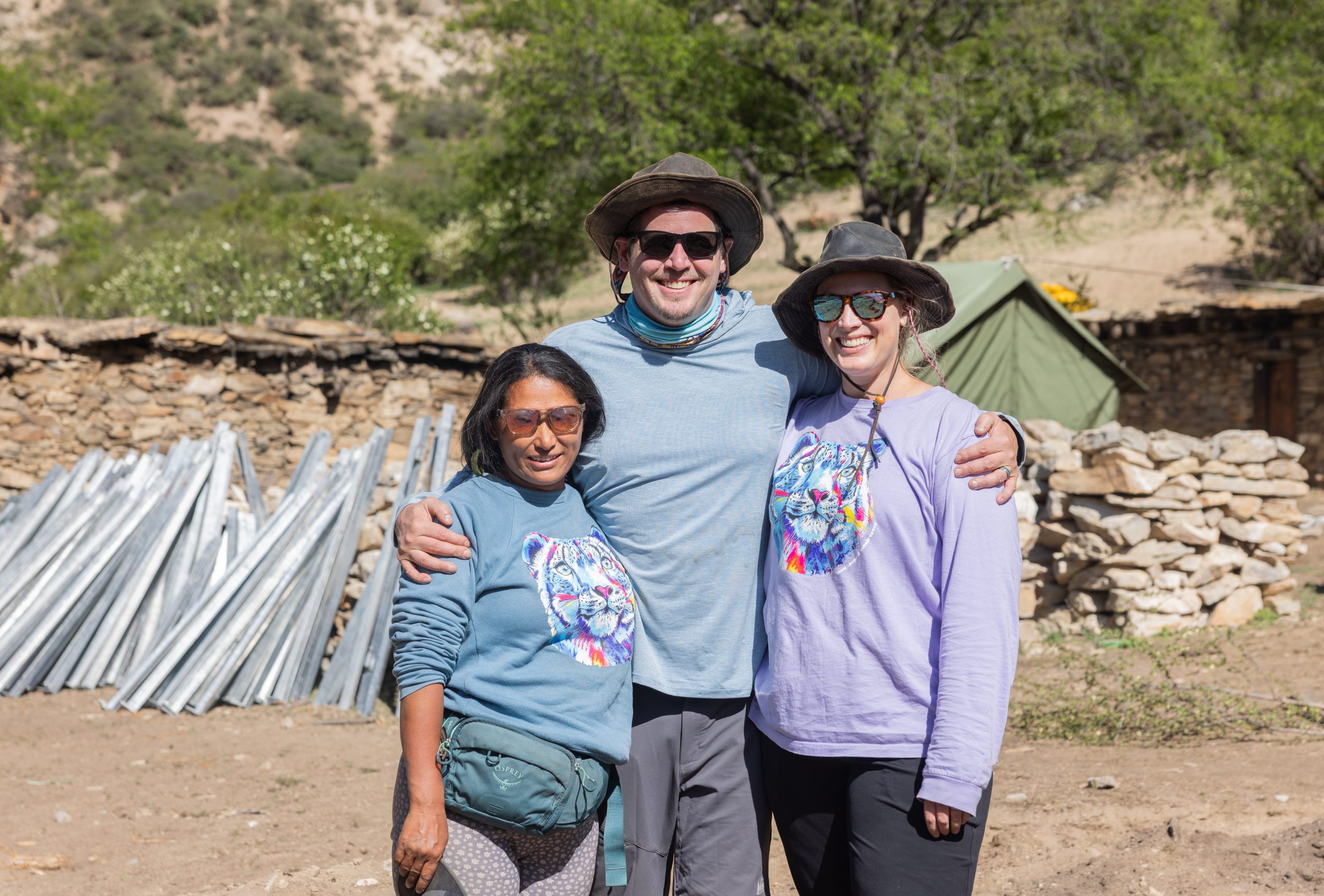
SLC Executive Director Ashleigh Lutz-Nelson, her husband Ryan Nelson, and SLC partner Tshiring Lhamu Lama together in Dolpo this spring. Photo Credit: Sonam Choekyi Lama
Snow Leopard Conservancy Executive Director Ashleigh Lutz-Nelson recently traveled deep into Nepal’s remote Dolpo region, where she spent time with longtime SLC partner and conservation leader Tshiring Lhamu Lama, visited communities working to coexist with snow leopards, and witnessed firsthand the conservation work featured in the acclaimed documentary Snow Leopard Sisters.
SLC’s Director of Operations and Communications, Katie Lawlor, sat down with Ashleigh after her return to talk about the journey, Tshiring’s work with the communities of Dolpo, the realities of living alongside snow leopards, and one extraordinary encounter in the Himalayas.
We invite you to watch the full conversation with Ashleigh and Katie on Snow Leopard Conservancy’s YouTube channel.
Katie Lawlor: Why did you go to Dolpo this summer?
Ashleigh Lutz-Nelson: We’ve been working with our partner Tshiring Lhamu Lama on her conservation work in her home community of Dolpo for the last six to seven years.
Over the course of those years, there was also the development of a feature documentary, Snow Leopard Sisters, which highlights Tshiring’s work with her communities to end retaliatory killings of snow leopards and create lasting coexistence.
The film launched on International Women’s Day at South by Southwest in Austin in March 2025 and went on to be featured at film festivals all over the globe, capturing the hearts of audience members and raising funds for the Snow Leopard Sisters Impact Campaign, for which Snow Leopard Conservancy is the Impact Partner.
I’ve been working closely with Tshiring, her sister and the film’s co-director Sonam Choekyi Lama, and Tenzin Bhuti Gurung, who is featured in the film as Tshiring’s apprentice in Snow Leopard Sisters. It has been exciting to work with them and participate in impact campaigns at film festivals, raising critical awareness for the plight of snow leopards and the incredible efforts Tshiring is making with her communities toward lasting coexistence.
Getting to go to Dolpo after a year of touring the film festivals—and after working much longer with Tshiring on this critical conservation work—was an absolute pleasure.

Filmmakers Ben Ayers, Sonam Choekyi Lama, and Andrew Lynch with conservationist Tshiring Lhamu Lama at the SXSW film festival. Photo Credit: SLC
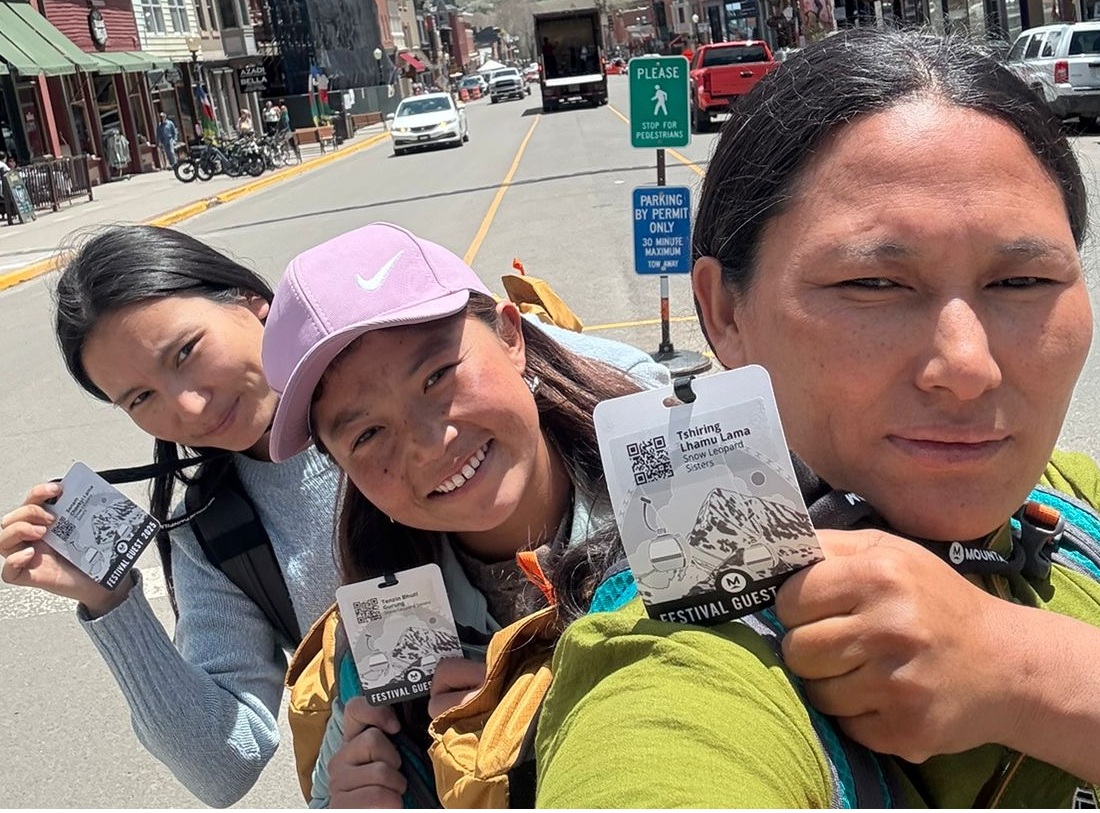
“Snow Leopard Sisters,” Sonam Choeyki Lama, Tenzin Bhuti Gurung, & Tshiring Lhamu Lama, at Mountainfilm Festival. Photo Credit: Sonam Choekyi Lama

The film team and Ashleigh Lutz-Nelson (SLC) took to the stage after the screenings to discuss the film’s creation and the importance of continuing the conservation work highlighted in the film. Photo Credit: SLC
Katie: For someone who has never been to Dolpo, how would you describe it? Take us there with you.
Ashleigh: Going to Nepal is such an unique experience and privilege. Getting to see the majestic Himalayas from the airplane really sets the scene. Seeing some of the highest peaks in the world, including Mount Everest and Annapurna, definitely got me very excited. I was even trying to look for snow leopards from the plane, which is pretty much infeasible!
Dolpo is one of the last roadless areas in Nepal, so getting to Shey Phoksundo National Park requires a lot of trekking.
First, we flew from Kathmandu to Nepalgunj, in the far southwestern part of Nepal. From the lowlands of the Terai—where tigers and rhinos live—we took another small propeller plane up to the village of Juphal. From there, we took a jeep to Dunai and then started the journey on foot.
From that point, it was about a 75-mile trek roundtrip through the Himalayas, up to gorgeous Phoksundo Lake and toward the gateway to Upper Dolpo.
It is a gorgeous and incredibly remote landscape, with the most welcoming Nepalese communities, who are mostly Tibetan Buddhist. You’re received at tea houses, you eat in your host’s kitchen, and you really learn firsthand about their way of life. You get to know each community member, understand their cultures and traditions, and how they feel about wildlife.
It’s absolutely incredible. I would recommend everybody visit Dolpo at some point in their life.

A first glimpse of the Himalayas from the air on the journey to Dolpo. Photo Credit: Ryan Nelson

Horses rest along the trail during the 75 mile roundtrip trek from Dunai to Upper Dolpo. Photo Credit: Ryan Nelson

Katie: What was it like to spend time with Tshiring in her home community and witness her work firsthand?
Ashleigh: Absolutely incredible. We were really received as family there, which I will forever be grateful to Tshiring and Choekyi for.
We had the opportunity to meet their mother right when we arrived, and it was such a privilege to meet her and thank her for raising two wonderful, wonderful daughters—to which she said they were exceptional women who largely raised themselves.
Being received as family is something I’ll never forget.
My husband, Ryan, was able to join me on this trip as well. It was his first visit to Nepal and the first time he could do a trip like this with me for wildlife conservation, so it was extremely special.
Tshiring put together an extraordinary itinerary for us through her trekking company, Snow Leopard Journey, which allows visitors to share this experience through customized treks to Phoksundo Lake and opportunities to look for wildlife with spotters she has trained through the Snow Leopard Sisters Impact Campaign.

Ashleigh and her husband Ryan boarded a small propeller plane for the flight from Nepalgunj to the mountain village of Juphal. Photo Credit: Sonam Choekyi Lama
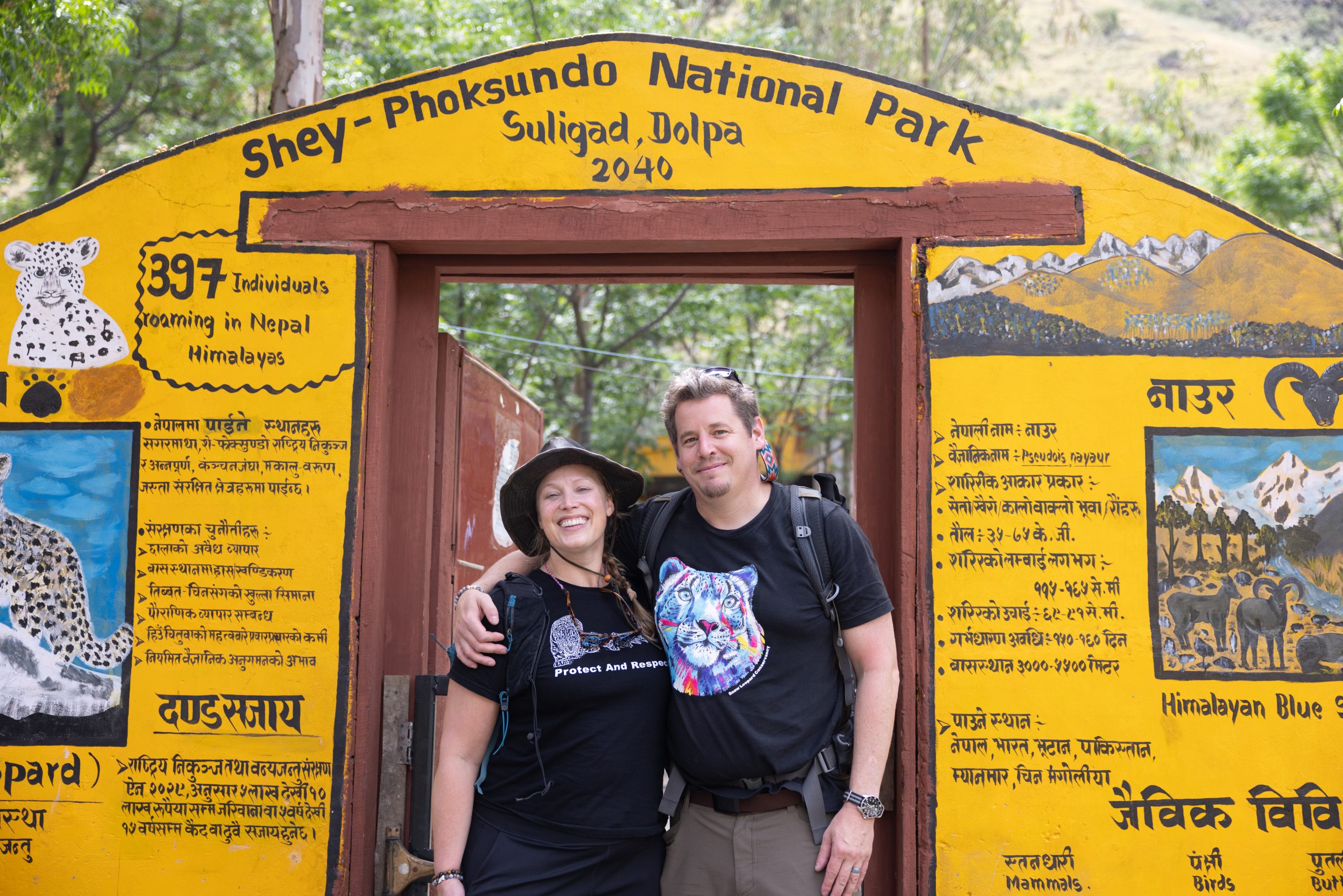
Ashleigh and Ryan explored Shey Phoksundo National Park together during Ryan’s first visit to Nepal. Photo Credit: Sonam Choekyi Lama
Katie: How would you describe Tshiring as a conservation leader?
Ashleigh: Tshiring is a warrior. She really is unlike anyone I’ve ever met.
She is truly fearless and so courageous to work on such a contentious issue in her community. When her sister, Sonam Choekyi Lama, first discovered that communities were retaliating against snow leopards because of livestock depredation, she shared that with Tshiring, and Tshiring immediately put together a plan for how to address it directly with the communities.
She works in collaboration with the Department of National Parks and Wildlife Conservation and other organizations working there, but being an insider from Dolpo has made all the difference.
It was amazing to see the community members interact around her. She is a true leader.
Watching her work on the corral building with the community members—leading the morning meetings, assigning roles for the day, and being there working alongside them throughout the construction of these engineered communal corrals—was such a delight for me.
I’ve seen the documentary many times now and have worked with her for years, but seeing her with her community, and seeing how much they respect and honor both her and Choekyi, was extraordinary.
And Tenzin is really coming up as a leader in her community as well.
Getting to see all of this in action was one of the greatest honors of my life and my profession so far.

Tshiring introduces Ashleigh to community members in Dolpo, the region she calls home and where she has led snow leopard conservation efforts for years. Photo Credit: Ryan Nelson
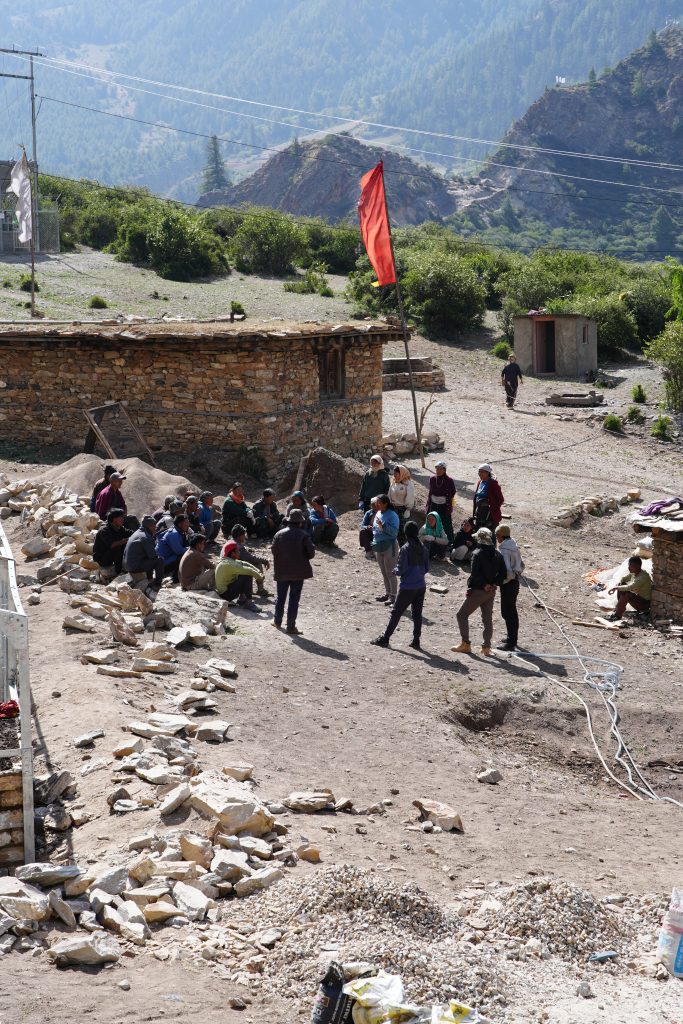
Tshiring leads the morning work-plan meeting as preparations begin for the day’s corral construction. Photo Credit: Ryan Nelson
Katie: What becomes more apparent when you are physically there and see what it takes to do conservation work in such a remote place?
Ashleigh: It all becomes very apparent when you’re there trekking and witnessing the daily lives of the community members and herding groups.
It’s very hard work.
People trek miles to get from village to village. The nearest hospital is in Dunai, the district headquarters of Dolpo, and for some communities it is a few days’ walk to receive medical care.
As you leave Dunai and head higher in altitude, traveling along this heavily flowing river and gorge that seems to go straight up into the sky, you can truly appreciate what community members deal with on a daily basis.
They rely heavily on herding and animal husbandry, which is very difficult work—managing goats, sheep, yaks and mules/horses. Mules/horses are the primary means of transporting goods.
Every morning there are animals to take care of and meals to prepare. There is barley and buckwheat to sow and process. They make and cultivate so much themselves because supplies are very limited.
They work day in and day out, and they have the best attitudes, Katie. They really have such a beautiful outlook on life.
Given the hardships they face on a daily basis, seeing that outlook expressed so fully was one of the most beautiful takeaways from the visit.
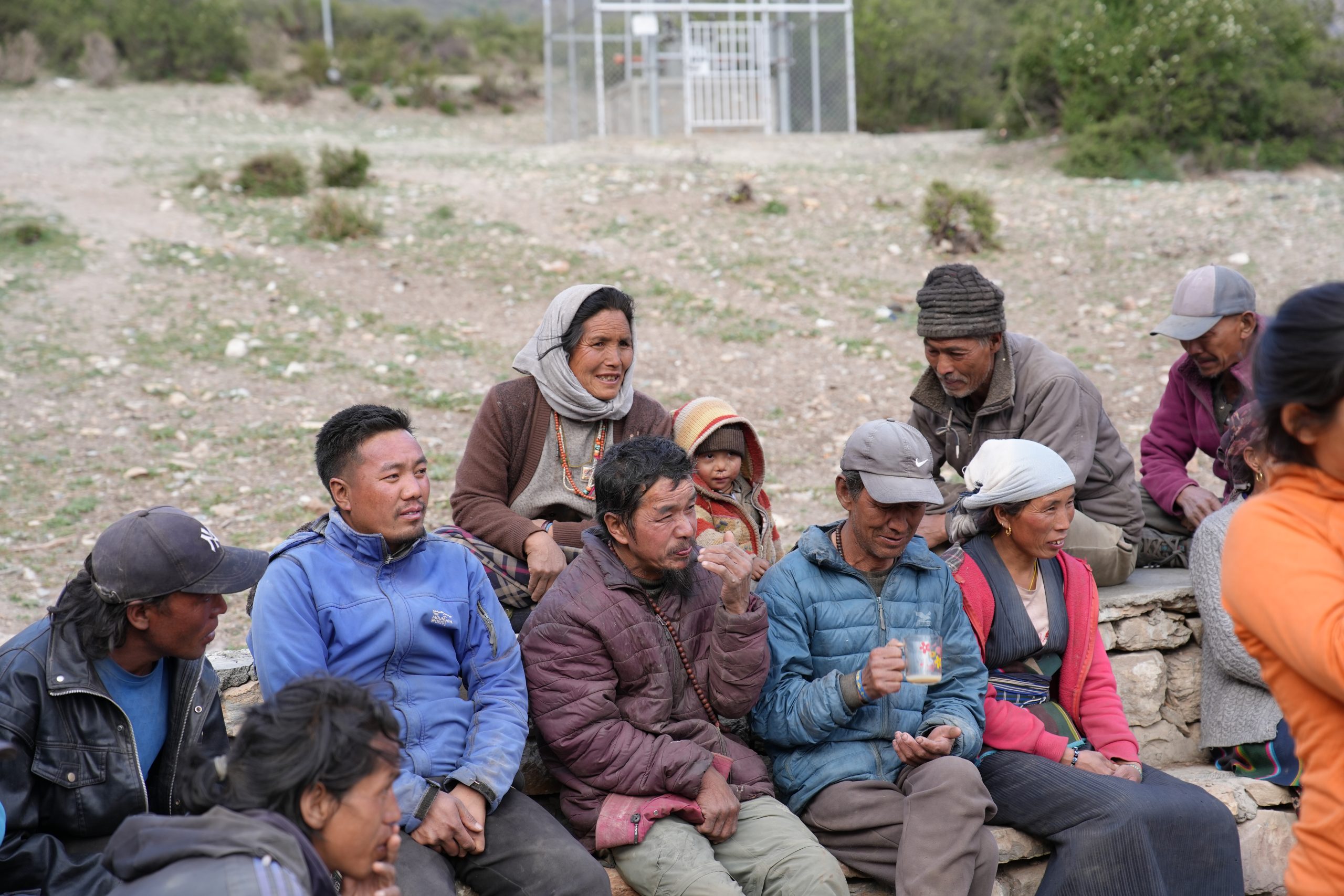
Community members in Dolpo gather together during Ashleigh’s visit, reflecting the strong local relationships at the heart of the conservation work. Photo Credit: Ryan Nelson
Katie: What does losing even one sheep, goat or other livestock animal mean for a family in Dolpo? And how can those losses affect attitudes toward snow leopards?
Ashleigh: It’s one of the biggest challenges.
Animal husbandry is a primary financial resource for many herders. They raise goats that are sold for meat, particularly around the Dashain holiday, when there is high demand in Kathmandu. Their goats are currency to them.
But you also see how much the herders care about these animals. They are true shepherds, and having an animal husbandry background myself, I can really appreciate that.
There is a government-funded compensation program for depredation incidents involving protected species such as snow leopards. However, that compensation doesn’t fully equate to the animal’s worth, nor does it address the psychological and emotional burden and devastation community members feel when animals are lost.
Herders do accept some losses, especially when animals are grazing in open pasture.
But the big issue is surplus killing.
If a snow leopard gets into an unsecured livestock enclosure—and many traditional corrals are low stone-walled enclosures that a snow leopard can easily jump into—the livestock cannot disperse the way a wild herd of blue sheep, ibex or urial sheep would.
The snow leopard may continue killing until all of the animals have stopped moving. This is what is called a mass killing or surplus killing.
If the herders don’t know this is happening overnight, they may wake the next morning and find that their whole herd has been killed. They’re devastated. Absolutely distraught.
It goes far beyond monetary compensation. It really is heartbreaking for them.
So we’re trying to prevent that depredation from happening in the first place—to keep domestic animals safe and also subsequently keep the snow leopards safe from retaliation.
Katie: You had the opportunity to see some of the new corrals being built. How are they different?
Ashleigh: Traditional livestock corrals are built with whatever materials are available. Above the tree line in Nepal, there isn’t much wood, so many corrals are primarily low stone-wall enclosures.
Other designs have been created in Dolpo, but they’re subject to avalanches, landslides, shifting mountainscapes, and the effects we’re seeing with climate change, including flooding.
Without very strong materials, those corrals can become defunct.
It’s really important to come up with a design that works for the communities. Are they willing to share a large communal corral that could hold 700 to 800 animals? Or does an individual herder need something separate?
Snow Leopard Conservancy has a long history of developing predator-proof corrals, and they are very site-specific. They look different depending on the landscape, the available materials and the communities themselves.
What is really unique about the corrals being built through the Snow Leopard Sisters Impact Campaign is that they’re being specifically designed with support from a civil engineer who has a conservation mindset and can bring his knowledge to designing a corral that could last 50 years in these areas—one that is site-specific, can withstand heavy snowfall and other local conditions, and is appropriate for the communities.
And the communities help build them.
They provide the masonry because they’re extremely skilled at it. Watching them carry these rocks and boulders on their backs is something I will never forget.
The strength and resilience of these communities is absolutely astounding.
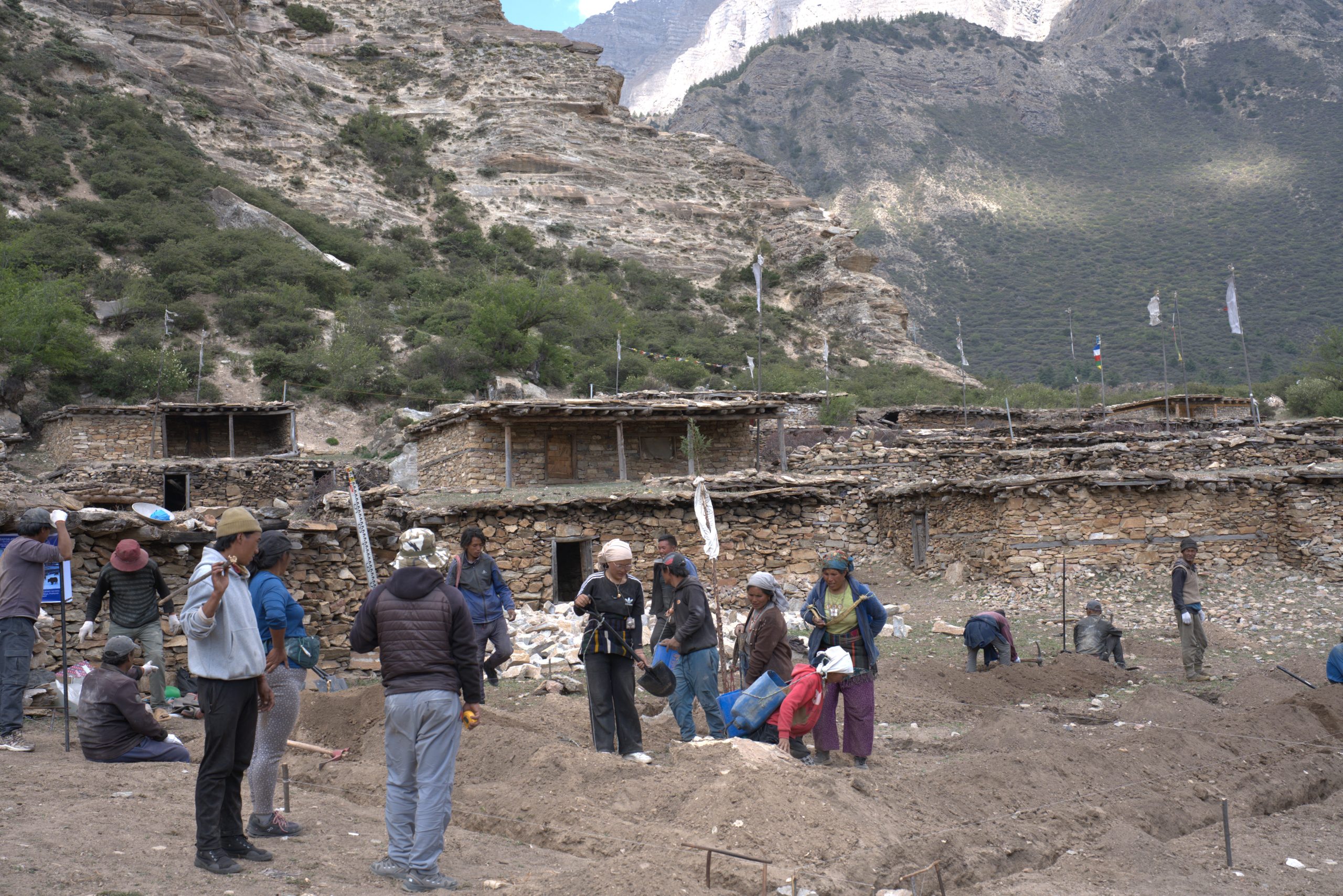
Each predator-proof corral is designed for the specific landscape and needs of the community. In Dolpo, local residents bring extraordinary masonry skills to the work, carrying and placing heavy stones and boulders by hand as they build these protective structures together. Photo Credit: Ryan Nelson
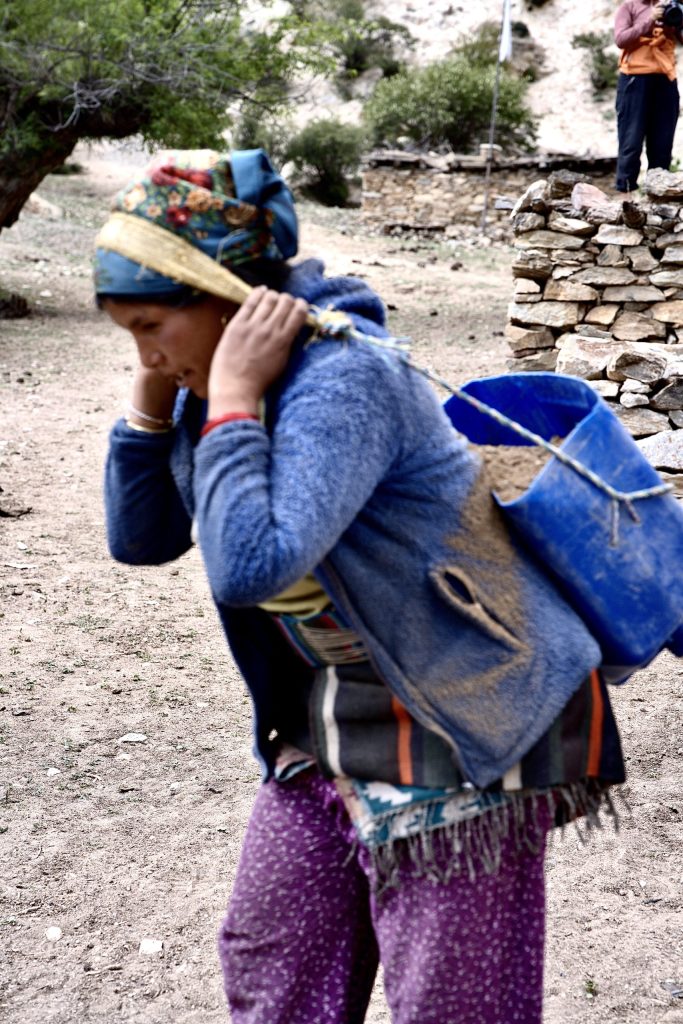
A local woman carries building materials in a head-supported bucket while helping construct a livestock corral in Dolpo. Women play an essential role in the labor and community effort behind these builds. Photo Credit: Ryan Nelson
Katie: Was there a particular conversation or experience in Dolpo that has stayed with you since coming home?
Ashleigh: There were many.
I think about all of those informal conversations sitting around the furnace, making dinner, making momos together and asking questions of one another.
That is really how communities there have historically received information—through visitors and people coming and going. Everyone you see on the trail or in the homes exchanges information.
In a world that is becoming so much more focused on technology and our phones, having those rich conversations in person and making those deep connections is something that will stay with me forever.
But one moment I think about very often was when we had the opportunity to visit the monks at the monastery at Phoksundo Lake.
There are three amazing monks there whom Tshiring and Choekyi know very well. The monastery is focused not only on practicing Buddhism, but also on protecting the local wildlife throughout the year. The monks stay over the winter. They are guardians of this area.
We had this incredible opportunity to meet with them, speak with them and learn from them. I went with Choekyi and Ryan, and we talked about their views of snow leopards.
We even had the chance to participate in a puja ceremony, a Buddhist blessing ceremony involving chanting and so much heart and soul on the monks’ part. They shared a blessing for us, the snow leopard, and for the safety of our journey.
They also did a blessing for our domestic kitties who have since crossed the Rainbow Bridge. We had a very special ceremony involving prayer flags overlooking the lake, which was incredibly emotional.
Having the chance to drink Tibetan tea in the monastery, sit with them and ask questions was so insightful and emotional. It will stay with me for the rest of my life.
And as we left the monastery, we got a call from one of the wildlife spotters Tshiring had trained. They had spotted a snow leopard while we were doing the puja ceremony.
How auspicious is that?
The snow leopard was spotted in a valley about a two-days’ walk from where we were. We could have changed course immediately to try to find her, but we were quite fatigued after all of the trekking and decided that if it was meant to be, it would be meant to be.
Snow leopards have such a mysterious and mystical aspect to them. They are a spiritual icon in Buddhist culture.
It was truly special to share that moment and know that they are being protected by the communities and by the conservation work being done in Dolpo.
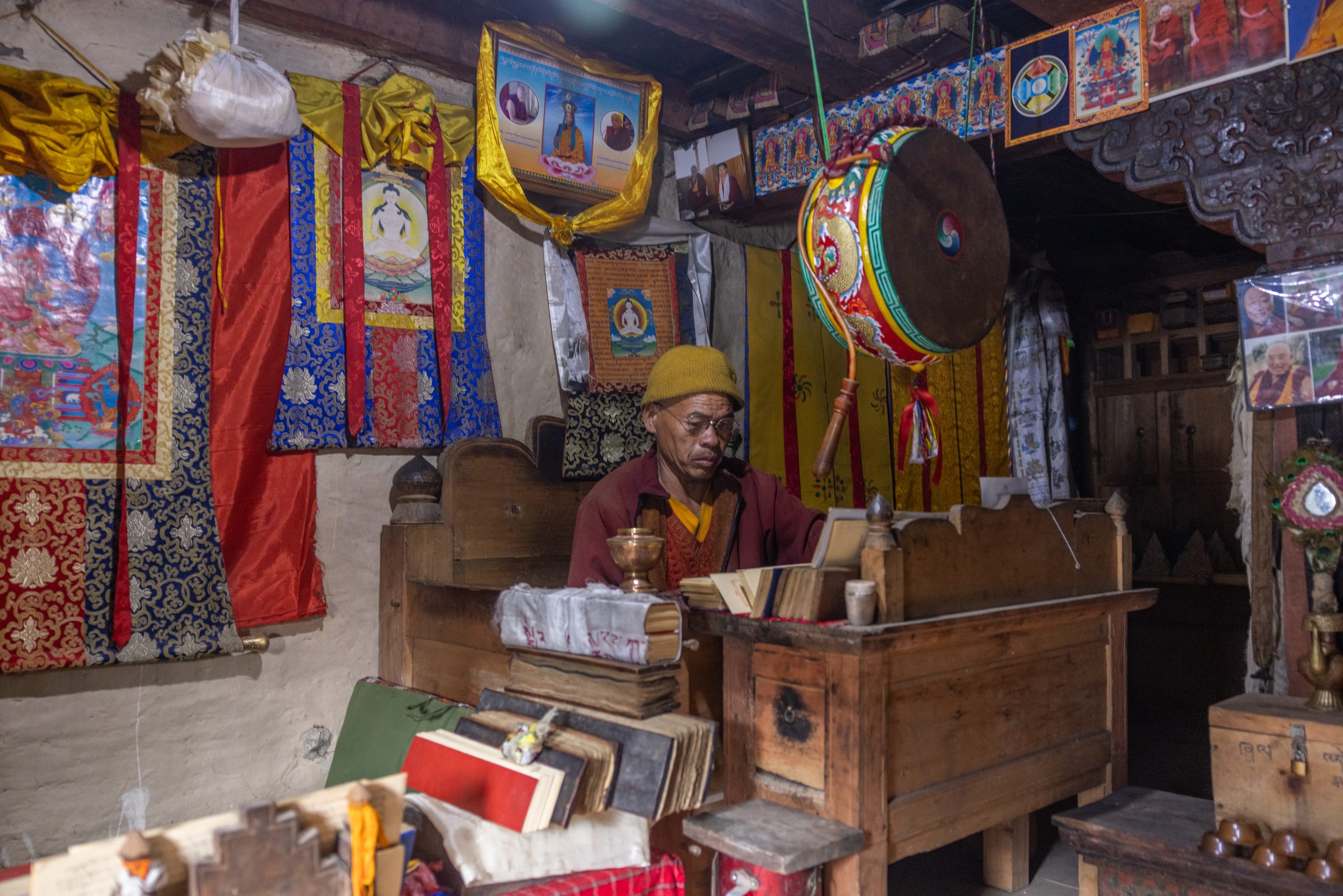
The monastery overlooking Phoksundo Lake serves as both a Buddhist spiritual center and a place of stewardship for the surrounding wildlife. The monks remain through the winter, helping protect the animals and landscape they regard as sacred. Photo Credit: Ryan Nelson
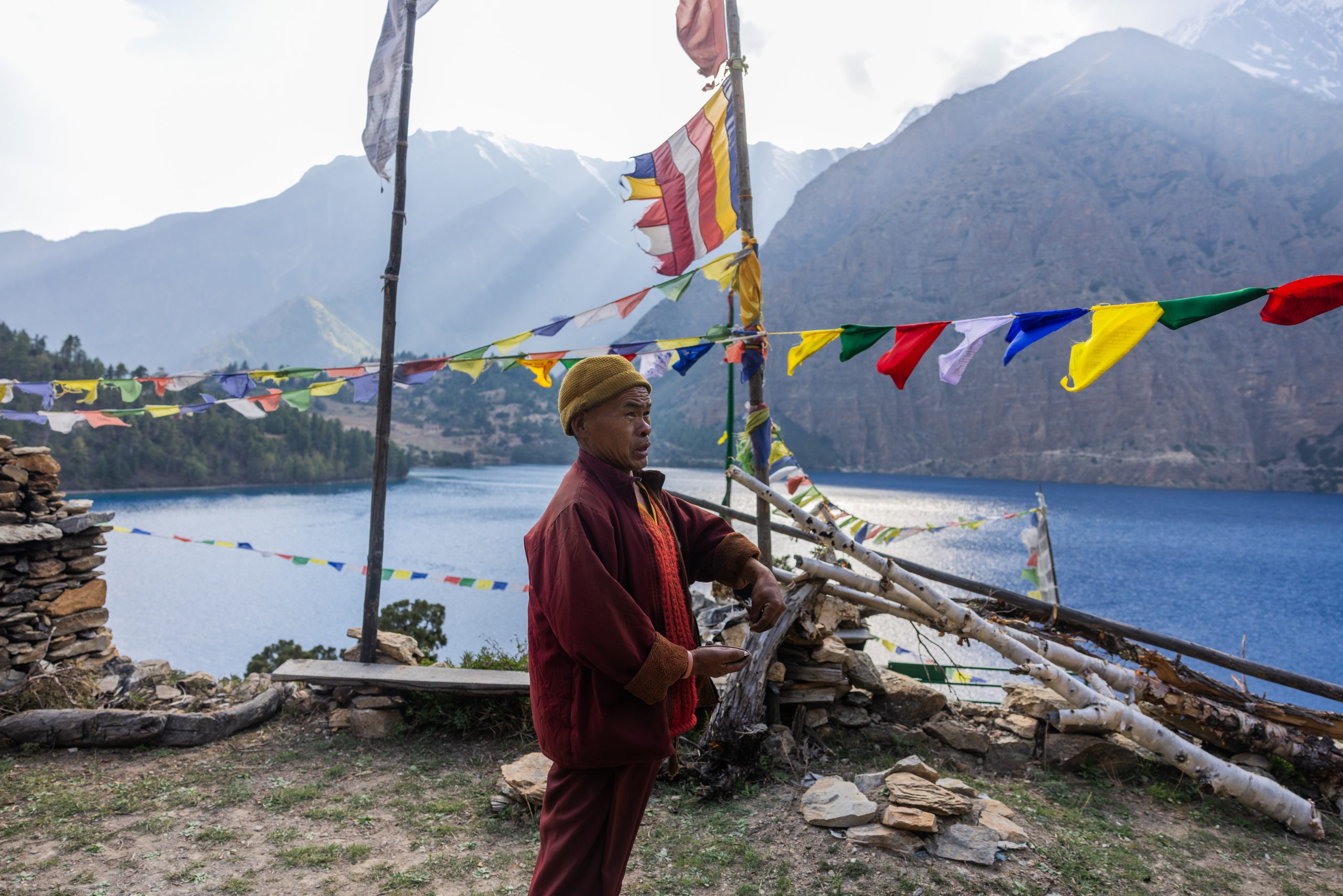
Ashleigh and Ryan had the opportunity to participate in a puja, a traditional Buddhist blessing ceremony filled with chanting, prayer, and the extraordinary heart and devotion of the monks. Photo Credit: Ryan Nelson
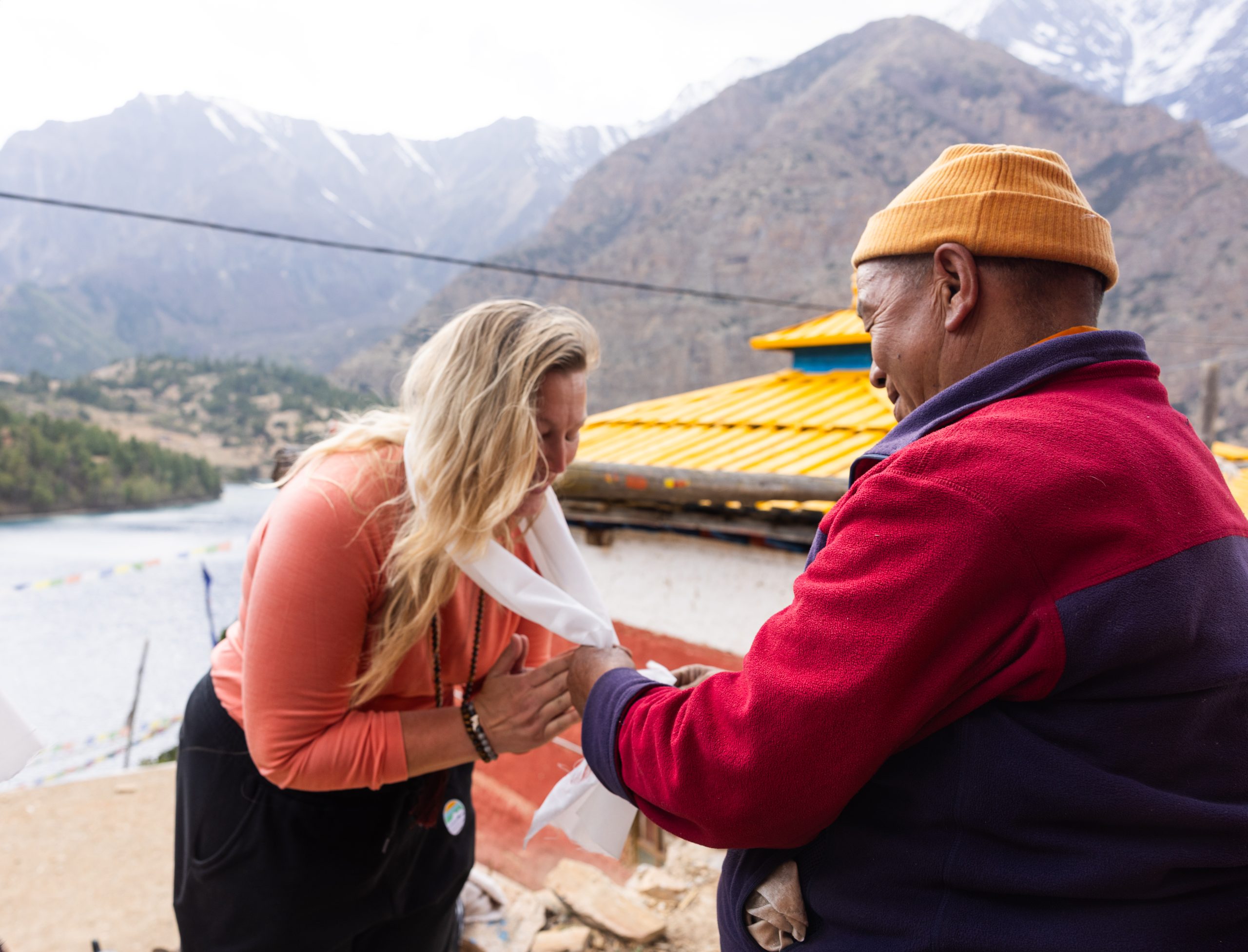
Ashleigh receives a blessing from a monk for a safe journey ahead. Photo Credit: Ryan Nelson

A special glimpse in the monastery’s most sacred quarters, adorned with Snow Leopard Journey khata scarves, which are a symbol of respect and gratitude. Photo Credit: Ryan Nelson
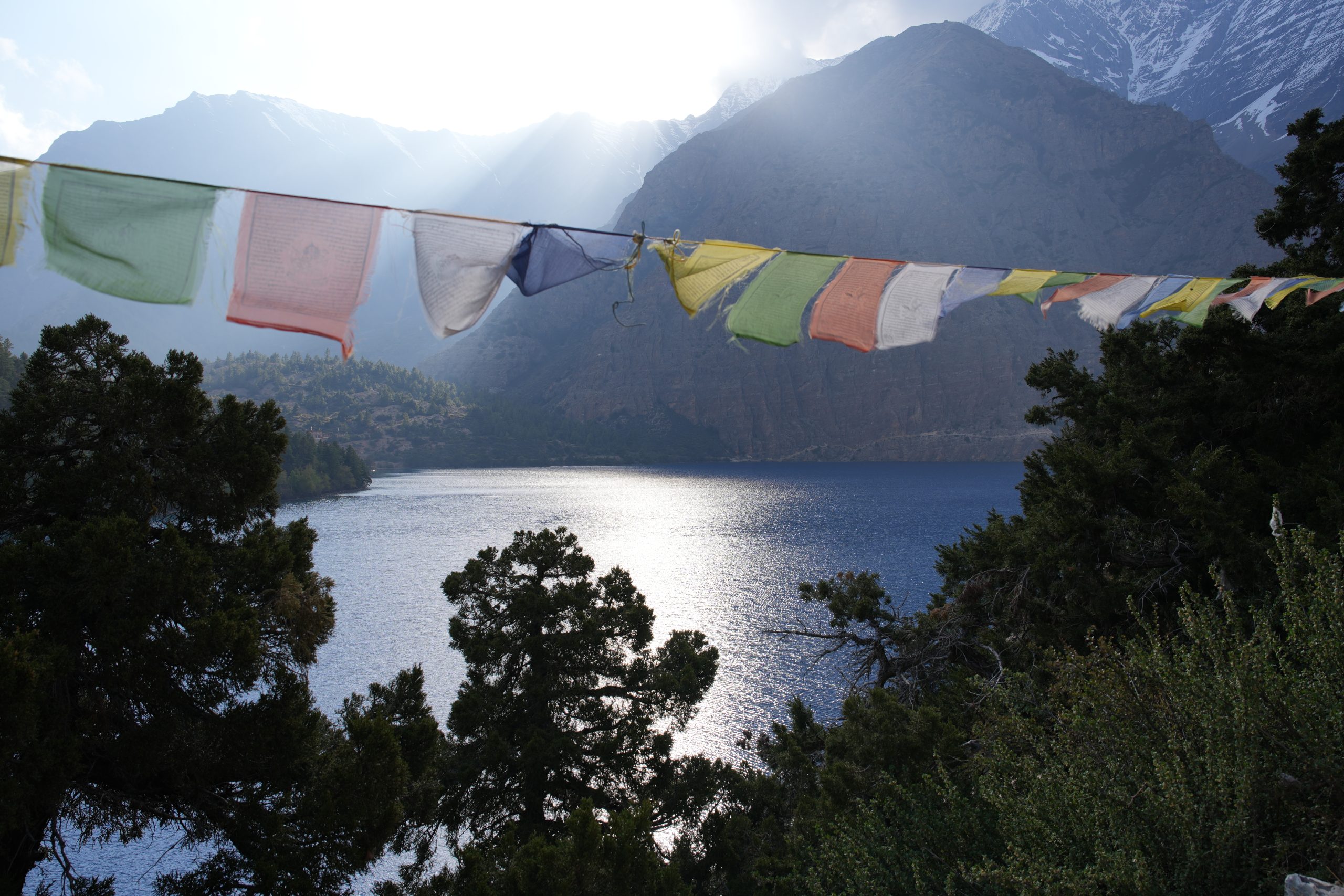
The profoundly deeply emotional ceremony included stringing blessed prayer flags along the lake’s shore. Photo Credit: Ryan Nelson
Katie: What are Tshiring and the communities hoping to accomplish next?
Ashleigh: This summer, they built two large communal corrals. One was in Polam, a winter herding site that we visited, where we got to see the construction and meet with the community members.
Another was built in Upper Dolpo, close to the Tibetan border and in prime snow leopard habitat.
That brought us to three corrals built through the campaign. There are 11 total that we want to build, so there are eight more villages, with sites and designs still to be confirmed. At least some are planned for next year.
Another key aspect of our collaborative work is training wildlife spotters and trekking guides.
These are very important jobs for the community because they bring in additional revenue that is positively linked to the presence of wildlife.
Tshiring has trained more than 20 spotters and guides. Originally, this was intended for youth conservationists, but it has expanded far beyond that, with older women in the community wanting additional work as well.
The spotters are celebrated when they see snow leopards and other wildlife.
Ecotourism revenue is also very important. Booking through an organization such as Tshiring’s Snow Leopard Journey means that revenue goes directly into these communities—through tea house bookings, porters, guides and other local services. Those revenues contribute to the communities’ well-being and quality of life while also economically incentivizing wildlife conservation.
A third component is looking at other predator deterrents, including solar-powered predator lights like Foxlights.
These are already being used in the communities. I met with the herding groups using them and heard very good results. They told me they had not experienced depredation from snow leopards or other predators since using them.
One goal is to create a Nepali-made version of this type of light so that it can become more widely accessible — not just in Dolpo, but throughout Nepal and perhaps in other snow leopard range countries.
And I’m really happy to say that since the film came out last year, there have been no reported cases of retaliatory killings of snow leopards in the region.
That is a testament to Tshiring’s leadership and to the communities themselves for their tolerance.
Being able to thank them for that in person—and to tell them how inspired the world has been by their courage in sharing their story—was truly special.
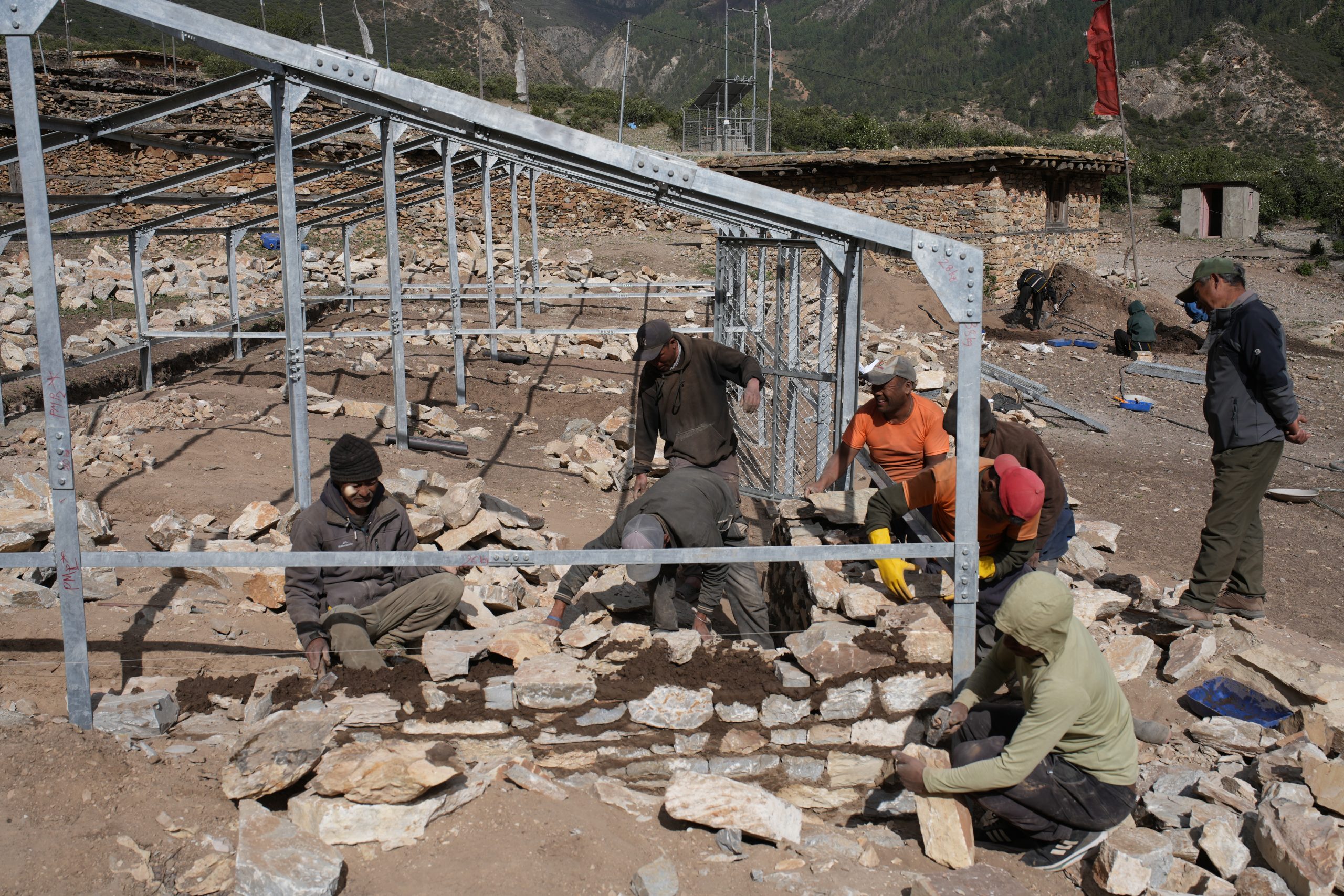
Construction of a new predator-proof corral in Polam, a remote winter herding site in Dolpo, which will safely house hundreds of animals. The corral was designed with input from a civil engineer to provide maximum protection from predators for decades to come. Photo Credit: Ryan Nelson
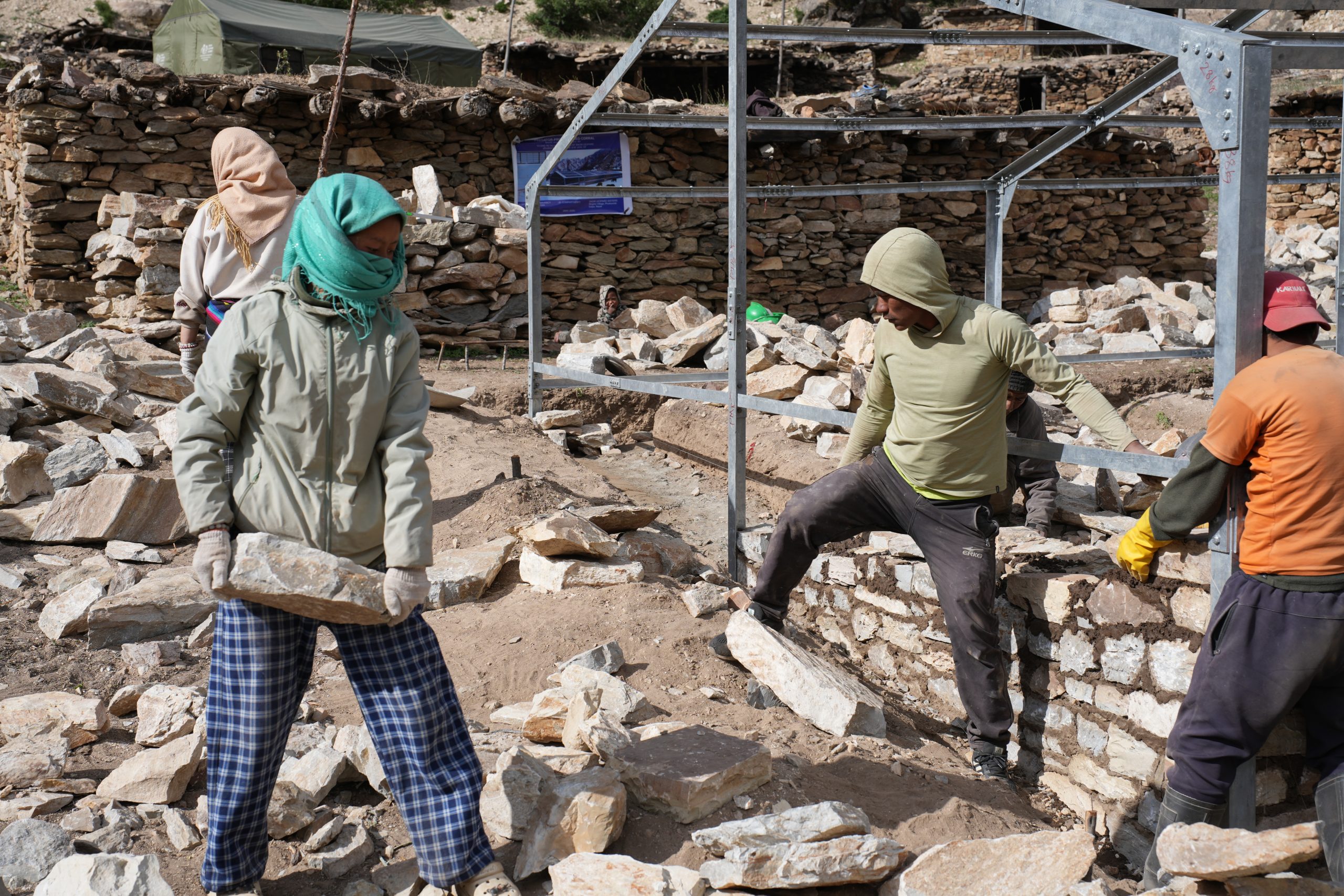
Each corral is designed to maximize local employment and women’s participation. Construction also includes the establishment of local revolving funds to support future repairs or reconstruction. Photo Credit: Ryan Nelson
Katie: For people following this work from around the world, how can they help?
Ashleigh: Being informed and learning about these issues is the first step.
We thank everyone for tuning in to what SLC has been doing and learning about how they can support our partners.
People can sign up for our e-newsletter and connect with us on our social channels to hear what’s happening in the countries where snow leopards live—and to learn about the heroes who live among them.
People can also financially support this work by contributing to these campaigns and grassroots efforts, where that support can have a tremendous impact.
Our e-newsletter is also one of the best ways to hear about upcoming events, including potential future screenings of the Snow Leopard Sisters documentary.
And if someone would like to visit Dolpo themselves, there is the opportunity to travel through Snow Leopard Journey. It is a very special opportunity to experience Dolpo, trek through this incredible landscape and perhaps even see a snow leopard.

A banner marks the construction of the new corral — supported by Snow Leopard Conservancy and Snow Leopard Sisters, and made possible through the generosity of our donors. Photo Credit: Ryan Nelson
Katie: Before we close, is there anything else from the journey you want people to know?
Ashleigh: On our very last morning at Baga La Base Camp, on the way toward Upper Dolpo, we were graced with the presence of a snow leopard.
We rushed out of the tent. I threw on my glasses, coat and beanie and went outside. The spotters had been up before dawn scanning the canyon.
And lo and behold, looking through one of the scopes, there she was.
When she stopped moving, you couldn’t see her. She completely blended into the rocks.
They believed it was the same snow leopard that had been seen a couple of days earlier. She made her way across the rocks, jumping and gracefully cascading along, as only a snow leopard can do, using that magnificent tail for balance.
We watched her for a few moments. It’s hard to know exactly how much time passed because we were so excited.
We watched her for as long as we could, until she disappeared into the canyon, presumably heading toward Upper Dolpo.
It felt so good knowing that this particular snow leopard, in this territory, would be protected over the winter with the new corral that was being built.
And hearing the heartfelt sentiments from the communities — that this work is truly changing their lives so they can sleep more comfortably at night during the winter and feel more secure and at peace for their domestic animals, their livelihoods and their own well-being—was incredibly meaningful.
Seeing how highly they thought of Tshiring and Choekyi was truly a gift.
Thank you to all of our supporters who have supported the Snow Leopard Sisters Impact Campaign and the rest of our work.
Our heartfelt gratitude.

A remarkable farewell: on the group’s final morning at Baga La Base Camp, a snow leopard appeared across the canyon. The spotters had been up before dawn scanning the canyon. Photo Credit: Ryan Nelson
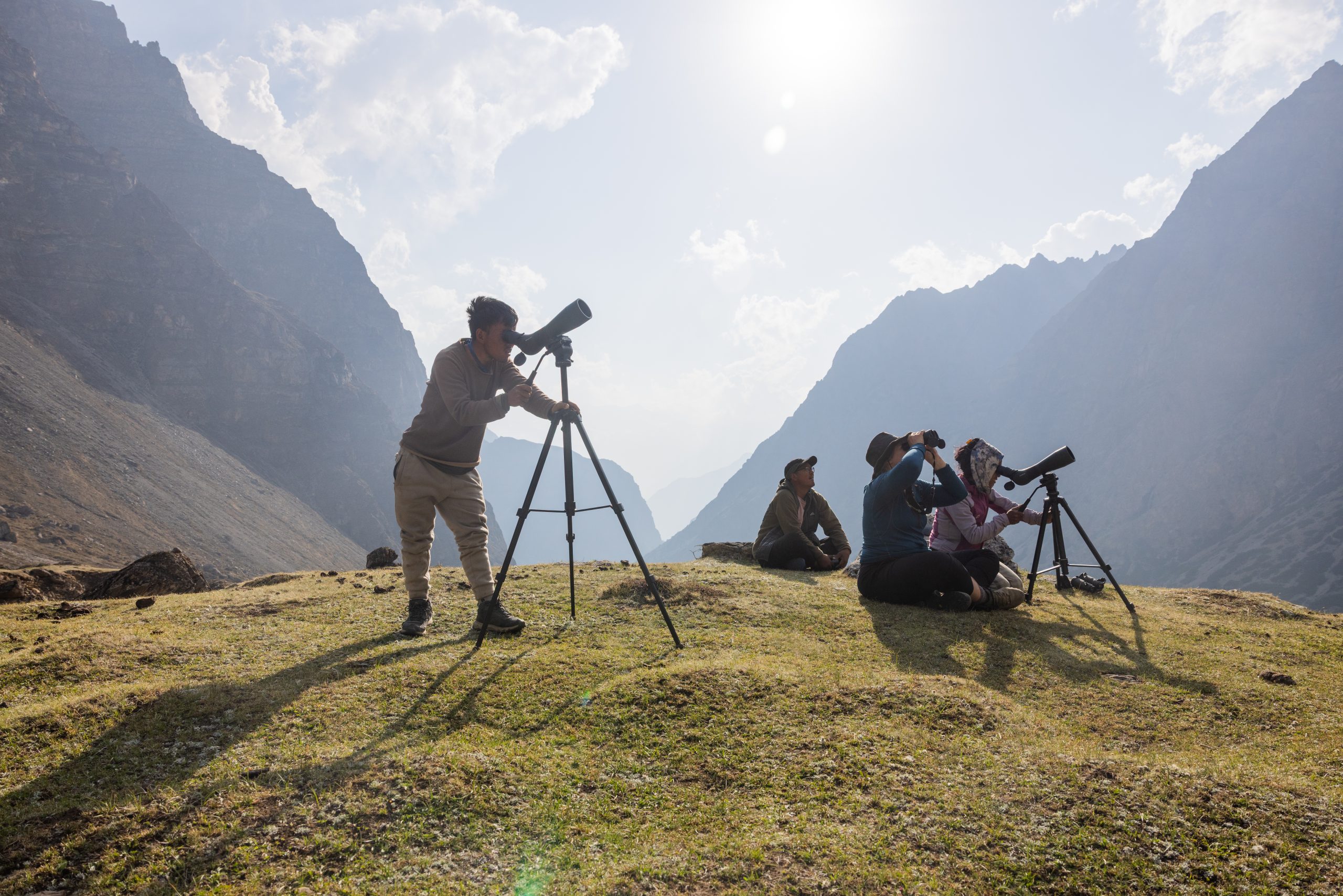
Time stood still as the group watched a snow leopard move across the rocky slopes toward Upper Dolpo. Knowing she would be better protected through the winter by the new predator-proof corral made the encounter unforgettable. Photo Credit: Sonam Choekyi Lama