

In June, Snow Leopard Conservancy convened 30 conservation practitioners in Kathmandu from 10 countries — including 8 snow leopard range countries — to advance community-led conservation and coexistence across Asia’s High Mountains.
The Snow Leopard Conservancy (SLC) and its partners across the snow leopards’ range were thrilled to participate in the 6th Conservation Asia Congress June 3rd – 5th in Kathmandu, Nepal, under the theme of “Harmonising Biodiversity and Human Well-Being Across Asia.” The Congress was organized and hosted by the Society for Conservation Biology-Asia Region, in collaboration with the Society for Conservation Biology-Nepal Chapter and the Burhan Community Regeneration and Conservation Foundation.
As an Inclusivity Sponsor to the Congress, SLC hosted its first partner network workshop for 30 practitioners (11 women, 19 men) from 10 countries (8 range countries) with 23 presentations on community-led snow leopard conservation and coexistence in Asia’s High Mountains. Snow Leopard Conservancy’s Partner Network Workshop, “Strengthening Collaborative Partnerships and Learning Exchanges for Conservation Action and Impact” took place on June 2nd, before the Congress began.
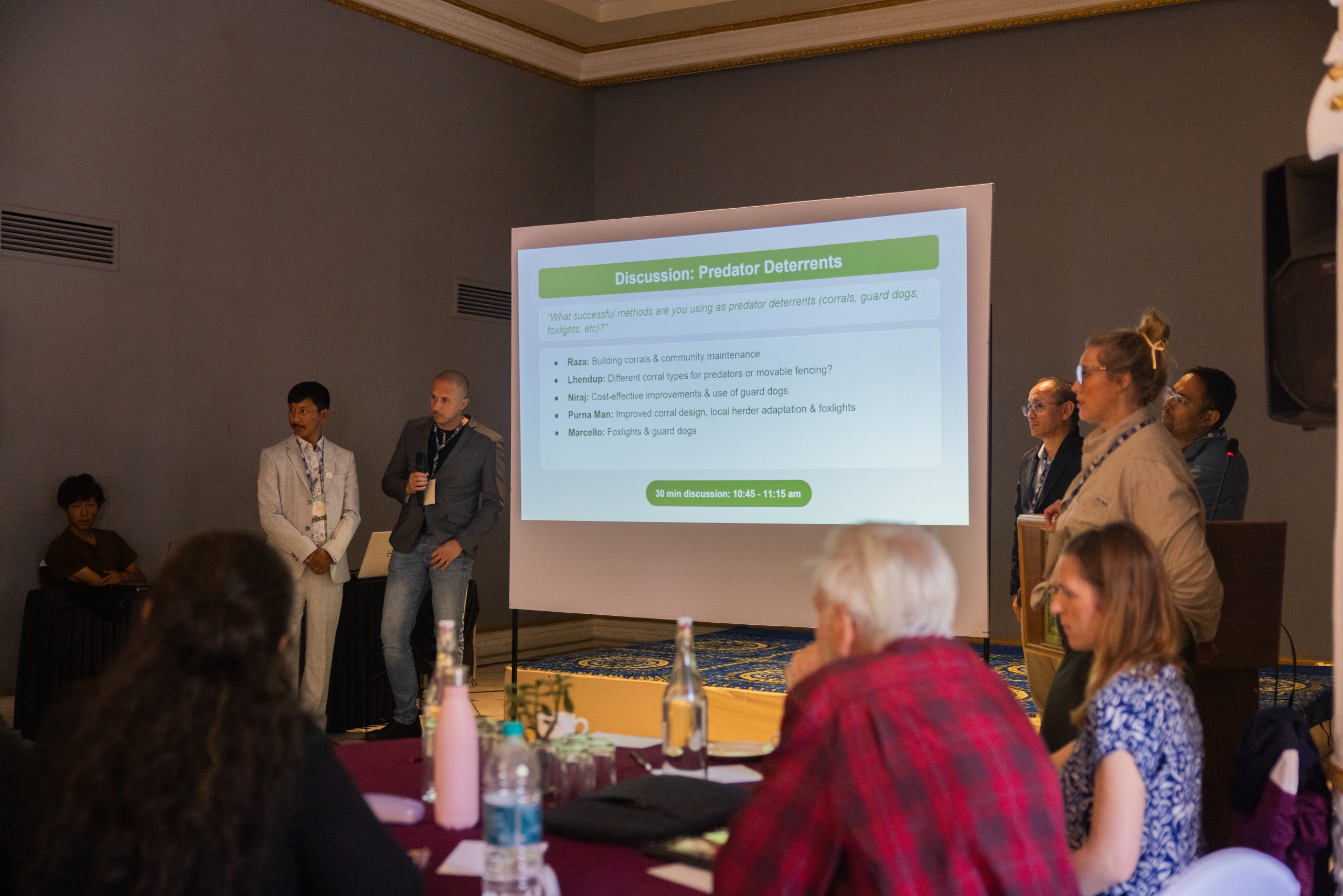
SLC partners share field-based experiences, lessons, and approaches to snow leopard conservation across Asia during the Conservancy’s inaugural Partner Network Workshop.
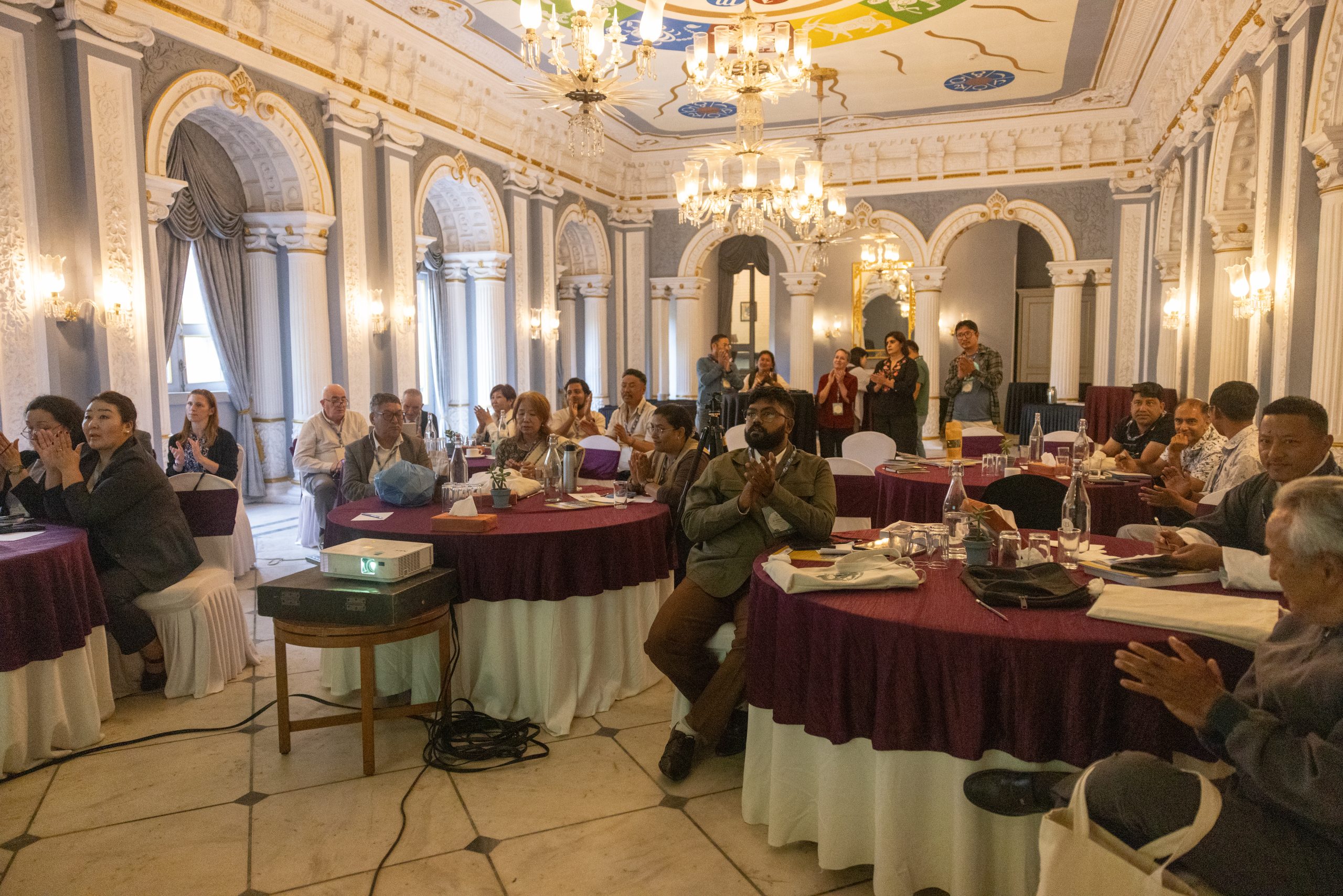
Participants gather to exchange knowledge and learn from one another, with many SLC partners meeting in person for the first time during the workshop.
The presentations were structured under four main themes:
1.) Mitigating Human–Carnivore Conflict: Practical Techniques to Reduce Retaliation and Improve Predator Tolerance;
2.) Sustainable Livelihoods Linked to Biodiversity Conservation and Human Wellbeing;
3.) Leading Stakeholder Meetings; and
4.) Youth Engagement in Conservation.
In a follow-up evaluation survey, the participants shared the aspects they valued most:
1.) Honest field reports and lessons from peers;
2.) The chance to exchange experiences directly with other researchers during the workshop and the broader Conservation Asia Congress; and
3.) The highly-interactive discussion session(s).
In addition to the partner workshop, SLC hosted a Symposium featuring a diverse subset of the Conservancy’s partner network presentations focused on “Advancing Human–Snow Leopard Coexistence While Strengthening Community Wellbeing Across Asia’s High Mountains” and a special screening event of the award-winning Snow Leopard Sisters feature documentary. Both of these events were accessible to the Congress’ 500 participants.
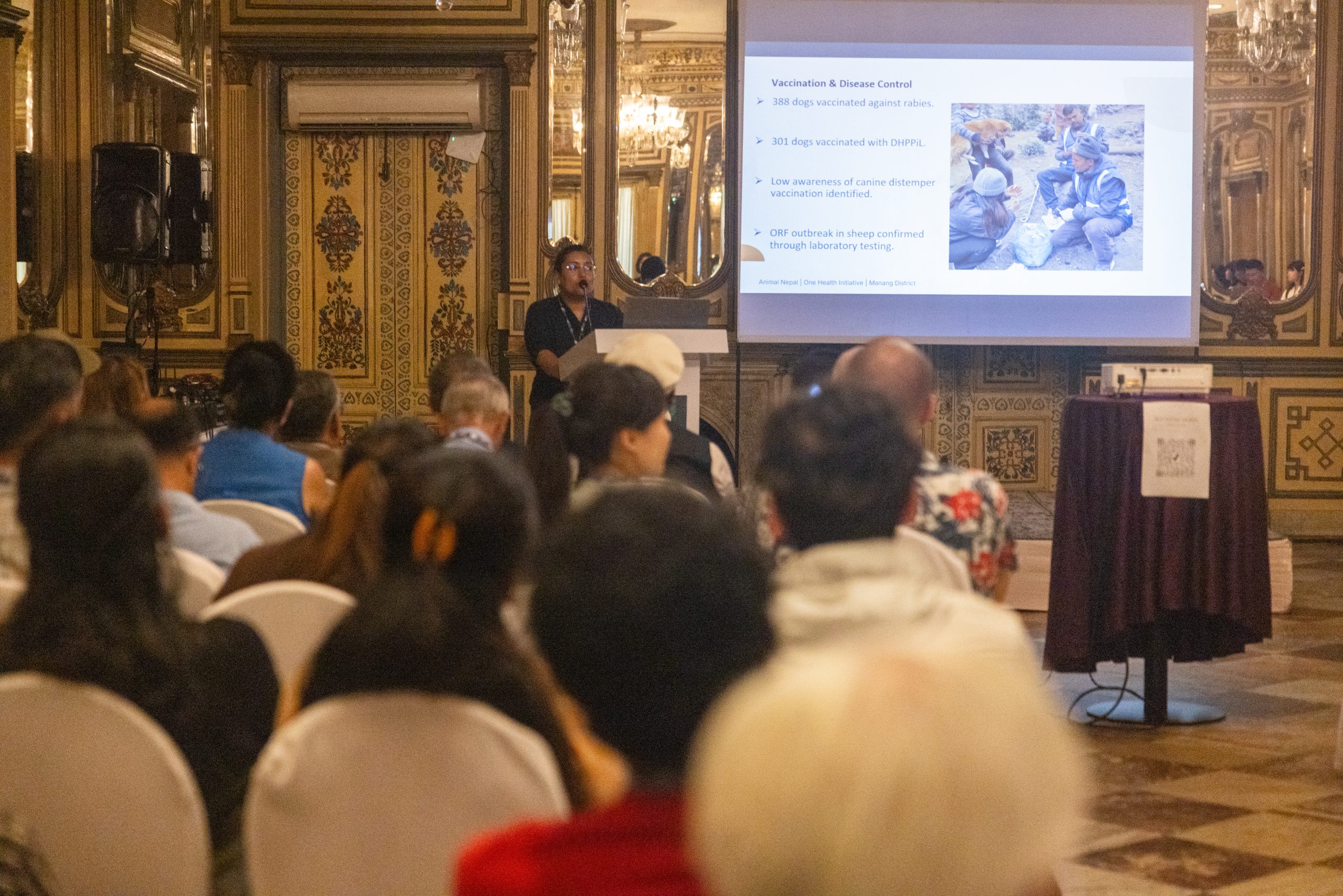
Animal Nepal Senior Veterinarian Dr. Sajana Thapa presents on the One Health – One Welfare initiative focused on veterinary and paraveterinary training, animal health clinics, and feral dog management to reduce transmissible disease risks and support the health of people, domestic animals, and wildlife.
The film screening was followed by an impact panel discussion between SLC’s Executive Director, Ashleigh Lutz-Nelson, and two of the Directors of the Snow Leopard Sisters film, Ben Ayers and Sonam Choekyi Lama. Ashleigh said, “Seeing the youth of Nepal rush the stage after the panel discussion for autographs by Ben Ayers and Sonam Choekyi Lama left a permanent smile on my face. There is so much hope for Nepal becoming a global example of how harmonious human-wildlife coexistence is indeed possible.”
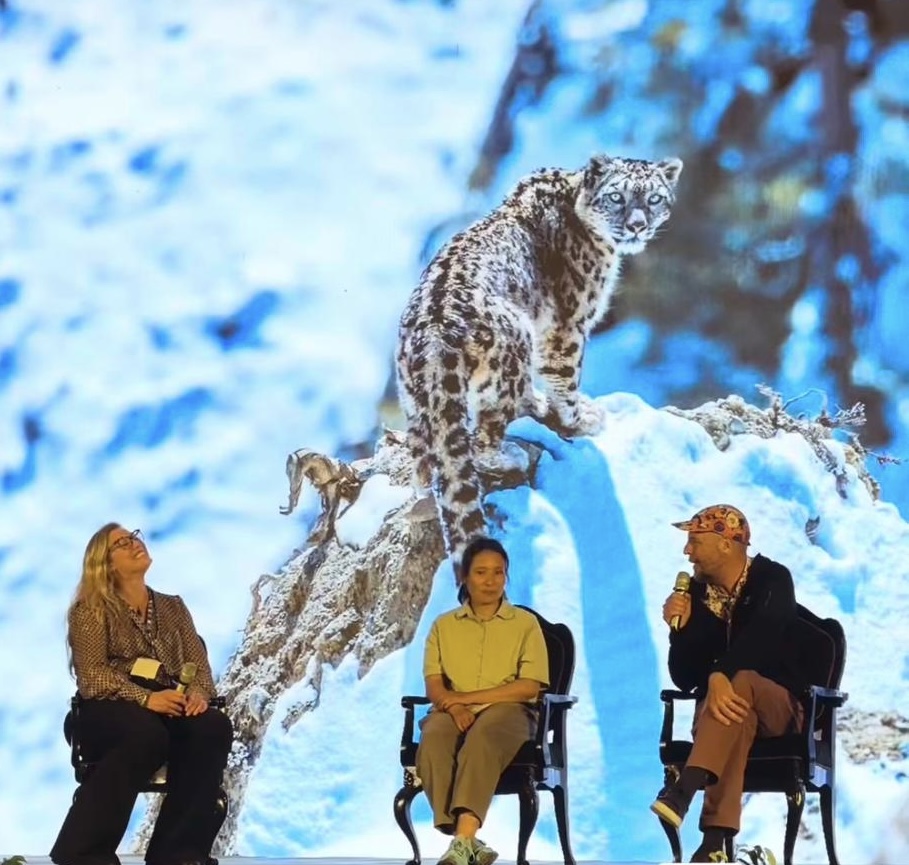
SLC Executive Director Ashleigh Lutz-Nelson with Snow Leopard Sisters directors Ben Ayers and Sonam Choekyi Lama following the film’s special screening and impact panel discussion.
Reflections
SLC staff and partners from across the range countries shared powerful reflections on the Congress, highlighting how the gathering deepened connections, sparked new collaborations, and reinforced their commitment to snow leopard conservation.
“Seeing our Conservancy partners arrive from near and far, reuniting with old friends and becoming new friends over the course of the workshop and Congress was a dream come true for me thanks to our dedicated team, partners, and Congress hosts. This learning exchange extended far beyond simply teaching one another, it was a beautiful, shared experience of camaraderie, mutual respect, and hope.” – Ashleigh Lutz-Nelson, SLC
“It was a privilege to meet friends and colleagues from across the snow leopard range countries and learn from the inspiring work being carried out in different landscapes. My sincere gratitude to Snow Leopard Conservancy for providing such a valuable platform and opportunity to connect, exchange experiences, and learn from one another. I hope there will be many more opportunities to share ideas, lessons, and innovations, and to further strengthen our collective efforts to protect snow leopards while improving the wellbeing of the communities that live alongside them.” – Shailendra Thakali, Ph.D., Nepal
“On behalf of Sarkori Davlatmamadov and myself, I would like to express our sincere gratitude to the Snow Leopard Conservancy team, the organizers of the SLC Partner Workshop, and the 6th Conservation Asia Congress (CAC Nepal 2026) held in Kathmandu. It was a great honor for us to represent Tajikistan and the Pamirs at such a distinguished international forum, which brought together scientists, conservation practitioners, community leaders, and nature enthusiasts from across Asia. The Congress was immensely valuable and inspiring for us. We gained new knowledge, met remarkable people, exchanged experiences, and made new friends united by a common goal: the conservation of nature and the protection of the snow leopard.
… For us, it was yet another reminder that the international conservation community is not merely a professional network, but a true family of like-minded people united by shared values and commitments. We returned from Kathmandu with tremendous energy, inspiration, and wonderful memories. Along with these memories, we brought home new ideas, valuable connections, and new friends who have dedicated their lives to the conservation of the snow leopard and the mountain ecosystems of Asia. … We sincerely look forward to future meetings and continued cooperation. It would be our great pleasure to one day welcome each of you to Tajikistan, to the beautiful Pamirs, the land of majestic mountains, warm hospitality, and the snow leopard.” – Dr. Qurbonidin Alamshoev and Sarkori Davlatmamadov, Tajikistan
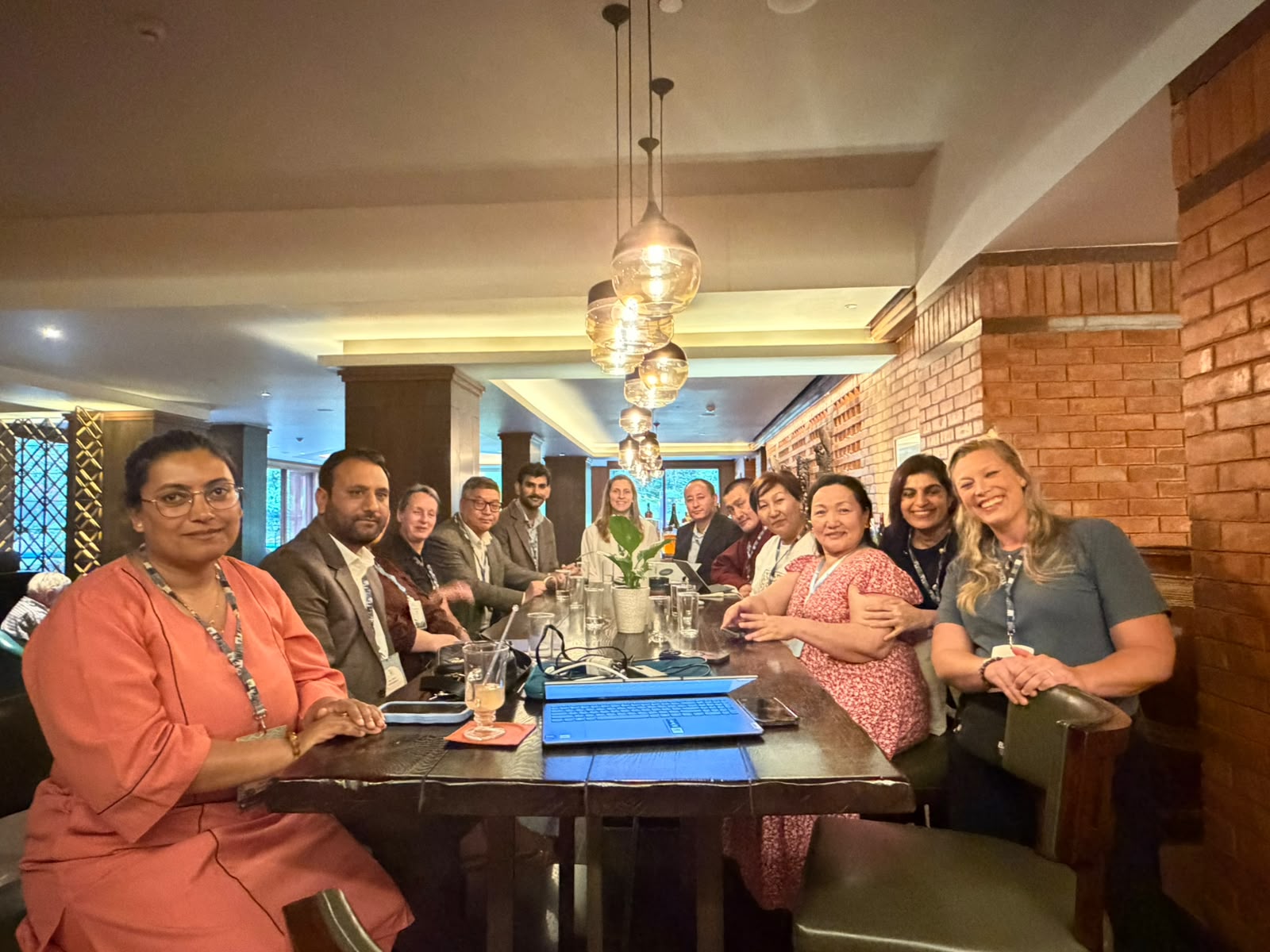
SLC partners share an informal dinner together — an evening of conversation, laughter, and friendship that reflected the spirit of the gathering. Beyond the presentations and learning exchanges, time spent together offered an equally meaningful opportunity to strengthen relationships, reconnect with old friends, and form new ones across the snow leopard range.
Collaborative Impact
We invite you to read more about the 6th Conservation Asia Congress in the Impact Report provided by the Congress’ host organizations. This inspiring report highlights the importance of collaboration and knowledge sharing across grassroots conservation practitioners, researchers, policy makers, and more. To summarize:
The 2026 Congress was a record-breaking event, fostering significant inclusivity and global representation:
Participants:
500 total attendees from 42 countries, with 390 participants from the Global South.
Demographics: 43% of participants were women, 357 were early-career conservationists (under 45), and 151 were students.
Inclusivity: 38 representatives from Indigenous Peoples and Local Communities (IPLCs) attended, and 160 travel and registration grants were awarded.
Scientific Program:
The Congress featured over 300 hours of knowledge sharing, including:
11 Plenary talks and 40 speed talks.
260 oral presentations across 21 sessions and 19 symposia.
59 poster presentations and 12 specialized workshops.
The Kathmandu Resolution 2026:
Adopted on World Environment Day (June 5, 2026), the resolution outlines three core pillars to guide future conservation efforts:
Building Capacity, Collaboration, and Advocacy: Fostering peaceful trans-Asian collaboration, empowering diverse regional leaders (especially women and marginalized groups), strengthening SCB ‘Country Chapters’, and addressing root causes of biodiversity loss like extractive economic systems and illegal wildlife trade.
Community-Led Conservation: Shifting from top-down protectionism to indigenous and local stewardship, securing local livelihoods, and advocating for landscape-scale policies that foster harmonious human-wildlife coexistence.
Science, Technology, and Infrastructure: Urging governments to adopt wildlife-friendly linear infrastructure, promoting accessible and ethical technological tools for socioecological monitoring, and strengthening open, evidence-based scientific research.
The Congress concluded by looking forward to the 2028 event, emphasizing a unified commitment to harmonizing biodiversity and human well-being.
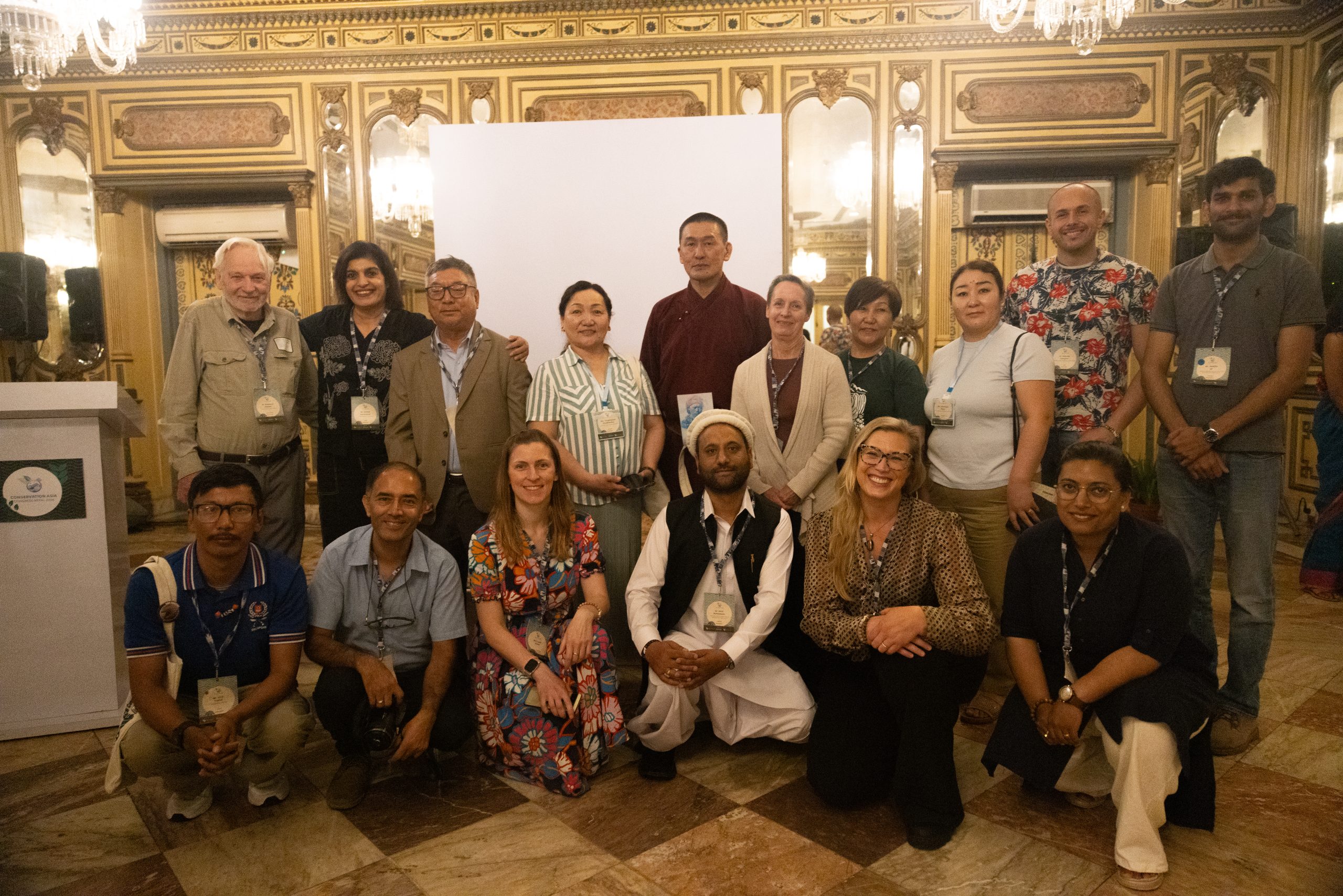
The Conservancy is grateful to our funding partners, Wildlife Conservation Network and Shared Earth Foundation, for their support in making this important milestone possible. With their contributions, SLC and our partners were able to play a significant role in the 6th Conservation Asia Congress.