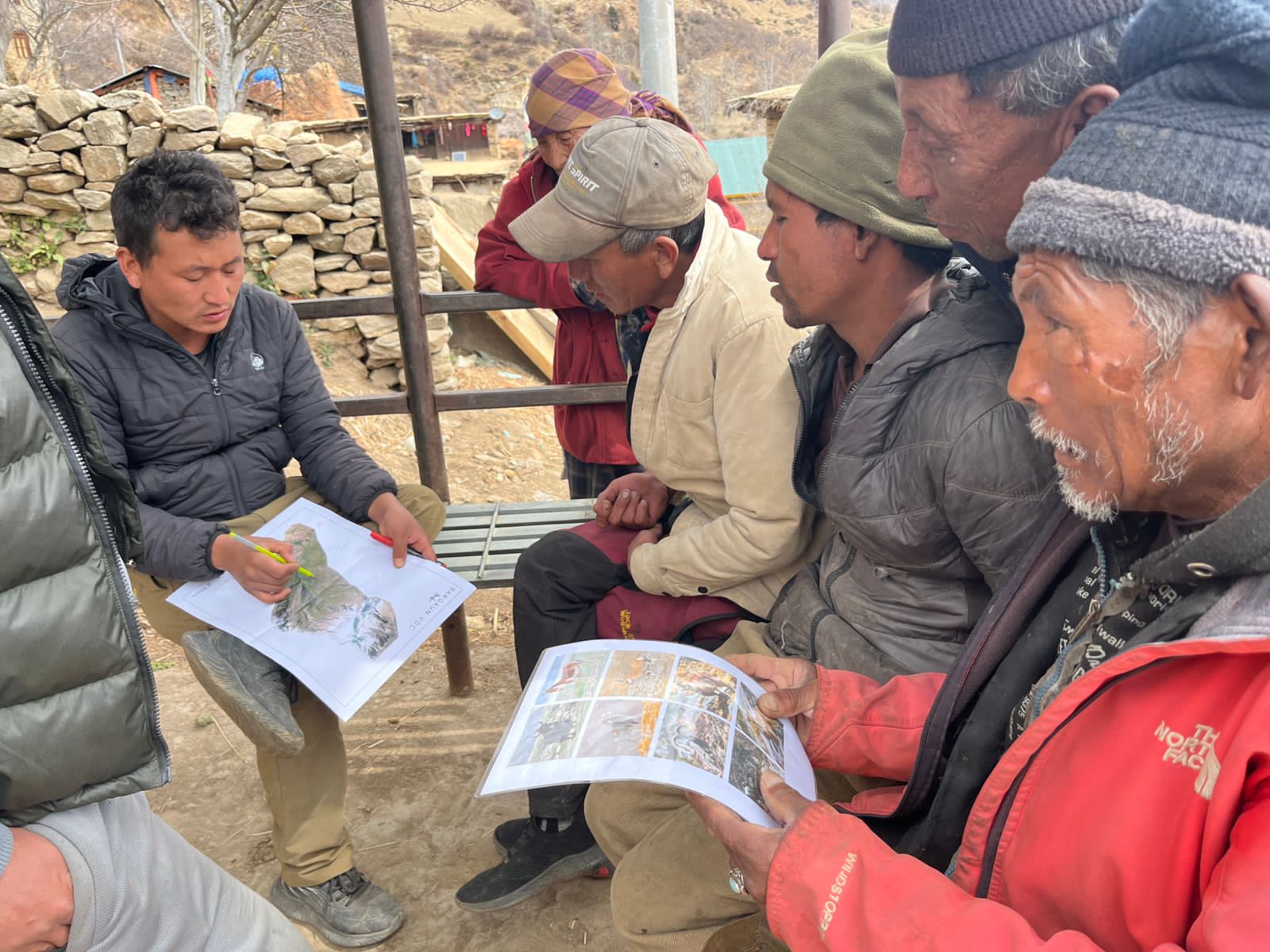
UKALI team members conducting community interviews. Photo Credit: UKALI
Community-led conservation continued to gain momentum across Nepal’s high mountain landscapes in 2025 through the work of Upper Karnali Landscape Initiatives (UKALI), led by founder Rinzin Phunjok Lama, in partnership with Snow Leopard Conservancy. Since we last reported on their lifesaving work, UKALI has strengthened their institutional capacity, expanded biodiversity research and monitoring, invested in sustainable livelihood development, created conservation education and skill building courses, and advanced their communication and outreach. Together, these efforts are building the local leadership, scientific knowledge, and community partnerships needed to safeguard one of the world’s most vital mountain ecosystems and advocate for snow leopard conservation in Nepal.
Expanding Wildlife Research and Ecological Monitoring
One of their most significant achievements came through wildlife research. Working alongside government partners, UKALI helped conduct the first comprehensive snow leopard population assessment in Namkha Rural Municipality – an area outside Nepal’s protected area network. Using 55 camera traps over more than 4,700 trap-days, researchers identified 25 individual snow leopards, contributing to Nepal’s first-ever national population estimate of approximately 397 snow leopards. These findings reinforce UKALI’s role as a leader in conservation by providing the scientific evidence needed to direct future stewardship decisions across western Nepal’s high mountain landscapes.
Protecting snow leopards means understanding the entire ecosystem that supports them. Between 2022 and 2025, UKALI expanded monitoring across the Humla District, recording 24 mammal and 178 bird species across elevations from 1,500 to 5,100 meters, and conducting western Humla’s first herpetofauna survey. The team also surveyed blue sheep – the snow leopard’s primary wild prey – and completed genetic and dietary analyses of more than 100 confirmed snow leopard scat samples. Together, these studies are establishing the ecological baseline needed to monitor change over time, identify conservation priorities, and support science-driven, community-led stewardship in these regions.
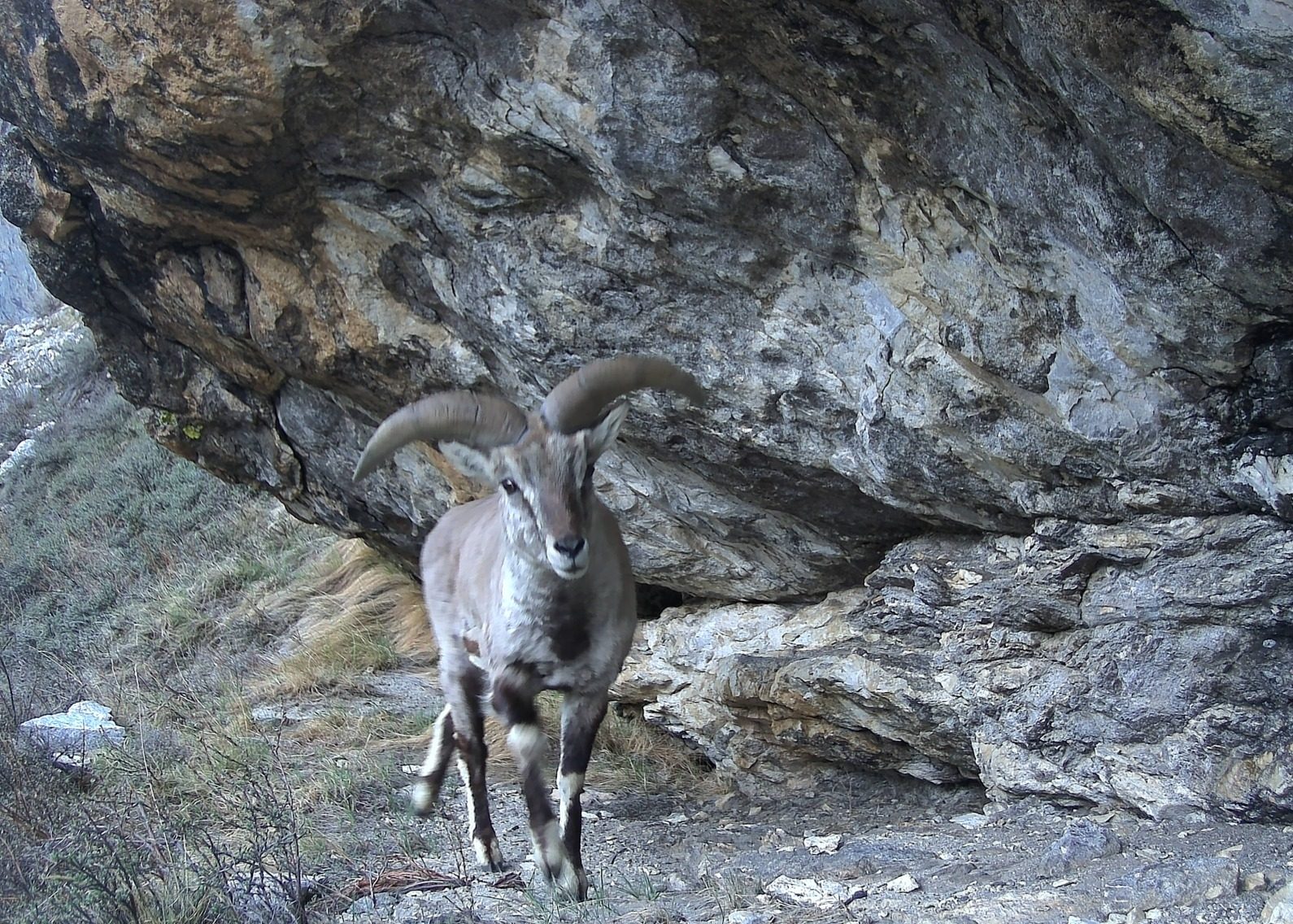
Blue sheep, the primary prey of snow leopard, captured on a trail camera in Humla, Nepal. Photo Credit: UKALI.
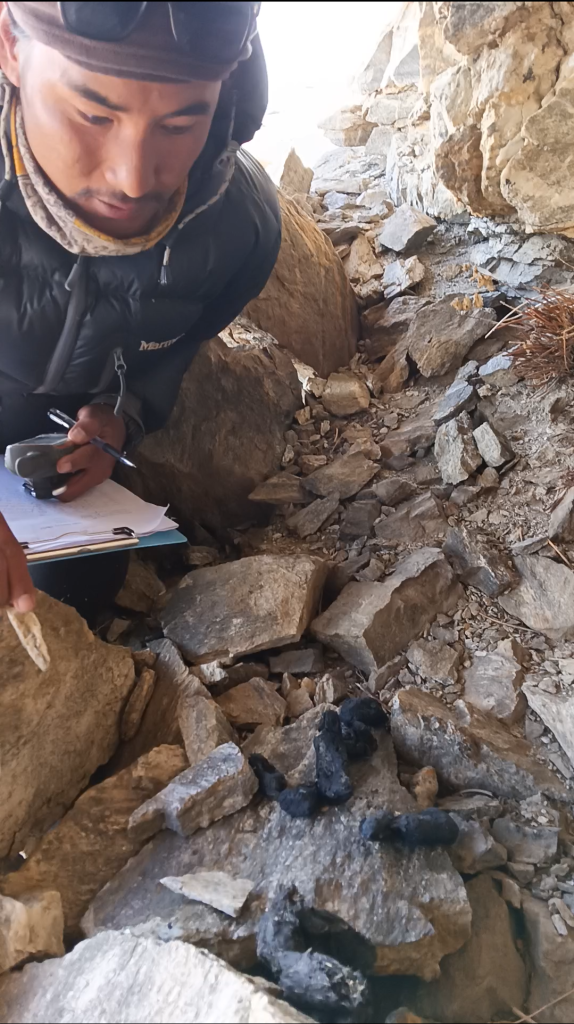
UKALI team member documenting snow leopard scat, which contributed to their snow leopard genetic and dietary analysis. Photo Credit: UKALI
Bringing Community Knowledge into Conservation
While scientific research is central to UKALI’s work, the organization recognizes that the people who have lived alongside wildlife for generations are among the region’s most important sources of knowledge. This year, UKALI hosted its first community wildlife mapping workshop in Mugum Valley, bringing together local residents to document the distribution of snow leopards and their primary prey species – blue sheep, Himalayan tahr, and musk deer – and to identify the conservation challenges shaping the region today. Participants shared generations of ecological knowledge while helping establish priorities for future research and stewardship. They also noted that locally led wildlife monitoring and community enforcement have already helped reduce poaching of wild ungulates, while emphasizing that greater local involvement offers an exciting opportunity to strengthen long-term protection of the valley’s remarkable biodiversity.
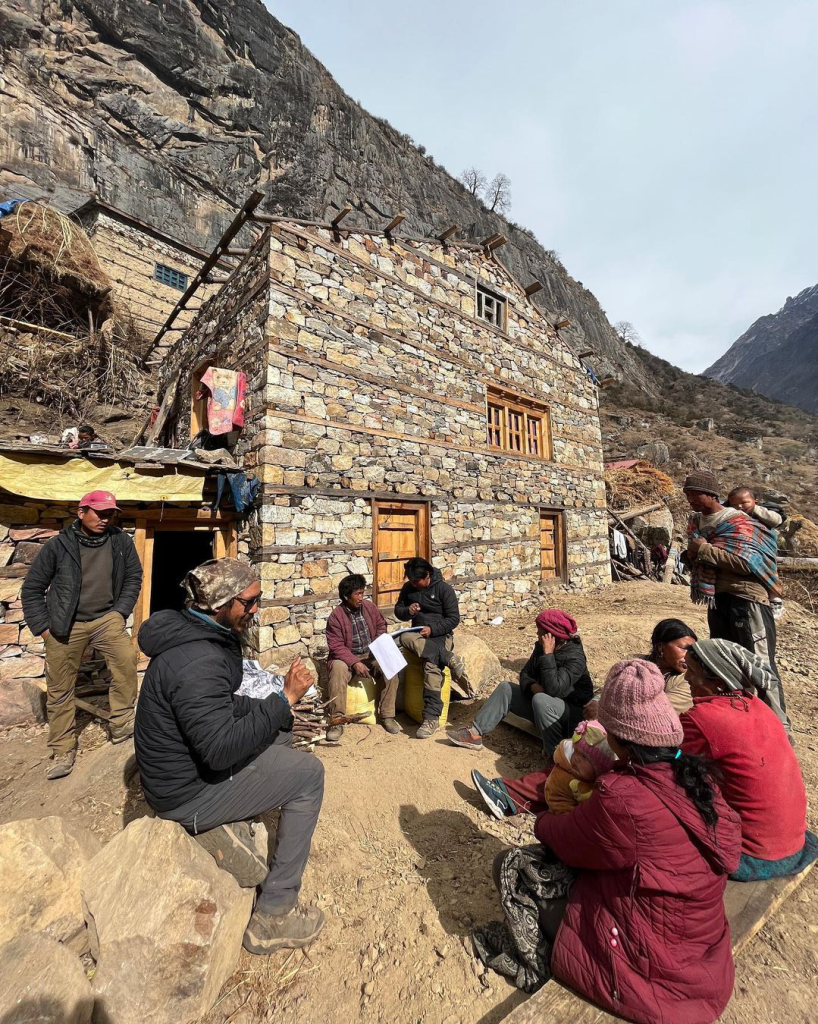
UKALI team members conducting community interviews. Photo Credit: UKALI
Investing in Education, Capacity, and the Next Generation
The organization also expanded its network of school eco-clubs to ten community schools, engaging more than 3,000 students and helping inspire the next generation of conservation leaders. UKALI also invested in its own team, bringing staff together for an intensive five-day capacity-building workshop that combined classroom instruction with hands-on field training in wildlife monitoring, citizen science, GPS and camera trap techniques, organizational leadership, financial management, and data analysis. Additional advanced statistical training further strengthened the team’s capacity, ensuring UKALI is well equipped to lead increasingly sophisticated research and conservation programs. The team also collaborated with Nepalese artists, filmmakers, and educators to share conservation stories in new ways, while continuing to develop the Namkha Heritage Trail – an initiative that celebrates the region’s remarkable wildlife, rich cultural heritage, and opportunities for responsible, conservation-based tourism.
Building Sustainable Livelihoods Through Conservation
Finally, UKALI conducted a series of feasibility studies to identify locally led enterprises that can strengthen livelihoods while supporting long-term conservation goals. Through site visits, community interviews, and market assessments, the team identified five promising opportunities: artisan products, highland honey, wild nettle textiles, seedling nurseries, and ecotourism. By evaluating both the economic potential and environmental sustainability of each enterprise, UKALI is helping generate local income and build a resilient economy.
Perseverance in the Himalaya
A reminder that fieldwork in the Himalaya is never without challenges. Remote landscapes, unpredictable weather, rugged terrain, political unrest, and human-wildlife conflict require flexibility, patience, and long-term commitment. Throughout the year, UKALI adapted to these realities while continuing to build trusted relationships and lay the groundwork for future engagement.
We are deeply grateful to Rinzin Phunjok Lama, the entire UKALI team, our local partners, and the communities whose knowledge and dedication continue to inspire snow leopard conservation in Nepal every day.
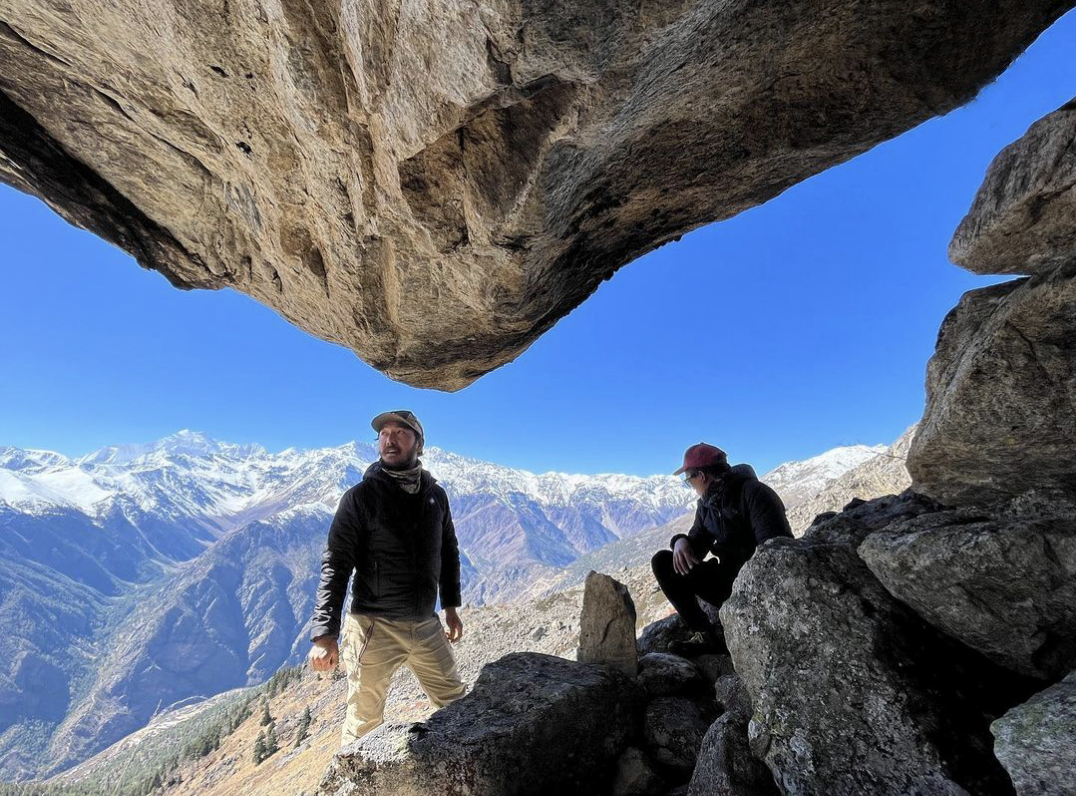
Rinzin and UKALI team member conducting field research in Humla, Nepal. Credit: UKALI